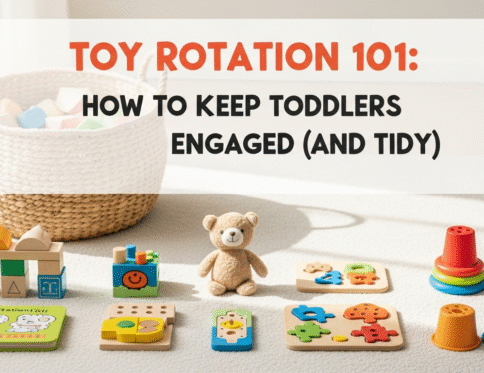


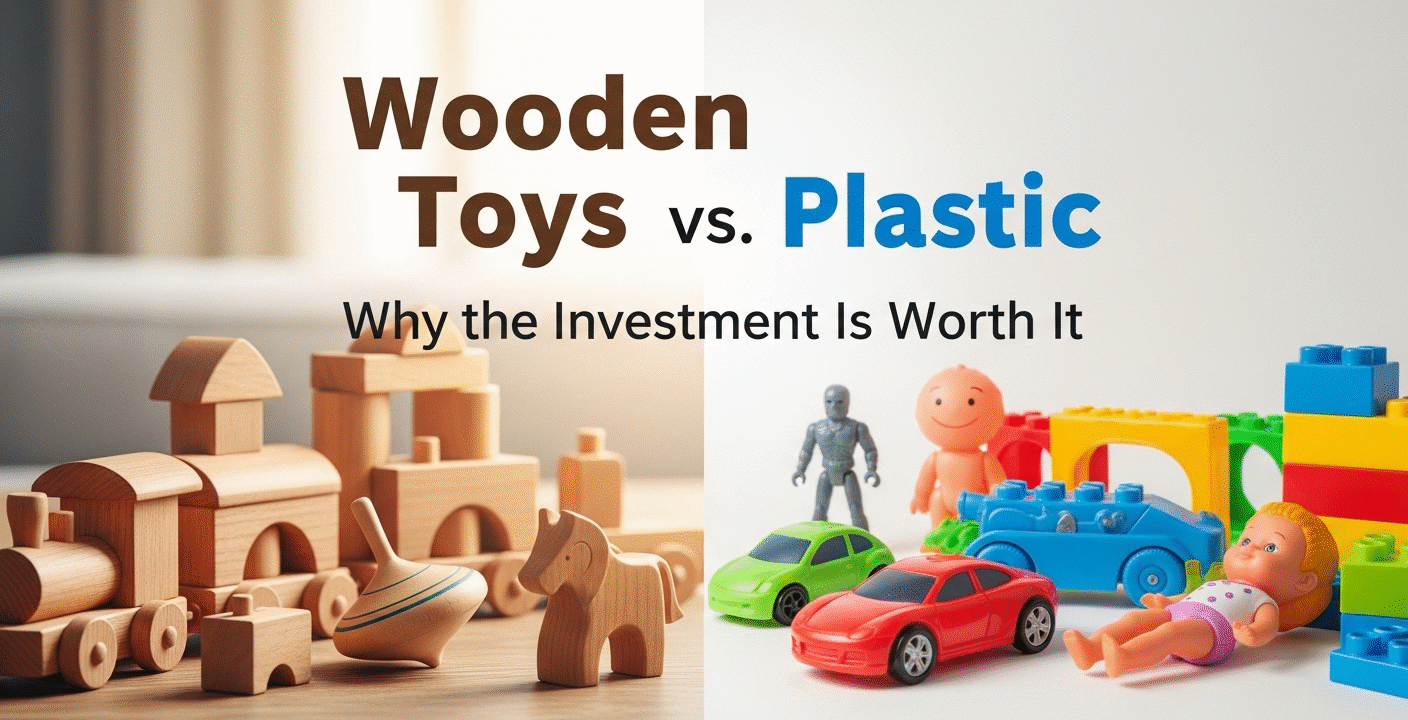

Walk down a standard toy aisle and you are greeted by flashing LED lights, electronic sirens, and brittle molded plastic. Walk into a Montessori classroom or thoughtfully curated playroom, and the atmosphere feels noticeably calmer: natural wood grain, tactile building blocks, balance boards, and open-ended puzzles take centre stage.
Choosing between wooden toys and plastic toys affects how long your playroom materials last, how your child focuses during independent play, and what materials toddlers put in their mouths during early sensory exploration.
Are Wooden Toys Better Than Plastic Toys for Toddlers?
Direct Answer: Solid wooden toys offer clear advantages over mass-produced plastic toys in durability, tactile weight, safety, and attention span. Because wooden toys do not rely on batteries or scripted sound effects, they require children to use their own imagination, problem-solving, and fine motor control during play.
| Comparison Factor | Solid Wooden Toys | Mass-Market Plastic Toys |
|---|---|---|
| Expected Lifespan | 10 to 20+ years (passed down across siblings & classrooms) | Months to 2 years (prone to cracking or battery failure) |
| Play Style | Active & open-ended (child drives the story and action) | Often passive (press a button and watch lights/sounds) |
| Sensory Feedback | Natural weight, warm grain texture & gentle acoustic sound | Uniformly light, smooth synthetic surface |
| Material Safety | Solid beech/birch wood with non-toxic water-based stains | Risk of sharp edges if cracked; potential PVC/phthalate concerns |
5 Reasons Parents and Educators Invest in Wooden Toys
1. Built to Survive Generations of Play
Plastic toys frequently snap at thin hinges, lose their battery covers, or corrode inside when electronics fail. Solid beechwood and birch plywood wooden educational toys withstand drops, stacking, and daily classroom use. If a wooden block gets scuffed after years of play, it stays completely safe and functional.
2. Encourages Deep Focus and Open-Ended Imagination
When a plastic fire truck has a button that plays a siren and talks, that toy can only ever be one thing. A set of natural wooden blocks, tactile sorting pieces, or a wooden balance board adapts to whatever a child is imagining that afternoon: a castle wall, a veterinary clinic, a bridge over lava, or a grocery counter.
3. Rich Tactile Weight for Fine Motor Development
Babies and toddlers learn about physics through their hands. Real wood has natural heft and subtle grain resistance, which requires young children to calibrate their grip strength and hand-eye coordination much more accurately than hollow lightweight plastic pieces.
4. Safer Materials for Mouthing Toddlers
Children under age three explore textures with their mouths as well as their hands. High-quality wooden toys finished with certified child-safe, water-based paints and natural oils eliminate worries about BPA, phthalates, or brittle plastic shards breaking loose during rough play.
5. Lower Cost Per Year and Less Household Clutter
While a handcrafted wooden toy or sensory wall panel has a higher upfront price than a discount-store plastic gadget, buying fewer, better toys saves money over childhood. Instead of filling garbage bags with broken plastic every birthday, families keep a curated shelf of enduring favourites that hold their value for younger siblings or resale.
Explore Educational Wooden Toys in Canada
Looking to build a calmer, longer-lasting play space? Browse our curated collection of Wooden Toys, Montessori Math Toys, and Tactile Learning Toys at Pitaya Kids.
Disclaimer: The information provided in this article is for general educational and informational purposes only and does not constitute medical, pediatric, or legal advice. Consult a qualified professional for specific developmental guidance. Product dimensions and specifications are based on current catalog data and subject to standard manufacturing tolerances.