

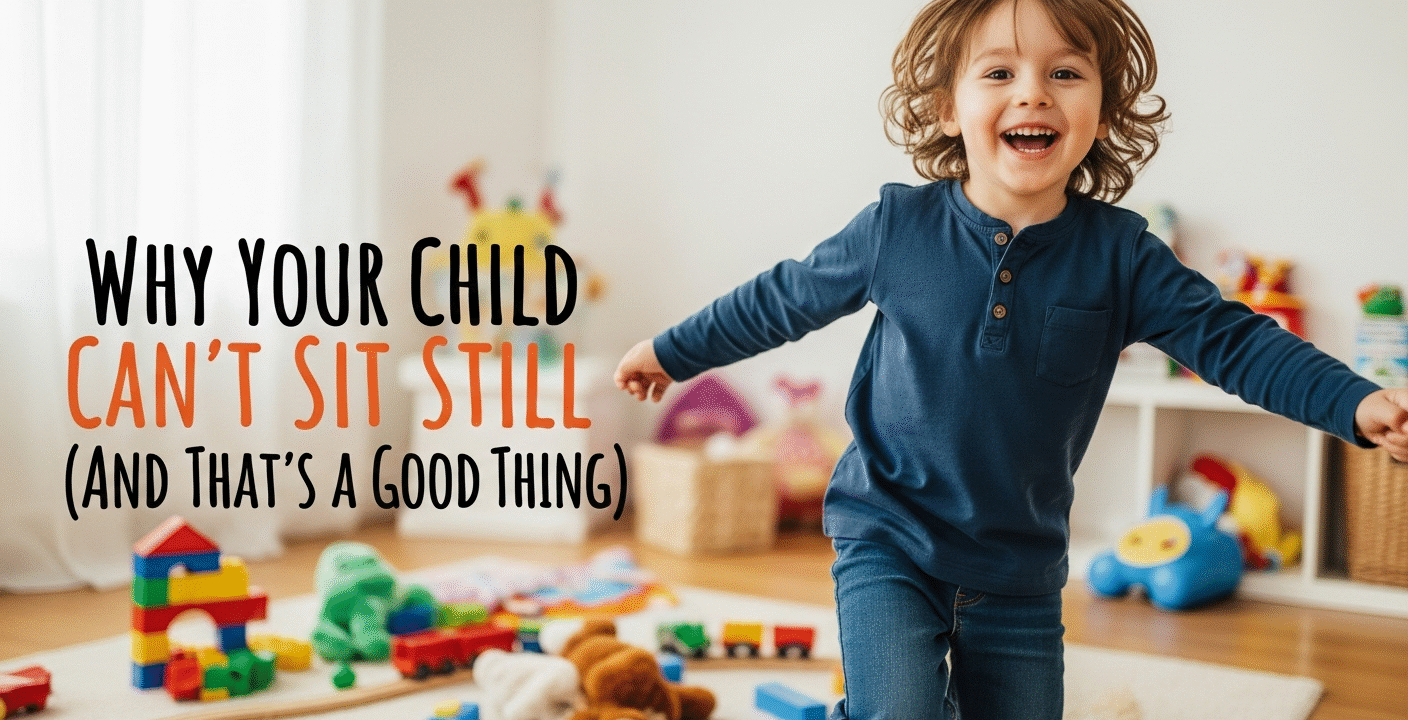

“Sit still!” “Stop wiggling!” “Can you just focus for one minute?”
If you’re a parent, these phrases probably sound familiar. It can be exhausting and frustrating when it feels like your child can’t sit still. We often interpret this constant motion—the tapping feet, the wiggling in the chair, the non-stop bouncing—as a sign of defiance or a lack of discipline.
But what if this restless energy isn’t a problem to be solved?
What if it’s a vital, necessary part of their growth? The truth is, there are powerful developmental reasons why your child can’t sit still (and why that’s a good thing). Before you label your child as “hyperactive” or “difficult,” let’s reframe that fidgeting as a sign of a healthy, developing brain.
The “Why”: Understanding the Need for Movement
When a child is in constant motion, they aren’t usually trying to be disruptive. Their bodies are responding to a biological need. This is a core part of child development.
- Brain Development: Movement is fuel for the brain. When active children move, they are activating their vestibular system (the sense of balance). This activation is directly linked to attention and learning. For many kids, sitting still is harder work than moving, as their brain is essentially “falling asleep” and uses fidgeting to jolt itself awake.
- They Are Kinesthetic Learners: Many children are kinesthetic learners, meaning they learn best through physical action, not just by listening or watching. That wiggling isn’t distracting them from the lesson; it is the lesson. They might tap their pencil to grasp a math concept or rock back and forth while sounding out a word. They are physically processing the information.
- Meeting Sensory Needs: We all have sensory needs. Some of us chew on a pen cap, tap our foot, or cross our arms. For children, these needs are even stronger. The pressure from sitting on their feet, the feeling of spinning, or the slight bounce on a chair provides sensory input that helps them feel regulated, calm, and focused. A child can’t sit still because their body is seeking the input it needs to feel “just right.”
The “Good Thing”: The Benefits of a Busy Body
Instead of seeing this constant motion as a flaw, it’s time to see it as a feature. Active children are building skills that will last a lifetime.
- Developing Gross and Fine Motor Skills: Every time your child climbs, jumps, runs, or swings, they are refining their gross motor skills. Even small movements, like fidgeting with a toy or button, help develop the fine motor skills they’ll need for writing and other precise tasks.
- Improving Focus (Yes, Really!): This is the biggest paradox for parents. We think stillness equals focus. But for many children, the opposite is true. Allowing small, non-disruptive movements can dramatically increase their concentration. Research has shown that kinesthetic learners who are allowed to fidget or stand while working retain more information.
- Emotional Regulation: Have you ever felt the urge to pace when you’re anxious or go for a run to “clear your head”? Children do the same thing. Physical movement is a primary way they release pent-up energy, process emotions, and manage stress. A child who “acts out” with big energy may just be trying to work through a big feeling.
How to Parent Your Active Child
Understanding the “why” is great, but you still have to manage the chaos of daily life. The goal isn’t to stop the movement but to channel it. This is a positive parenting approach.
- Build In “Movement Breaks”: Don’t expect a young child to sit for 30 minutes. Set a timer for 10-15 minutes of quiet activity, followed by a 3-minute “wiggle break.” Have them do 10 jumping jacks, run to the end of the hall and back, or do a “silly dance.”
- Redefine “Sitting Still”: Who says working has to happen in a hard chair? Let them do homework while lying on their stomach, sitting on a (safe) exercise ball, or standing at the coffee table. These alternative positions provide the sensory input they crave.
- Provide Good Outlets: Instead of saying “Stop tapping,” try saying, “You seem to have a lot of energy in your hands. Here’s some clay to squeeze while you listen.” Fidget tools, stress balls, or even just a textured pillow can satisfy those sensory needs without being disruptive.
- Get Outside. A Lot. The best solution for a child can’t sit still indoors is to give them ample time to not sit still outdoors. Unstructured, free play outside is the single best way for them to meet their developmental needs for big movement.
Embrace the Wiggles
So, the next time you feel that familiar frustration rising as your child bounces off the sofa for the tenth time, take a deep breath.
Remember that this isn’t a behavior problem. It’s child development in action. You aren’t failing at discipline; your child is succeeding at growing. Understanding why your child can’t sit still (and why that’s a good thing) is the first step toward a more peaceful and positive parenting journey.
Disclaimer: This article is for informational purposes only and does not constitute medical advice. The information provided is not intended to be a substitute for professional medical advice, diagnosis, or treatment. If you have concerns about your child’s development, activity level, or ability to focus, please consult with a qualified pediatrician or a child development specialist.