
Rest time is a vital part of the daily rhythm in every licensed daycare centre, preschool, and Montessori home. Choosing the right sleep and rest furniture affects how easily toddlers settle down for naps, how much floor space educators save when nap time ends, and how safely young children get in and out of bed on their own.
In this guide, we compare standard Canadian daycare cot dimensions, Montessori floor beds, and toddler-to-teen bed transitions so parents and childcare directors can select safe, durable rest-time furniture.
What Size Is a Standard Daycare Cot or Montessori Floor Bed?
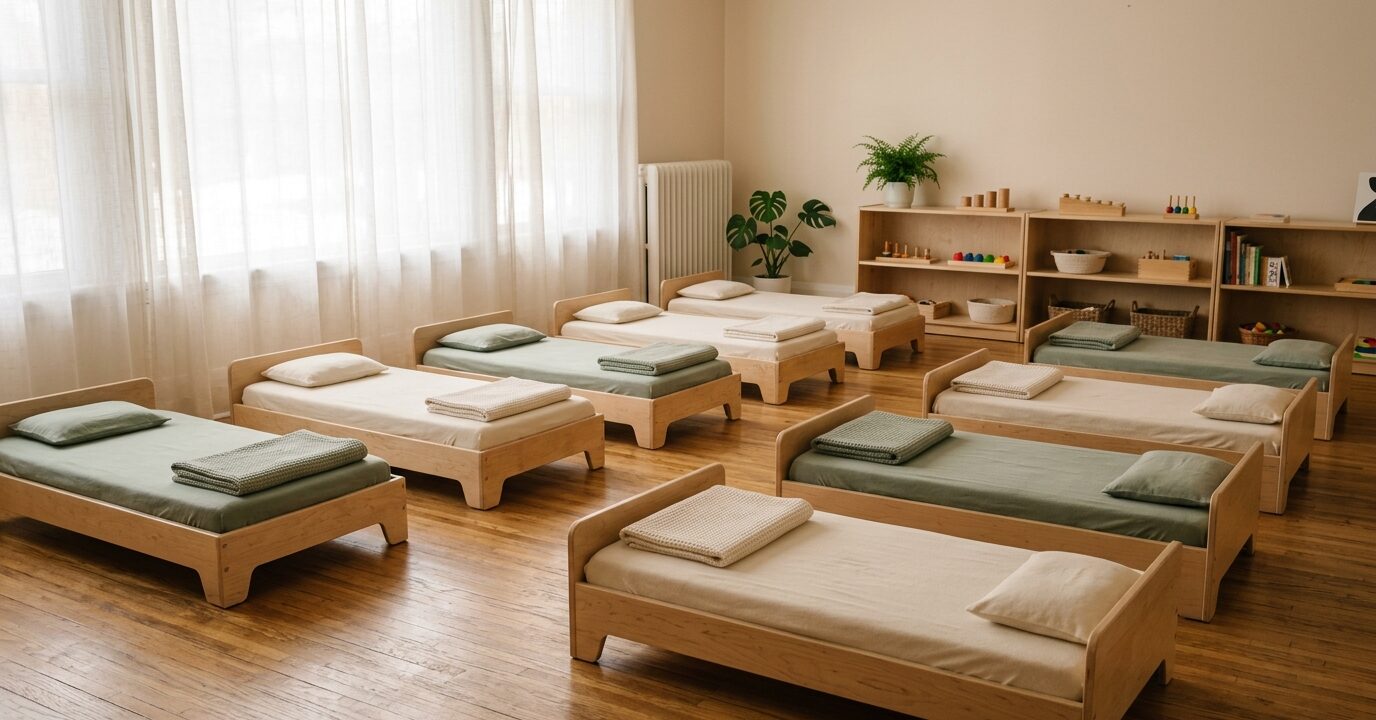
Direct Answer: A standard toddler and preschool daycare cot measures 120 cm long by 60 cm wide (48 in x 24 in) with a low frame height between 12 cm and 20 cm (5 in to 8 in) off the floor. This low elevation allows children aged 15 months to 5 years to lie down and get up unassisted without fall risks.
| Sleep / Rest Bed Type | Standard Dimensions (Metric & Imperial) | Frame Height Off Floor | Recommended Age Group | Best Environment |
|---|---|---|---|---|
| Montessori Daycare Cot / Low Bed | 120 cm x 60 cm (48 in x 24 in) | 20 cm (8 in) | 15 months to 5 years | Daycare nap rooms, preschools & toddler bedrooms |
| Standard Crib / Toddler Mattress Bed | 132 cm x 70 cm (52 in x 27.5 in) | 15 cm to 30 cm (6 in to 12 in) | 18 months to 4 years | Home nursery-to-toddler transition |
| Twin / Single Montessori Floor Bed | 190 cm x 99 cm (75 in x 39 in) | 10 cm to 25 cm (4 in to 10 in) | 2 years to 12+ years | Home bedrooms (toddler-to-tween transition) |
What Kinds of Toddler-to-Teen Bed Conversions Exist in Kids’ Furniture?
Direct Answer: Four main bed designs transition a child from toddlerhood into elementary and teen years: 3-in-1 or 4-in-1 convertible cribs that convert into a daybed and full twin frame, twin-sized Montessori floor beds used from age 2 through adolescence, expandable length beds with sliding frames, and modular low-loft beds with removable leg extensions.
When transitioning a toddler out of an enclosed crib, pairing a low bed like our Montessori Daycare Bed (120 x 60 x 20 cm) with child-height Montessori open shelves and a Montessori Chest of Drawers creates a completely child-safe bedroom. Because the mattress sits just 20 cm (8 in) off the floor, toddlers can climb in when sleepy and wake up to read a book from their shelf without rattling crib bars.
4 Essential Features for Daycare and Preschool Nap Cots
1. Off-the-Floor Elevation for Airflow and Hygiene
In licensed Ontario and Canadian childcare centres, sleeping mats placed directly on cold floors expose children to dust and drafts. A raised 20 cm (8 in) frame keeps the mattress and bedding elevated off the floor, allowing healthy airflow underneath while keeping children warm during winter months.
2. Wipeable, Non-Porous Frame Surfaces
Daycare cots must be sanitized between uses and whenever bedding is laundered. Our Rest Time & Daycare Cots feature sealed, smooth wooden/MDF frames and high-density foam mattresses that wipe clean in seconds using mild soap and water. (See our full Wooden Play Furniture Cleaning & Maintenance Guide.)
3. Rounded Corners and Pinch-Free Construction
Classroom nap rooms are busy spaces where 15 to 24 cots are arranged daily. Smooth radius corners and solid frame sides eliminate finger pinch points and sharp edges when educators arrange cots at least 46 cm (18 in) apart for clear walkway access.
4. Calming Classroom Colour Options
Visual calm helps energetic toddlers transition from active morning play to midday rest. Choosing muted natural wood tones, soft grey, pastel blue, or sage green cots helps signal quiet time across the classroom.
Furnish Your Daycare Nap Room or Montessori Bedroom
Explore our Montessori Daycare Bed and complete Rest Time & Daycare Cots Collection, or pair your sleep furniture with adjustable tables, chairs, and storage that grow with your child.