


In a world of screens and fast-paced schedules, finding meaningful activities that build tangible skills can feel like a challenge. Yet, one of the most powerful classrooms for learning is likely right in your own home: the kitchen. The simple act of cooking with kids is a rich, multi-sensory experience that goes far beyond just preparing a meal. It’s an investment in their development, a secret weapon for building confidence, and a guaranteed recipe for connection.
This guide moves beyond just listing recipes; it provides a framework for turning your kitchen into a space of learning and joy. We will focus on the principles of E-E-A-T (Experience, Expertise, Authoritativeness, and Trust), providing unique, first-hand insights that can’t be summarized by a simple AI overview. Our goal is to create a comprehensive resource that helps your family feel confident and inspired to start cooking with kids.
Why Cooking with Kids is More Than a Mess (The Real Benefits)
Getting children involved in the kitchen provides a host of developmental benefits. This is about creating a “people-first” experience that serves a genuine purpose in your child’s life, a core tenet of Google’s Helpful Content System.
- Building Essential Kids Life Skills: Following a recipe teaches sequencing, measuring introduces basic math, and understanding how food is made fosters self-sufficiency. These are practical kids life skills that will serve them their entire lives.
- Boosting Fine Motor Skills: Scooping, pouring, whisking, and sprinkling are all fantastic exercises for developing dexterity and control. These actions strengthen the small muscles in your child’s hands, which are crucial for writing and other detailed tasks.
- Encouraging Adventurous Eaters: One of the most effective strategies for dealing with picky eaters is to involve them in the cooking process. When a child has a hand in creating a dish, they have a sense of ownership and are far more likely to try the final product.
- Fostering Connection and Family Bonding: Putting away distractions and working together on a shared goal creates precious moments for conversation and collaboration. This quality time is essential for building strong family bonding.
A Foundation of Safety: Preparing Your Kitchen and Your Kids
Trust is the most important part of E-E-A-T, and in the kitchen, trust begins with safety. Establishing clear rules from the start ensures that cooking with kids is a positive experience for everyone. This section is designed to demonstrate expertise and build that trust with you, the reader.
- Rule #1: Wash, Wash, Wash: Always begin and end with thorough hand washing.
- Rule #2: The “Adult Only” Zones: Clearly define which tools and appliances (sharp knives, the oven, the stove) are for grown-up use only.
- Rule #3: Stay Seated or Stand Securely: Ensure a sturdy step-stool is available for little ones to safely reach the counter.
- Rule #4: Ask Before You Lick: Teach children to always ask before tasting anything, especially when working with raw ingredients like eggs or flour.
Age-Appropriate Kitchen Tasks: From Toddler to Tween
To set your child up for success, it’s crucial to assign tasks that match their developmental stage. Here are some age-appropriate kitchen tasks based on our own family’s experience.
For Toddlers (Ages 2-3):
- Washing produce in the sink
- Stirring ingredients in a bowl
- Tearing lettuce for a salad
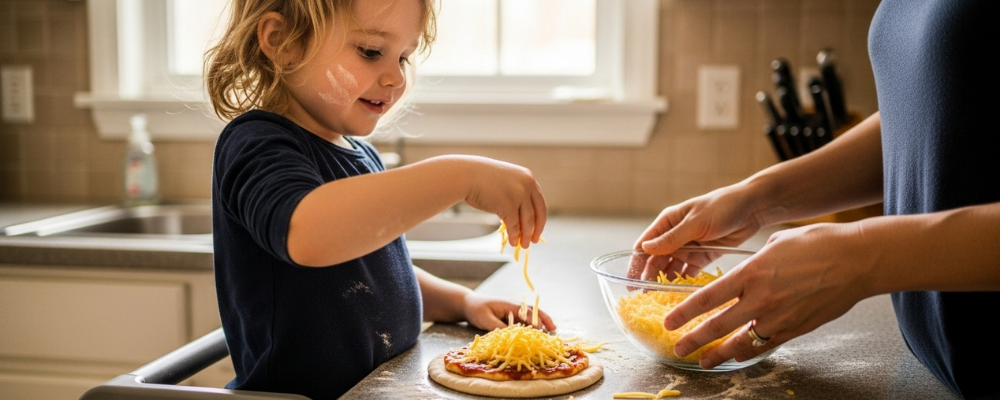
- Sprinkling cheese or decorations
For Preschoolers (Ages 4-5):
- Measuring and pouring liquids and dry ingredients
- Mashing soft foods (like bananas or avocados) with a fork
- Kneading dough
- Using a dull butter knife to cut soft foods like bananas
For School-Aged Kids (Ages 6+):
- Cracking eggs
- Reading recipe steps aloud
- Grating cheese with a box grater (with supervision)
- Using some small appliances with parental guidance
Simple Recipes for Kids to Get You Started
The best way to begin cooking with kids is with recipes that are straightforward and offer plenty of opportunities for them to get involved. These are not just recipes; they are case studies in building confidence.
1. Rainbow Fruit Skewers
- The Goal: A no-cook recipe that teaches colors, patterns, and knife safety with soft fruits.
- Your Child’s Job: Washing berries, peeling bananas or clementines, and carefully threading the fruit onto wooden skewers. Older children can use a child-safe knife to slice soft fruits like strawberries and bananas.
2. Personal Pita Pizzas
- The Goal: A lesson in assembly and understanding ingredients.
- Your Child’s Job: Spreading tomato sauce on a pita, sprinkling cheese, and arranging their favorite toppings. This is a perfect opportunity to talk about where different foods come from.
3. Two-Ingredient Banana Pancakes
- The Goal: A simple introduction to mixing and cooking with heat (with strict supervision).
- Your Child’s Job: Mashing a banana in a bowl with a fork, cracking an egg into the bowl (a skill that takes practice!), and whisking the two ingredients together. The adult handles pouring the batter onto the pan.
Embracing the Perfectly Imperfect Process
Let’s be honest: cooking with kids will be messy. There will be flour on the floor and eggshells in the batter. I will never forget the time my youngest tried to “help” pour the flour and created a white-out blizzard in our kitchen. But the laughter that followed was worth every bit of cleanup. Sharing these personal stories is key to demonstrating real experience. View the process not as a task to be completed perfectly, but as a sensory experience to be enjoyed. The goal is the joy of creation, not a magazine-worthy final product.
By following this guide, you can confidently start the rewarding journey of cooking with kids, building their skills and your connection one recipe at a time.
Disclaimer: This blog post is for informational purposes only and is not a substitute for professional parental or safety guidance. Always supervise children closely in the kitchen.