


In today’s screen-filled world, parents are constantly searching for engaging ways to encourage physical activity. It’s a challenge to find a single item that is fun, safe for indoor use, and genuinely beneficial for a child’s development. Enter the kids’ balance board. This simple, low-tech piece of equipment is making a huge comeback, and for good reason. But what is a balance board, and is it really more than just a toy?
You might be surprised to learn that this curved piece of wood or plastic is a developmental powerhouse. It’s an incredible tool that supports everything from physical strength to cognitive focus. Let’s dive into the 10 surprising balance board benefits for kids and explore why it deserves a spot in your playroom.
So, What Is a Balance Board?
Before we get to the benefits, let’s answer the main question: what is a balance board?
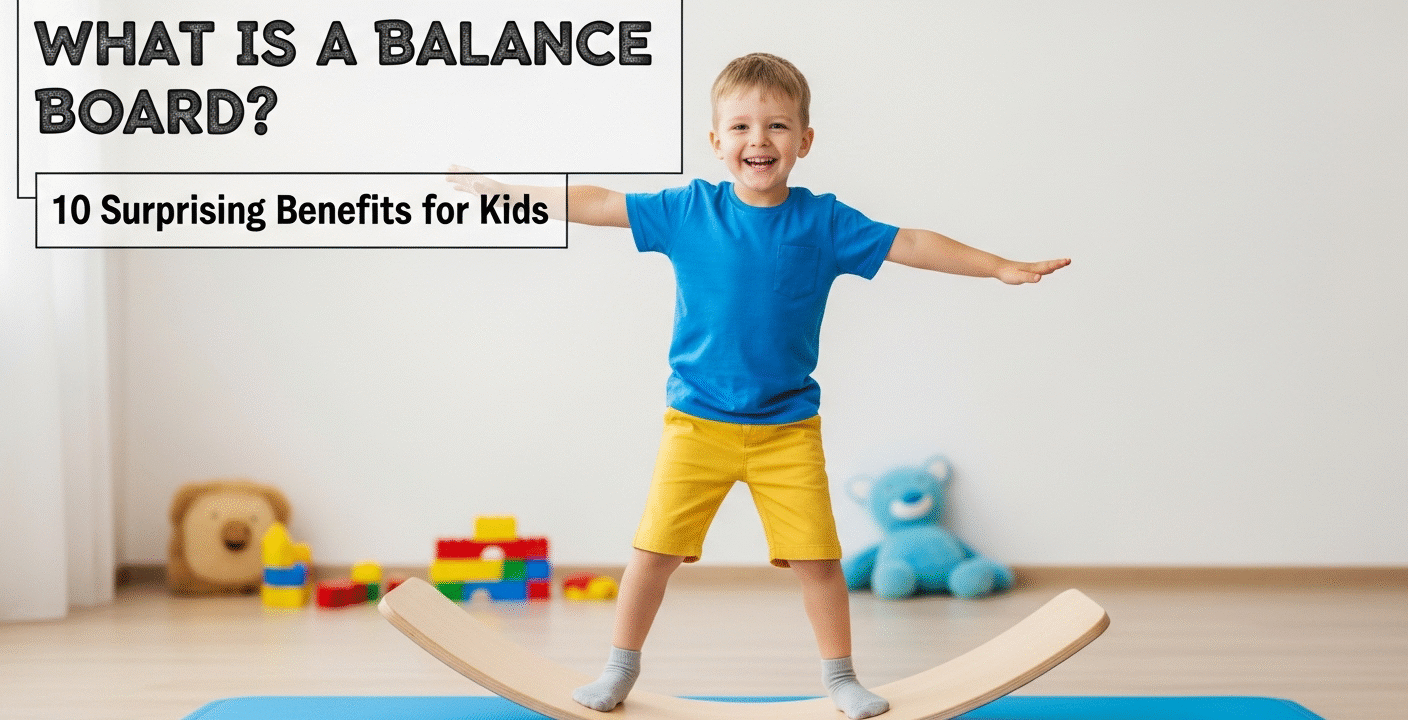
At its simplest, a balance board for kids is a curved board that requires the user to balance on it. The user stands, sits, or rocks on the unstable surface, engaging their muscles and balance system to stay upright.
They come in a few common forms:
- Rocker Boards: These are the most common for kids, often called “Wobbel boards” or “Waldorf rockers.” They have a simple U-shaped curve.
- Wobble Boards: These are typically a flat disc sitting on top of a small ball or dome, allowing for 360-degree movement.
While the design is simple, the effects on a child’s body and brain are complex and profound.
10 Surprising Balance Board Benefits for Kids
This simple toy is a master of multitasking. It seamlessly blends active play with crucial developmental skills.
1. Improves Balance and Coordination
This is the most direct of all the balance board benefits for kids. To stand on the board, a child must constantly make micro-adjustments. This active process trains the brain and body to work together, dramatically improving overall coordination and the ability to improve balance in all activities, from walking to playing sports.
2. Strengthens Core Muscles
Forget sit-ups. The act of balancing is one of the best ways to build core strength for kids. The muscles in the abdomen and back (the core) must constantly engage to keep the child stable. A strong core is the foundation for good posture, proper alignment, and power in other physical movements.
3. Enhances Proprioception (Body Awareness)
This is a huge, “surprising” benefit. Proprioception is often called our “sixth sense.” It’s the brain’s ability to know where the body is in space without having to look. Standing on an unstable surface “wakes up” the receptors in the ankles, knees, hips, and core, sending a flood of information to the brain and sharpening this crucial sense.
4. Stimulates the Vestibular System
The vestibular system, located in the inner ear, is our internal balance center. Rocking, spinning, and balancing activities directly stimulate this system. A well-stimulated vestibular system is essential for developing good balance, spatial awareness, and even eye-hand coordination.
5. Boosts Sensory Integration
For many children, especially those with sensory processing challenges, a balance board is a key tool for sensory integration. It provides strong vestibular and proprioceptive input in a controlled way, which can help organize the brain, reduce sensory-seeking behaviors, and promote a sense of calm.
6. Increases Focus and Concentration
Want your child to focus more on homework? Try a 5-minute balance board break. The brain-body connection is powerful. When a child engages in a physical balancing task, it activates the brain and can clear mental fog, making it easier to settle down and concentrate afterward. Some kids even find they focus better while rocking gently on a board.
7. Encourages Active, Open-Ended Play
A balance board for kids is the definition of an open-ended toy. It’s not just for balancing. It becomes a bridge for toy cars, a slide, a rocking chair for reading, a ramp, a doll’s cradle, or a fort-building component. This versatility sparks creativity and ensures it gets used far more than a one-trick-pony toy, all while encouraging active play.
8. Builds Confidence
There is a pure, powerful “I did it!” moment when a child finally masters standing on the board, or transitions from sitting to standing. Overcoming this physical challenge builds resilience and self-confidence that translates directly into other areas of life, encouraging them to try new and difficult things.
9. Provides a Safe Indoor Active Outlet
Rainy days, small apartments, or “I’m bored!” syndrome are no match for a balance board. It’s a fantastic tool for getting wiggles out indoors. It provides a safe and compact way for kids to move their bodies, burn energy, and develop their gross motor skills without running, jumping, or climbing on the furniture.
10. It’s Calming and Can Help Self-Regulation
While it’s a tool for active play, the gentle, rhythmic rocking motion can also be incredibly soothing. Much like a rocking chair, this movement can help a child who is overstimulated, anxious, or upset to calm their body and mind. It becomes a safe “go-to” spot for self-regulation.
Choosing the Right Kids’ Balance Board
When you’re ready to buy, remember that understanding what is a balance board and its types is key. For most toddlers and young children, the classic wooden rocker board is the most versatile. Look for one with a non-slip surface (like felt) for added safety. Always supervise young children and encourage barefoot use for the best grip and sensory feedback.
A Tool for Play and Potential
As you can see, the answer to “what is a balance board?” is so much more than “a toy.” It’s a simple, screen-free tool that unlocks a world of physical and cognitive development. The balance board benefits for kids are clear: from a stronger core and better balance to improved focus and a sense of calm, this one item can support your child’s growth in countless surprising ways.
Disclaimer: This article is for informational purposes only and is not intended as medical advice, diagnosis, or treatment. Always consult with a qualified healthcare professional or paediatric occupational therapist with any questions you may have regarding your child’s development or a medical condition.