

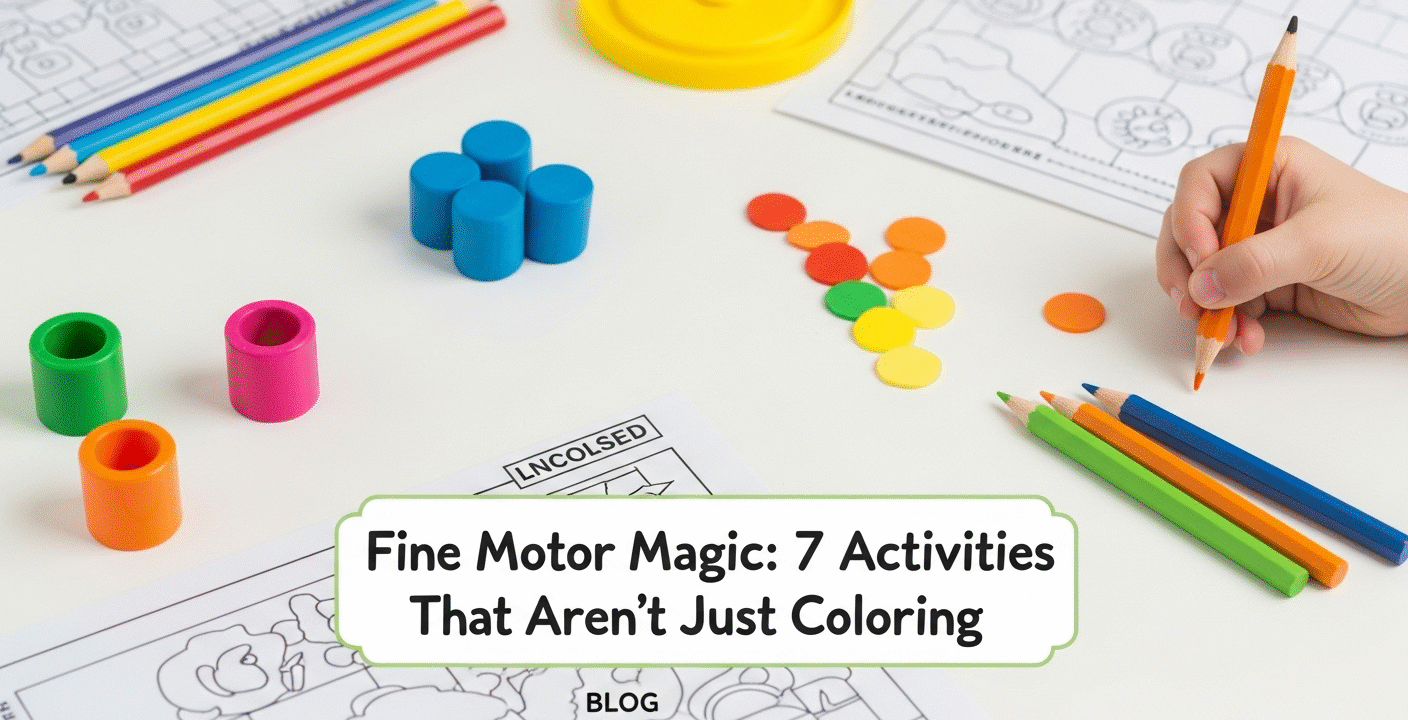

When you hear “fine motor skills,” what’s the first thing you picture? For most of us, it’s a child hunched over a coloring book, crayon in hand. While coloring is a fantastic and valuable activity, it’s not the only way to build those crucial small-muscle movements. To develop fine motor skills, children need a variety of engaging challenges.
Strong fine motor skills are the foundation for so many essential life tasks—from zipping a jacket and tying shoes to, yes, holding a pencil and writing. If you’re looking to mix things up and move beyond the coloring pages, we’ve got you covered. Here are seven engaging fine motor activities that your child will love.
Why Are These Skills So Important?
Before we dive into the activities, let’s quickly touch on the why. Fine motor skills involve the use of the small muscles in the hands, fingers, and wrists. Developing these skills is critical for:
- Independence: Enabling children to perform self-care tasks like buttoning, using a fork, and brushing their teeth.
- School Readiness: Good fine motor skills are a direct predictor of academic success, as they are essential for writing, drawing, and using tools like scissors.
- Cognitive Development: Many of these activities also boost hand-eye coordination, problem-solving, and concentration.
7 Fun Fine Motor Activities Beyond the Coloring Book
1. Play-Doh and Putty Power
There’s a reason this is a classic. Squishing, rolling, pinching, and squeezing modeling clay or therapy putty is a powerhouse for building hand strength.
- How it helps: Each movement isolates different muscle groups in the fingers and hands.
- Make it a game: Hide beads or small plastic toys inside the putty for your child to “rescue.” This is a perfect blend of sensory play and motor skills.
2. Threading and Lacing Adventures
This activity requires focus and precision.
- How it helps: Guiding a string through a small hole (like in lacing cards, wagon wheel pasta, or Cheerios) is a fantastic way to develop a strong pincer grasp (using the thumb and forefinger) and sharpen hand-eye coordination.
- Get started: You can use store-bought lacing beads or simply punch holes in cardstock and have your child “sew” with a shoelace.
3. Scissor Skills Practice
Handing scissors to a young child can feel intimidating, but with supervision, it’s one of the best ways to develop fine motor skills.
- How it helps: The “open-close” motion builds hand muscles that are distinct from those used in gripping.
- Make it a game: Start by having them snip play-doh, then move on to cutting straight lines drawn on paper, and eventually graduate to zig-zags and simple shapes.
4. Tweezer and Tong Transfers
This “transfer work” is a staple in many preschool activities for a reason.
- How it helps: Using child-safe tweezers, tongs, or even a clothespin to move small objects (like pom-poms, cotton balls, or dry beans) from one bowl to another is an incredible workout for the pincer grasp.
- Make it a game: Have them sort pom-poms by color into an ice cube tray.
5. Sticker Line-Up
This is one of the simplest toddler activities, yet it’s packed with benefits.
- How it helps: The simple act of peeling a sticker off its backing is a complex motor task. Then, placing the sticker onto a specific spot (like along a drawn line or inside a circle) requires precision and control.
- Get started: Use any small stickers you have on hand. Dot stickers are perfect for this.
6. Building with Small Blocks
While large wooden blocks are great for gross motor skills, small, interlocking blocks (like LEGOs or magnetic tiles) are fine motor skills champions.
- How it helps: Pushing the small pieces together and pulling them apart requires dexterity, hand strength, and hand-eye coordination.
- Make it a game: Challenge them to build the “tallest tower” or to copy a simple pattern you’ve made.
7. Sensory Bins with Scoops
Never underestimate the power of sensory play.
- How it helps: Filling a bin with rice, dry pasta, or sand and adding various scoops, spoons, and small cups encourages scooping, pouring, and transferring. These movements help develop wrist control and hand strength.
- Make it a game: This is one of those fine motor activities that can keep a child engaged for a long time. Just lay down a towel for easy cleanup!
Making Fine Motor Development Fun
The best way to develop fine motor skills is through consistent, playful practice. These fine motor activities feel like games, not work, which makes children excited to do them.
By rotating these screen-free activities into your routine, you’ll be building hand strength and dexterity in a fun, engaging way, all while preparing your child for the big tasks ahead.
Disclaimer: This article is for informational purposes only. The activities suggested are not a substitute for professional medical or occupational therapy advice. Always supervise your child during these activities and ensure all materials used are age-appropriate and non-toxic.