


Ever feel like you’re drowning in a sea of plastic, wooden blocks, and stuffed animals? You look at your playroom, which has more toys than a store, yet your toddler wanders in, looks around, and proclaims, “I’m bored!”
It’s a common problem. When toddlers are faced with too many choices, they become overwhelmed. Instead of engaging in deep, creative play, they flit from one toy to another, an-d nothing holds their attention. Even worse, that mountain of toys means cleanup is a constant, losing battle.
But what if there was a simple, proven method to make old toys feel brand new, dramatically increase toddler engagement, and create a calm, tidy playroom?
Enter the magic of toy rotation. This simple concept is a game-changer for parents, and this “Toy Rotation 101” guide will show you exactly how to do it.
🤔 What Exactly is Toy Rotation?
Toy rotation is the simple practice of having only a small, curated selection of toys available to your child at one time. The rest of the toys are stored away, out of sight.
Then, on a regular basis (like once a week or every two weeks), you “rotate” the toys—you swap the toys that are out with a “new” set from storage.
It’s not about buying more toys; it’s about being intentional with the toys you already have. This method, often associated with Montessori toy rotation, is less about minimalism and more about mindful-ness. It prevents overstimulation and encourages your child to play more deeply with fewer items.
✨ The 4 Major Benefits of Toy Rotation
Before we get to the “how,” let’s cover the “why.” The benefits of toy rotation are immediate and profound, for both your child and you.
- Dramatically Increases Engagement: The “novelty factor” is real. When a toy disappears for two weeks and then reappears, it feels brand new to a toddler. This novelty sparks new interest and helps keep toddlers engaged for much longer periods. They’ll explore the toy in new ways, fostering creativity and a longer attention span.
- Reduces Overwhelm and Fosters Focus: A room overflowing with options is overwhelming for a small child. By offering just 8-10 toys at a time, you give their brain a chance to focus. They can choose an activity, complete it, and truly learn from it before moving on.
- Makes a Tidy Playroom Effortless: This is a huge win for parents. Fewer toys out means less mess. Period. Cleanup time is 10x faster and less daunting for both you and your child. It also makes toy organization a manageable task rather than a monumental chore.
- Teaches Gratitude and Care: When there are fewer toys, each one becomes more valuable. Children learn to take better care of their belongings. It also reduces the “I want” mentality because they are consistently satisfied and excited by the toys they already own.
🚀 How to Start Toy Rotation: A 5-Step Guide
Ready to try it? Here’s a simple, step-by-step guide on how to start toy rotation this weekend.
Step 1: The Great Toy Audit
Gather all of your child’s toys into one central location (like the living room floor). This might be scary, but it’s essential. Create three piles:
- Keep: Toys your child loves and that are appropriate for their development.
- Donate: Toys they have outgrown or show no interest in.
- Trash: Anything broken or missing critical pieces. This first step is the hardest, but this initial declutter toys session is the foundation for the whole system.
Step 2: Categorize Everything
Take your “Keep” pile and sort the toys into broad categories. Don’t overthink it. Good categories include:
- Building: Blocks, LEGOs/Duplos, magnetic tiles.
- Puzzles & Logic: Jigsaw puzzles, shape sorters, lacing beads.
- Pretend Play: Play food, dress-up, dolls, action figures, toy cars.
- Art & Sensory: (These are often kept separate) Play-Doh, crayons, sensory bins.
- Fine Motor: Stacking rings, pegboards.
Step 3: Box It Up (The “Out” Bins)
This is the core of your new toy organization system. Get several large, opaque (not-clear) storage bins. Divide your categorized toys among these bins, making sure each bin has a good variety (e.g., one puzzle, one set of blocks, a few pretend-play items).
These are your “Rotation Bins.” Label them (e.g., “Bin 1,” “Bin 2”) and—this is critical—store them somewhere completely out of sight (a closet, the basement, a high shelf). If your child can see them, the magic is lost.
Step 4: Set the Stage (The “In” Toys)
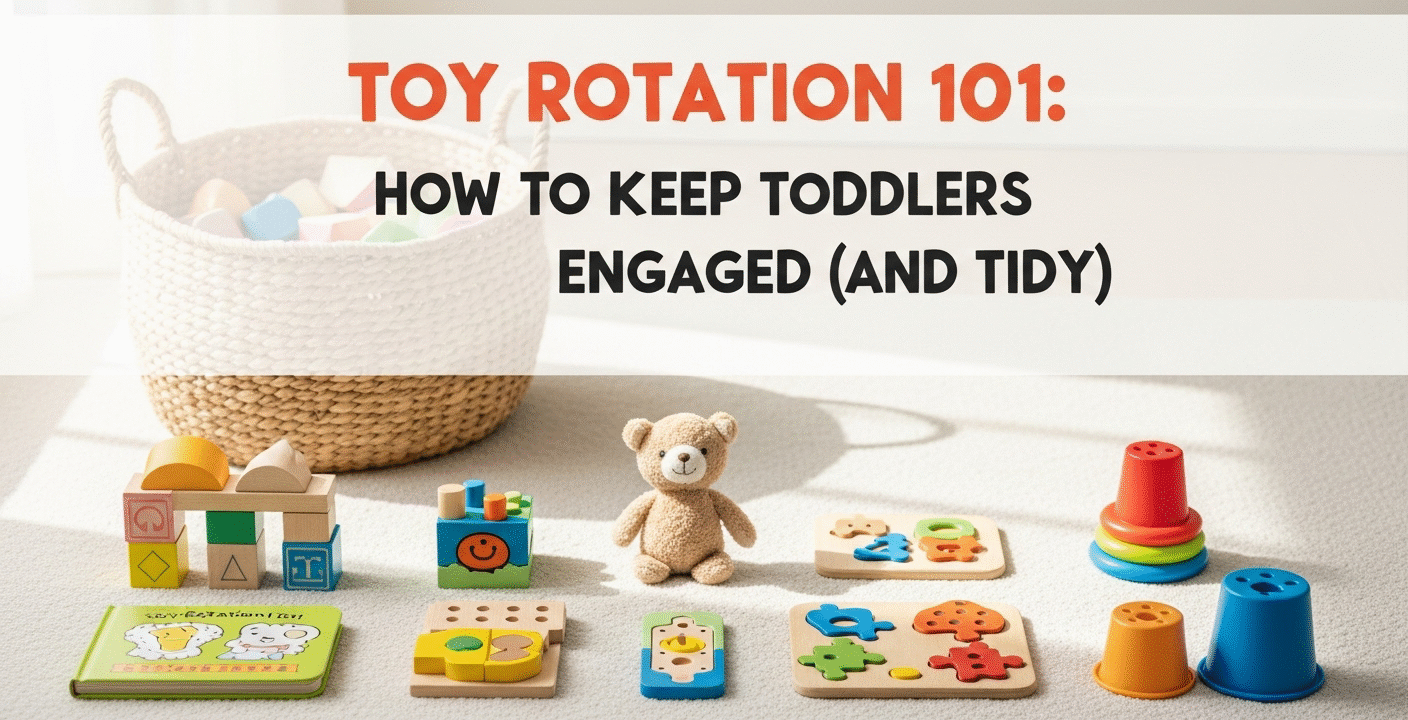
Now, the fun part! From the toys you set aside (or from one of your newly packed bins), select just 8-12 toys.
Arrange these toys invitingly on a low, accessible shelf. Don’t just dump them in a toy box. Place the puzzle on the shelf, put the blocks in a small basket, and set the toy animals up as if they’re waiting to be played with. This beautiful, accessible presentation invites your child to play.
Step 5: Set Your Toy Rotation Schedule
Decide on a frequency that works for you. There is no one-size-fits-all rule.
- Weekly: A good starting point for young toddlers with shorter attention spans.
- Bi-Weekly (Every 2 Weeks): The most common and manageable for many families.
- Monthly: Can also work, especially for older toddlers.
The best time to do the swap is at night after your child is asleep or when they are out of the house. The “Toy Fairy’s” morning visit is part of the excitement!
Pro-Tip: Don’t be too rigid. If your child is deeply engaged in a particular “in” toy (like a complex block city they’ve been working on for days), leave it out for another rotation! The goal is engagement, not a strict schedule.
Your New Reality
Implementing a toy rotation system takes a little effort upfront, but the payoff is immense. You’ll be swapping a chaotic, overwhelming mess for a calm, tidy playroom that fosters deep, imaginative, and independent play. You’ll get to watch your child’s creativity blossom as they find new joy in old toys, and you’ll finally win the battle against clutter.
Disclaimer: This article is for informational purposes only. It is not intended to be a substitute for professional advice. Always supervise young children during play.