

Dreaming of a calmer, more purposeful living room that both you and your child can enjoy? You may have heard about the Montessori method, but feel intimidated by the idea of a total home makeover. The good news is that creating a Montessori at home environment is less about buying expensive materials and more about shifting your perspective.
The core of the method is creating a prepared environment—a space that is orderly, accessible, and designed to foster independent play and curiosity. Your living room, often the heart of the home, is the perfect place to start.
Here are five simple, high-impact swaps you can make to transform your space into a more peaceful, Montessori living room.
1. Swap: The Giant Toy Box
For: Low-Level Shelving
That bottomless toy box might seem like an easy cleanup solution, but it’s often a source of overstimulation and frustration for a child. When toys are jumbled together, children can’t easily see their choices, and items are often forgotten or broken.
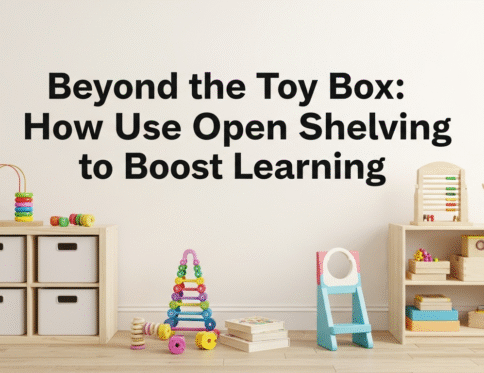
The Montessori Swap: Implement low-level shelving.
- Why it works: Open, accessible shelves allow you to display a curated selection of toys and activities. This visual clarity helps your child make a conscious choice, focus on one activity at a time, and—crucially—know exactly where to return the item when they are finished. This is the foundation of order and simplicity.
- Pro Tip: Use a system of “toy rotation.” Keep most toys in storage and swap out the 8-10 items on the shelf every week or two to maintain your child’s interest.
2. Swap: The “Off-Limits” Coffee Table
For: Child-Sized Furniture
Many living rooms are designed entirely for adults, which can leave a child feeling like a visitor in their own home. They may struggle to use adult-sized furniture, leading to frustration or a lack of engagement.
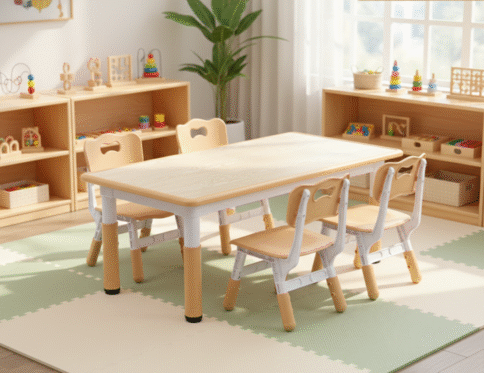
The Montessori Swap: Add a small, child-sized furniture set (like a weaning table and chair).
- Why it works: Providing furniture that is proportionate to their body gives your child a sense of belonging and respect. This “workstation” is theirs. It becomes the designated spot for practical life activities like puzzles, drawing, or even having a snack. This simple addition makes the space truly shared and is a key step for Montessori at home.
3. Swap: Cluttered Bins
For: Purposeful Activity Trays
Similar to the toy box, bins filled with mixed-up “stuff” (like markers, blocks, and figurines all in one) create chaos.
The Montessori Swap: Organize single activities onto small, accessible trays.
- Why it works: A tray defines the workspace. One tray might hold a simple 3-piece puzzle, another might have playdough and a cookie cutter, and a third could hold paper and a few crayons. This system helps your child understand the concept of a “work cycle”—they take the tray, complete the activity, and put the tray back, ready for the next person. It’s a brilliant way to support the prepared environment.
4. Swap: Flashing, Electronic Toys
For: Simple, Natural & Accessible Toys
Battery-operated toys that sing and flash often do the “work” for the child, promoting passive entertainment rather than active engagement.
The Montessori Swap: Prioritize simple, open-ended, and accessible toys.
- Why it works: Toys made from natural materials (like wood or fabric) provide rich sensory feedback. Open-ended items like building blocks, simple puzzles, realistic animal figurines, or art supplies require imagination and problem-solving. This fosters deep concentration and supports child-led learning by allowing the child to be the leader of their own play.
5. Swap: High, Adult-Centric Decor
For: Accessible Art & Mirrors
Take a look at your living room from your child’s height. Are the walls blank? Is all the art and family photos hung at an adult’s eye level?
The Montessori Swap: Hang accessible art and a low-level mirror.
- Why it works: This simple change communicates to your child that this is their space, too. A non-distorting acrylic mirror hung low on the wall allows them to observe their own movements and expressions. Hanging a few framed prints of beautiful art or realistic photos (of family, nature, or animals) at their eye level fosters an appreciation for beauty and respects their presence in the room. This aligns perfectly with core Montessori principles.
A Journey, Not a Destination
Transforming your living room doesn’t have to happen overnight. By making these five simple swaps, you are not just tidying up; you are building a prepared environment that supports your child’s natural development. You are creating a space that encourages focus, independence, and a lifelong love of child-led learning.
Disclaimer: This article is for informational purposes only and does not constitute professional advice. All families and children are unique, and you should always consider your own child’s individual needs and safety when making changes to your home environment.