


Ever looked at your small balcony, tiny patio, or limited yard and wished it could be more than just a concrete slab? What if you could transform that tiny area into a rich, immersive oasis that calms your mind and delights your senses? It’s not only possible, but it’s also a deeply rewarding project. This guide on How to Create an Outdoor “Sensory Garden” in a Small Space will show you exactly how.
You don’t need acres of land to build a garden that offers a powerful outdoor sensory experience. You just need a little planning and the right selection of plants and elements.
🌿 What is a Sensory Garden?
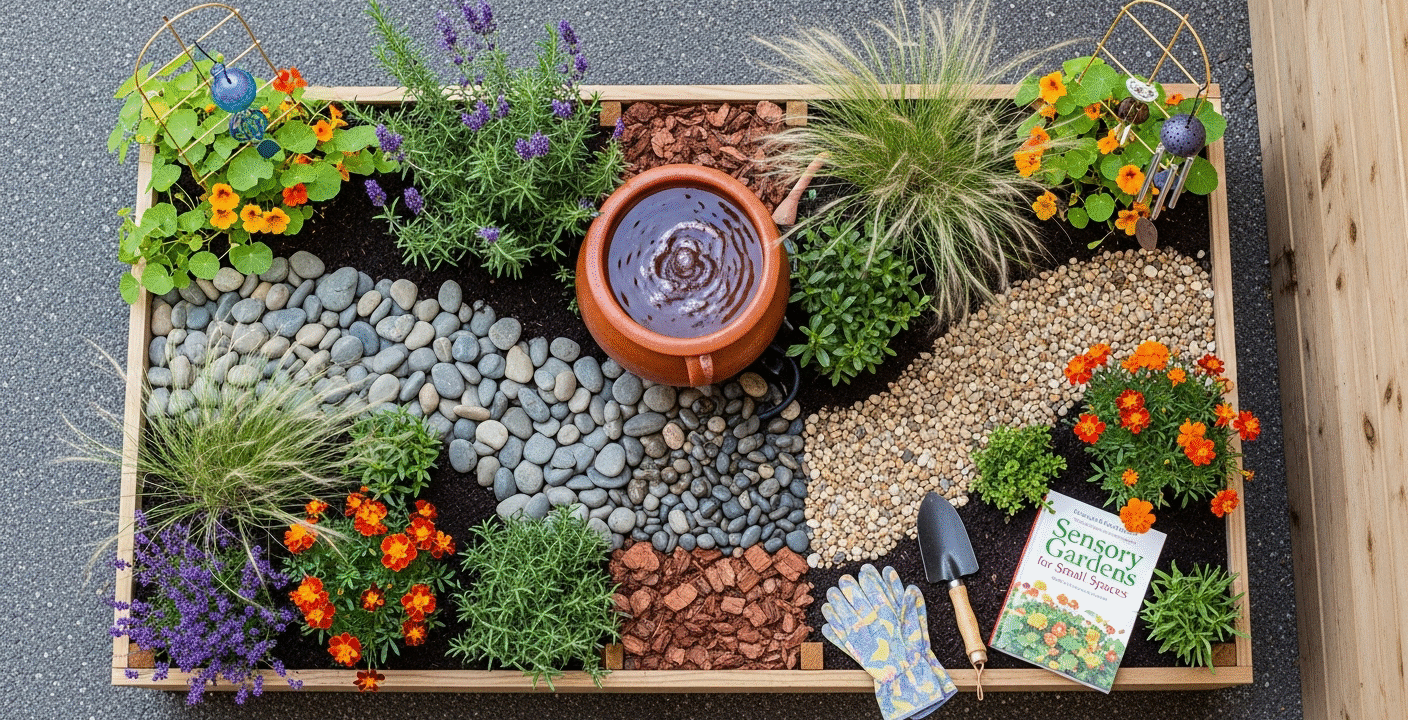
A sensory garden is not just a collection of pretty plants; it’s a small garden design intentionally crafted for engaging the senses. The goal is to create a space that stimulates all five of them: sight, smell, sound, touch, and even taste.
These gardens are incredibly beneficial. They can be a place of mindfulness and stress relief for adults, a fantastic learning environment for children, and a therapeutic space for everyone. The best part? You can achieve all these benefits even in a very limited area.
Planning Your Small Space Solution
The key to a sensory garden in a small space is maximizing every square inch. Forget the traditional garden bed; your best friends are containers, hanging baskets, and vertical space.
- Go Vertical: Use trellises, wall planters, or railing boxes. Vertical gardening is perfect for climbing plants (like jasmine) or for creating a living wall of herbs and lettuces.
- Embrace Containers: Container gardening gives you complete control. You can use a varietyc of pots, troughs, and window boxes to cluster plants together, creating a lush feel. This also allows you. to move plants around to capture the best light.
- Think in Layers: Place taller plants (like ornamental grasses) at the back of a container cluster, with medium-sized sensory plants in the middle and trailing plants (like creeping thyme) spilling over the edges.
Engaging the Five Senses: Plant & Element Ideas
This is the fun part! Let’s break down your garden by sense. You don’t need to include every single idea—even one or two elements for each sense will create a stunning effect.
1. Sight: Vibrant Colors and Forms
The visual aspect is often the easiest to achieve. Look for:
- Vibrant Colors: Choose flowers with bold, contrasting colors. Think bright marigolds, deep purple petunias, or the stunning multi-colored stems of ‘Bright Lights’ Swiss Chard.
- Interesting Shapes: Include plants with unique foliage, like the intricate patterns on a Coleus leaf or the architectural shape of a small succulent.
- Movement: Plants that move gently in the breeze, like a small ornamental grass (e.g., Japanese Sedge), add a dynamic visual element.
2. Smell: Fragrance and Aromas
Scent is powerfully linked to memory and mood. Plant aromatic herbs and flowers where you can easily brush against them, releasing their fragrance.
- Lavender: A classic for a reason. Its calming scent is perfect for a relaxation-focused small balcony garden.
- Mint: Very easy to grow in a container (and essential to keep it contained!). A simple brush of the leaves releases a refreshing burst of scent.
- Jasmine or Honeysuckle: If you have a trellis, these climbing vines produce intoxicatingly sweet-smelling flowers.
- Rosemary: This hardy herb offers a wonderful, pine-like scent and is great for cooking.
3. Sound: The Music of the Garden
Your small space can be filled with soothing sounds that help drown out city noise.
- Rustling Leaves: As mentioned, ornamental grasses are fantastic for this. Their fine blades create a soft, rustling sound in the wind.
- Wind Chimes: A small, well-tuned bamboo or metal wind chime can add a delicate, meditative sound.
- Water Feature: You don’t need a pond. A small tabletop fountain provides the gentle, trickling sound of water, which is incredibly relaxing.
4. Touch: A Mix of Textures
This is one of the most overlooked sensory garden ideas. Adding tactile plants creates an interactive experience.
- Soft & Fuzzy: Lamb’s Ear (Stachys byzantina) is a must-have. Its leaves are thick, soft, and velvety-gray.
- Spiky & Firm: Succulents like Echeveria or Sempervivum (Hens and Chicks) offer firm, waxy, and interestingly shaped leaves.
- Fine & Feathery: The foliage of ferns or dill provides a delicate, soft texture.
- Rough & Bumpy: A potted conifer or the rough bark of a small rosemary stem adds contrast.
5. Taste: The Edible Bonus
Why not make your garden productive? A DIY sensory garden is the perfect place to grow small, edible treats.
- Herbs: Basil, parsley, chives, and the aromatic herbs mentioned earlier (mint, rosemary) are perfect for container gardening.
- Small Fruits: An Alpine Strawberry plant can produce tiny, delicious berries all summer long in a hanging basket.
- Vegetables: A cherry tomato plant in a large pot or a “cut-and-come-again” lettuce mix can provide fresh additions to your meals.
Putting It All Together
You now have the ideas, so let’s assemble them. Start small. Choose one or two plants for each sense. Arrange your pots in a cluster to create a mini-ecosystem. Place the tactile plants and aromatic herbs at the front, where they are easy to reach. Situate your wind chime or water feature where it can catch a breeze or be easily seen.
This guide on How to Create an Outdoor “Sensory Garden” in a Small Space proves that you don’t need a large yard to create a truly special place. By engaging the senses, your small balcony or patio can become your favorite escape.
Disclaimer: This article is for informational purposes only. Please consult with a professional horticulturist or gardening expert for advice specific to your local climate and conditions. Always ensure pots and structures are safely secured, especially on balconies.