

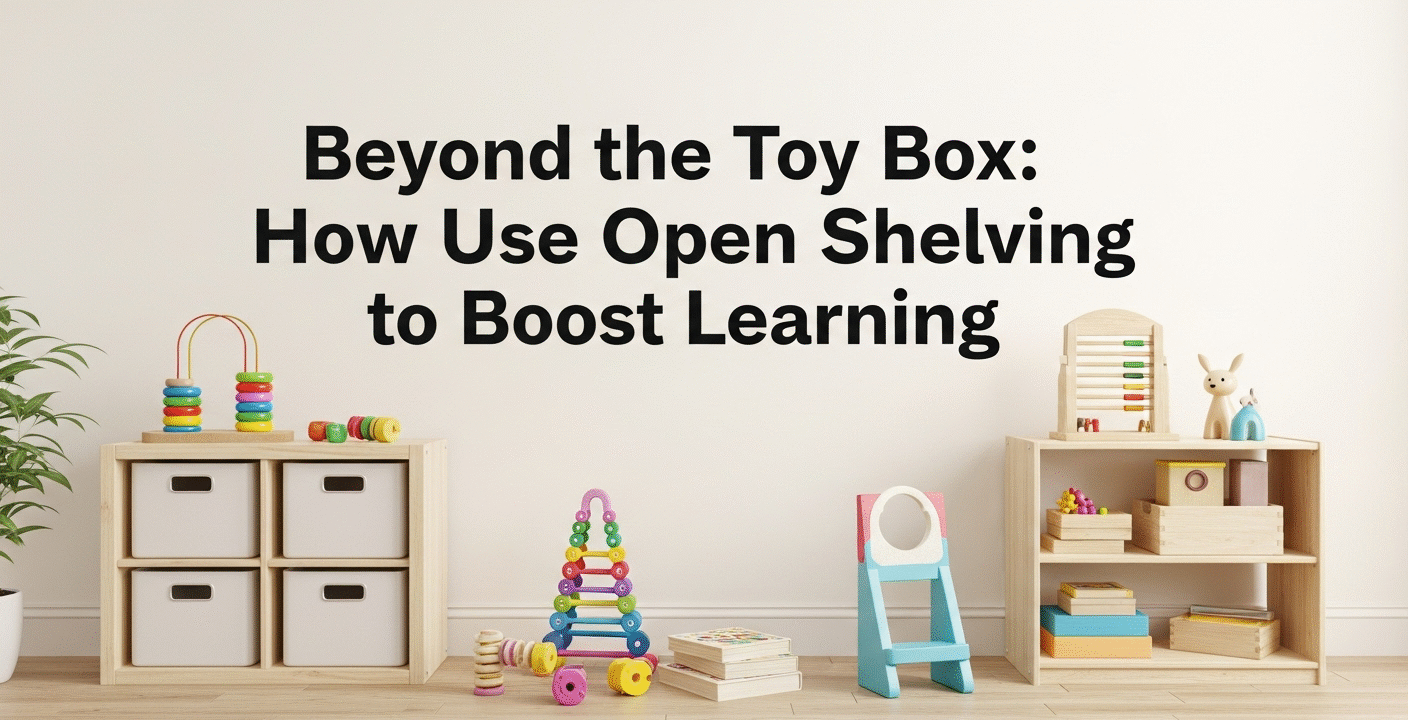

Remember the classic toy box? A deep, cavernous bin where beloved toys go to be forgotten, crushed, or lost in a chaotic jumble. While it might seem like a quick way to tidy up, the toy box is often where active play goes to die. If you’re tired of the “I’m bored” complaints despite a room full of toys, the solution might not be more toys, but a new way of presenting them. It’s time to explore open shelving to boost learning.
This simple shift in playroom organization can fundamentally change how your child interacts with their environment, turning a cluttered room into an active, engaging learning environment.
What’s Wrong with the Toy Box?
The traditional toy box operates on an “out of sight, out of mind” principle. This creates several problems for child development:
- Overwhelm: A child digs and dumps, creating a massive, overstimulating pile. They can’t decide what to play with and quickly feel overwhelmed.
- Forgotten Toys: Toys at the bottom are rarely seen, leading to wasted resources and missed play opportunities.
- Dependence: The child often needs an adult’s help to find a specific item, stifling their autonomy.
- Lack of Respect: When toys are jumbled together, they are more likely to be broken. It doesn’t teach children to value their belongings.
The Power of Open Shelving in Child Development
Switching to low, accessible, open shelving isn’t just an aesthetic choice; it’s a developmental one. This Montessori-inspired approach is built on respect for the child and their ability to learn.
1. Promotes Independence and Decision-Making
When toys are displayed clearly on shelves, a child can scan their options and make a conscious choice. This visual accessibility is key. They can retrieve the toy themselves, play with it, and—crucially—know exactly where it goes when they are finished. This fosters a powerful senseof autonomy and competence, which is essential for promoting independence.
2. Encourages Deep Focus and Open-Ended Play
An organized play space with limited, well-chosen items invites deeper engagement. Instead of flitting between dozens of options in a pile, a child is more likely to select a single activity (like a set of blocks or a puzzle) and engage with it for a longer period. This builds their concentration and encourages open-ended play, where they, not the toy, direct the narrative.
3. Builds Responsibility and Organization Skills
The rule is simple: “A place for everything, and everything in its place.” Open shelves make this rule concrete. Children learn to respect their materials and take pride in their organized play space. Cleaning up is no longer a daunting punishment but a simple, logical part of the play cycle. This is a foundational life skill that serves them well far beyond the playroom.
How to Implement Open Shelving to Boost Learning: A Practical Guide
Ready to make the switch? Here’s how to do it effectively.
Step 1: Choose the Right Shelving
Look for units that are low, sturdy, and safe. A child should be able to see and reach everything without climbing. Simple cube shelves or low bookcases work perfectly.
Step 2: Curate and Categorize
This is the most important step in your new playroom organization strategy. Do not simply dump the toy box contents onto the shelves.
- Group Like Items: Keep all puzzle pieces in one tray, all building blocks in one basket, and all art supplies in another.
- Use Trays and Baskets: Use low-sided baskets or wooden trays to contain items with multiple parts. This defines the “activity” and makes it easy to carry to a mat or table.
- Less is More: A crowded shelf is just as overwhelming as a toy box. Leave space between items. This signals that each item is valuable and worthy of attention.
Step 3: Master the Toy Rotation
You don’t need to get rid of your other toys. You just need to implement a toy rotation. This is the secret weapon for using open shelving to boost learning.
Store the majority of your toys in bins, hidden away in a closet. Every week or two, “shop” your stash and swap out the items on the shelves. This “new” selection keeps your child engaged, prevents boredom, and allows you to tailor the environment to their current interests and developmental needs.
Step 4: Go Beyond Toys
Your shelves aren’t just for toys. Use them to create a rich learning environment that reflects the real world.
- Books: Use a forward-facing sling or shelf to display book covers.
- Art Supplies: A tray with paper, crayons, and safety scissors.
- Nature: A small basket with interesting rocks, pinecones, or leaves.
- Real-Life Tools: A small dusting brush and pan or a child-safe watering can for plants.
A Simple Change for Big Results
Implementing open shelving to boost learning is more than an organization hack; it’s a parenting philosophy. It communicates to your child that you trust them, respect their choices, and believe in their ability to engage in meaningful play. By trading the toy box for a thoughtful, organized play space, you are providing the foundation for promoting independence, focus, and a lifelong love of learning.
Disclaimer: This article is for informational purposes only and does not constitute professional advice. Parents and caregivers should always supervise children and choose age-appropriate materials and furniture to ensure a safe environment.