

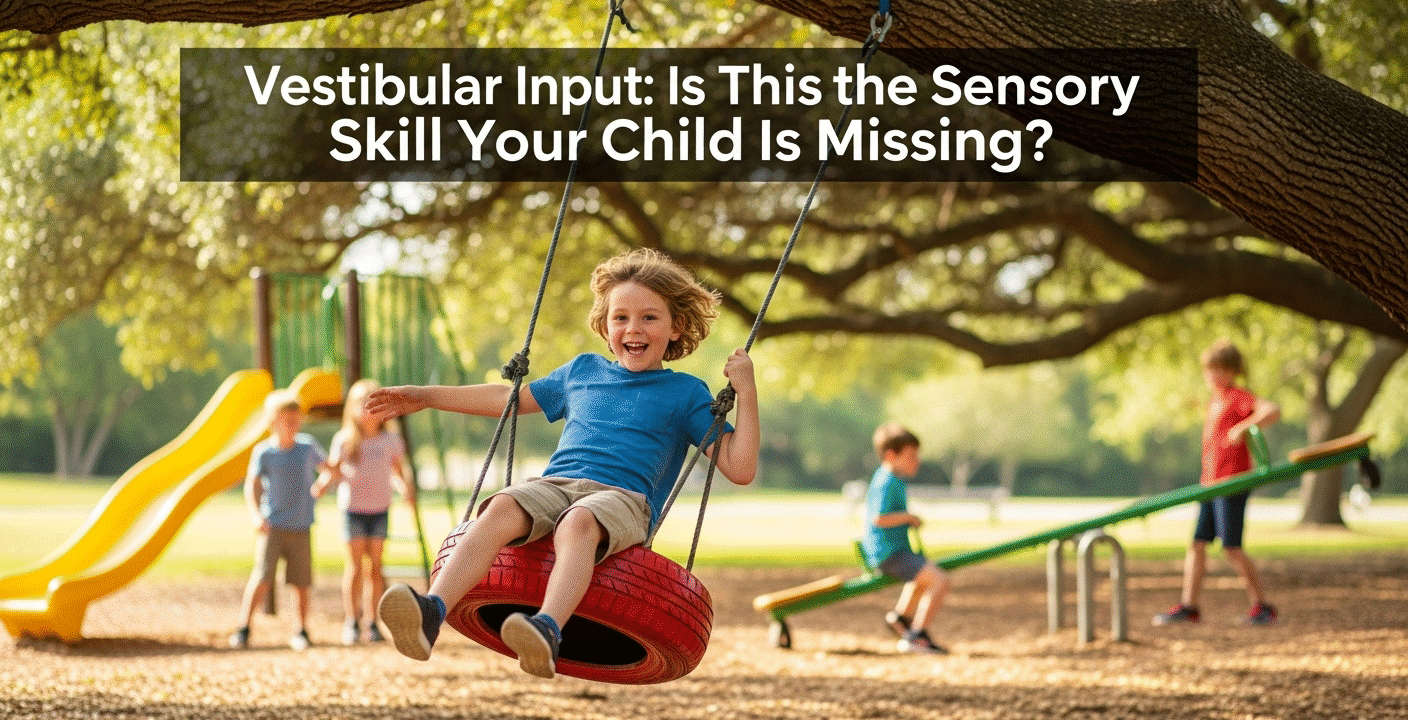

Does your child seem to be in constant motion—spinning, jumping, and climbing on everything? Or, conversely, are they overly cautious, terrified of the playground swings, and prone to car sickness? These seemingly opposite behaviors might be linked to the same hidden “sixth sense”: the vestibular system and how your child processes vestibular input.
Many parents are familiar with the five basic senses. But sensory processing involves much more. The vestibular sense, often overlooked, is a crucial sensory skill for development. If your child is struggling, it’s not a matter of behavior; it might be a sign of underlying sensory challenges.
This post will explore what vestibular input is, why it’s vital for child development, and how you can help your child get the “just right” amount they need.
What Is the Vestibular System?
Think of the vestibular system as your body’s internal GPS. Located in the inner ear, it’s responsible for detecting movement, gravity, and changes in head position. It answers the constant, subconscious questions: “Where am I in space?” “Am I moving or still?” “Am I upright or upside down?”
This system is the foundation for our sense of balance and movement. Every time you nod your head, stand on one foot, or even just sit upright in a chair, your vestibular system is hard at work.
Why Vestibular Input Matters for Development
When this system works well, it forms the basis for many other skills. Proper sensory integration of vestibular input is critical for:
- Balance and Coordination: This is the most obvious one. It allows kids to ride a bike, play sports, and even just walk down a hallway without stumbling.
- Muscle Tone and Posture: The vestibular system helps tell muscles how much to “turn on” to keep us from collapsing in a heap. A child who slouches constantly may be struggling with this.
- Focus and Attention: This one surprises many parents. The vestibular system has a strong link to the parts of the brain responsible for alertness. Proper vestibular input can be organizing and calming, allowing a child to sit still and learn.
- Visual Skills: The system helps stabilize the eyes while the head is moving (think of reading words on a page while slightly shifting in your chair).
- Emotional Regulation: A disorganized vestibular system can leave a child feeling insecure, anxious, or overwhelmed, leading to meltdowns or hyperactivity.
Signs of a Vestibular Processing Challenge
Children who struggle with vestibular input often fall into two camps.
1. The “Under-Responsive” or Sensory Seeker
This child’s brain isn’t getting enough vestibular information, so they actively seek out intense experiences to feel regulated. This is often called sensory seeking.
- Craves spinning, swinging, and roughhousing.
- Can’t sit still; fidgets, rocks, or paces.
- Loves being tossed in the air or jumping on furniture.
- Is often described as a “daredevil” with no apparent fear of heights.
- May have trouble with tasks requiring stillness and focus.
2. The “Over-Responsive” or Sensory Avoider
This child’s brain is overwhelmed by vestibular information. Even small movements can feel intense and threatening. This is a form of sensory avoiding.
- Is fearful of swings, slides, or carousels.
- Dislikes having their head tilted (like during hair washing).
- Gets motion sick very easily.
- May seem clumsy or uncoordinated.
- Prefers quiet, sedentary activities and avoids the playground.
How to Provide Healthy Vestibular Input
The great news is that you can support this sensory skill through play! The goal is to provide regular, safe doses of vestibular input throughout the day.
Here are some powerful sensory integration activities:
- Swinging: Both back-and-forth (linear) and rotating (rotary) swinging are fantastic.
- Spinning: Have your child spin in an office chair or play “Ring Around the Rosie.” Important: Always follow spinning with a few big jumps or by pushing against a wall. This helps organize the brain and prevent it from getting “stuck” in a spin cycle.
- Jumping: Use a mini-trampoline, jump rope, or simply play hopscotch.
- Rolling: Log-roll down a grassy hill or do somersaults on the carpet.
- Balancing: Walk on a curb (with a hand to hold), use a balance beam, or try standing on one foot.
- “Heavy Work”: Activities like pushing a heavy laundry basket or carrying groceries provide input that helps ground and organize the vestibular system.
When to Seek Professional Help
While these activities can help all children, if your child’s sensory challenges are significantly impacting their daily life, safety, or learning, it’s wise to consult a professional.
An occupational therapy (OT) assessment is the gold standard. An OT can identify the specific type of sensory processing difficulty your child has and create a “sensory diet” of activities perfectly tailored to their unique needs.
Understanding vestibular input can be a game-changer. It reframes “bad behavior” as a “sensory need” and gives you the tools to help your child feel more balanced, secure, and ready to learn.
Disclaimer: This article is for informational purposes only. It is not intended to be a substitute for professional medical advice, diagnosis, or treatment. Always seek the advice of your physician or another qualified health provider, such as an occupational therapist, with any questions you may have regarding a medical condition or your child’s development.