

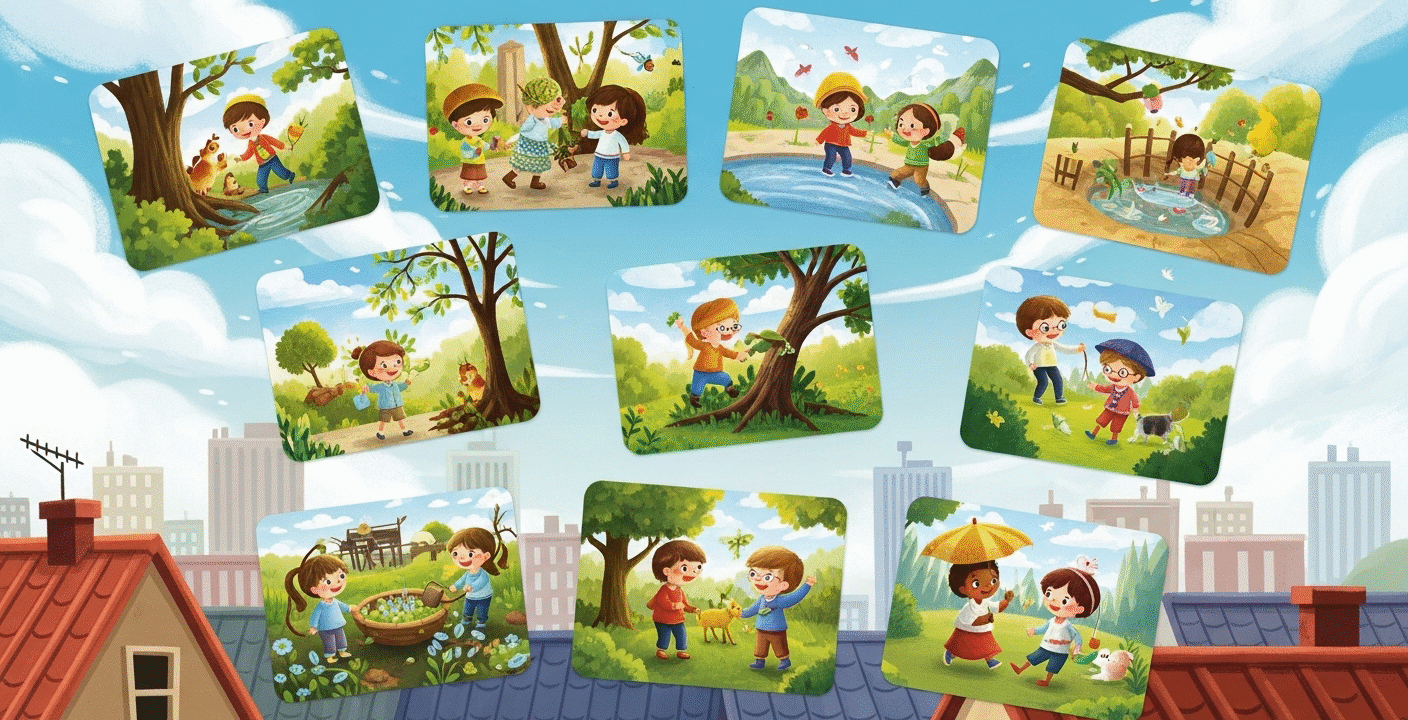

Living in an apartment or a home with no backyard can feel like a disadvantage for parents. You want your children to run, dig in the dirt, and connect with the natural world, but your urban environment seems to offer more concrete than chlorophyll. The good news? Connecting kids with nature doesn’t require a sprawling lawn. It’s a mindset, not a location. That’s where urban nature play comes in.
This post will explore nine creative, simple, and effective nature play ideas that you can implement today, proving that a rich connection to nature is possible anywhere.
Why is Urban Nature Play So Important?
Before we dive into the “how,” let’s touch on the “why.” Engaging in urban nature play is crucial for a child’s development. It stimulates their senses, promotes scientific curiosity (what is this bug?), improves mental well-being, and fosters a sense of environmental stewardship. When children are involved in connecting kids with nature, even on a small scale, they learn to care about the world around them.
9 Ideas for Urban Nature Play (Even Without a Yard)
1. Create a Balcony or Windowsill Garden
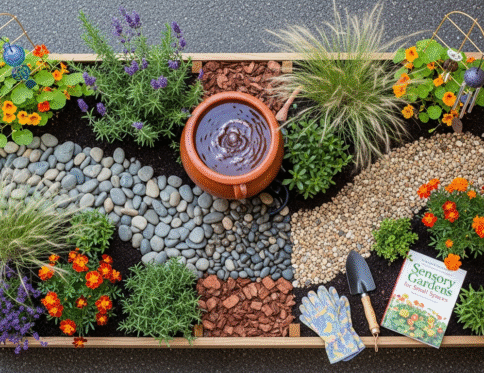
You don’t need an acre to be a farmer. A few pots on a windowsill or a small container garden on a balcony can be a magical experience. Balcony gardening for kids teaches responsibility, patience, and the science of where food comes in.
- Try This: Start with easy-to-grow items like mint, cherry tomatoes, or hardy flowers like marigolds. Let your child do the digging, watering, and (best of all) the harvesting.
2. Go on a Neighborhood Nature Scavenger Hunt
Nature exploration isn’t just for forests. Your neighborhood sidewalk is a tiny ecosystem. Create a checklist of things to find: a smooth rock, a “Y” shaped twig, a feather, three different types of leaves, a pill bug, a dandelion. This transforms a simple walk into an adventure.
3. Build an Indoor Nature Tray
This is one of the best apartment nature activities for rainy days. Use a shallow bin or a baking tray and fill it with natural items you’ve collected on your walks (pinecones, pebbles, leaves, acorns). Add some scoops or toy animals, and you have a sensory-rich, indoor nature play station that fosters imaginative play.
4. Sprout Seeds in a Jar
This classic science experiment never gets old. All you need is a glass jar, a paper towel, and some dried beans or lentils from your pantry. Dampen the paper towel, line the jar with it, and wedge the beans between the paper and the glass. Your child can watch the roots and sprouts emerge, a visible lesson in botany.
5. Become Local Park “Experts”
This may seem obvious, but many city dwellers underutilize their local parks. Go beyond the playground. Make it a mission to visit every park within a two-mile radius. Explore the “wild” edges, find the biggest tree, or lay on a blanket and watch the clouds. Treating your local park as your “backyard” is a key part of urban nature play.
6. Start a (Tiny) Worm Composting Bin
For the brave and curious, an indoor worm composting bin (vermicomposting) is an incredible, hands-on science lesson. It’s surprisingly low-odor, fits under a sink, and teaches kids about the food cycle and decomposition. They will be fascinated by the worms and the “black gold” compost they create.
7. Birdwatch from Your Window
The urban environment is full of birds. Hang a simple, window-mounted bird feeder or just make a habit of observing the birds that land on nearby trees or ledges. Grab a simple bird identification guide from the library (or use an app) and start a family “life list” of the birds you spot.
8. Press Flowers and Leaves
Collecting interesting leaves and flowers on a walk is one of the classic nature play ideas. Take those treasures home, press them between the pages of a heavy book (with wax paper to protect the pages), and wait a week. You can use the dried, pressed flora to make bookmarks, cards, or a nature-themed collage.
9. Bring the Outside In: Nature Crafts
Indoor nature play can be as simple as crafting with natural objects. Use sticks to build a mini-fort, paint pebbles to look like bugs or story characters, or create “leaf people” by gluing leaves onto paper and drawing on faces. These no backyard solutions merge creativity with a tangible connection to the earth.
Embracing Nature Wherever You Are
You don’t need a white picket fence to raise a child who loves and appreciates nature. Urban nature play is about being intentional and creative. It’s about finding the wild in the windowsill, the sidewalk crack, and the local park. By fostering these small connections, you are giving your child a gift that will last a lifetime.
Disclaimer: This article is for informational purposes only. Always supervise children during play and ensure that all activities, especially those involving small objects or outdoor exploration, are safe and age-appropriate.