

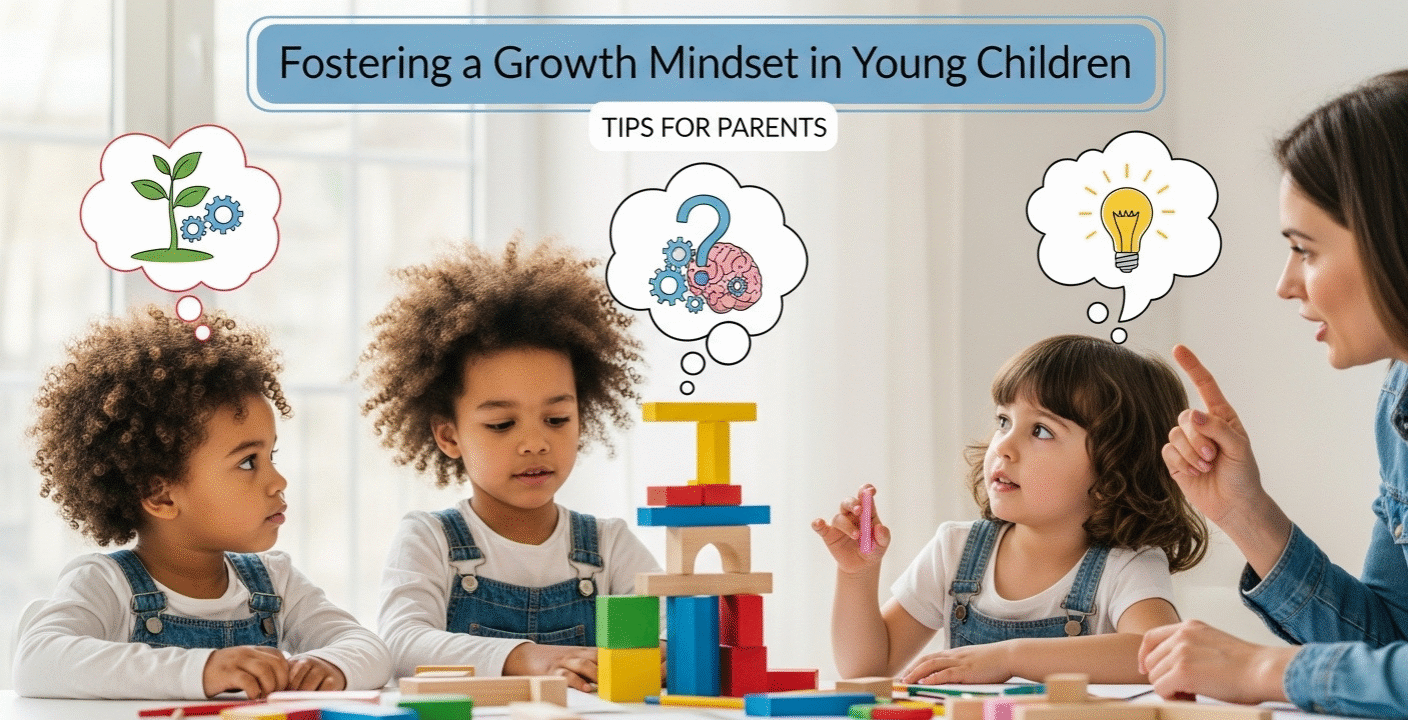

As parents, we’ve all been there. Your child proudly presents a drawing, and your first instinct is to say, “You’re such a great artist!” While meant as a loving compliment, this kind of praise can unintentionally set the stage for a “fixed mindset.” The journey of fostering a growth mindset in young children is one of the most powerful gifts we can give them, equipping them with the resilience to navigate life’s inevitable challenges.
This guide moves beyond simple definitions to provide actionable, experience-based parenting tips for mindset development. In a world where search engines prioritize content with real, lived experience, our goal is to offer authentic strategies that genuinely help you raise confident and resilient children. This is a foundational skill that will serve them far beyond the classroom.
Fixed Mindset vs. Growth Mindset: What’s the Difference?
Understanding the core concepts is the first step. The theory, pioneered by psychologist Carol Dweck, identifies two core beliefs about intelligence and ability. Creating content that addresses the user’s query thoroughly is key to a problem-solving focus.
- Fixed Mindset: The belief that qualities like intelligence or talent are innate and unchangeable. Children with a fixed mindset may avoid challenges for fear of failure, as they see it as a reflection of their limited ability.
- Growth Mindset: The belief that abilities can be developed through dedication and hard work. Children with a growth mindset see challenges as opportunities to learn and grow. They understand that effort is the path to mastery.
This simple shift in perspective is the key to fostering a growth mindset in young children.
| Fixed Mindset Belief | Growth Mindset Belief |
|---|---|
| “I’m either good at it or I’m not.” | “I can learn to do anything I want.” |
| “I give up when it’s too hard.” | “Challenges help me to grow.” |
| “My abilities are unchanging.” | “Effort and practice make me stronger.” |
| “I don’t like to be challenged.” | “I’m inspired by the success of others.” |
The Power of Language: Your Words Shape Their Mindset
The single most effective tool you have is your language. The way you praise, respond to setbacks, and talk about challenges directly influences your child’s developing mindset.
- Praise the Process, Not the Person: This is the golden rule. Instead of saying, “You’re so smart,” focus on their effort, strategies, and progress.
- Instead of: “You got an A, you’re a genius!”
- Try: “You studied so hard for that test and your effort really paid off! I’m proud of how you prepared.”
- Instead of: “You’re a natural at soccer!”
- Try: “I saw you practicing your dribbling all week, and it really showed in the game today.”
- Introduce “The Power of Yet”: This simple, three-letter word is transformative. When your child says, “I can’t do it,” you can add, “…yet.” This reframes the statement from a permanent failure to a temporary state. It implies that with more practice and effort, they will succeed. This is a core principle in building a growth mindset for kids.
- Frame Challenges as Opportunities: When your child encounters a difficult task, don’t rush to save them. Frame it as a fun puzzle or a chance to “grow their brain.”
- Try: “Ooh, this looks like a tricky one! Your brain is going to get such a great workout!”
- Try: “I love how you keep trying different ways to solve that puzzle. That’s how we learn!”
Creating a Growth Mindset Environment at Home
Your actions and the environment you create are just as important as your words. To truly succeed in fostering a growth mindset in young children, it must be a part of your family culture.
- Model a Growth Mindset Yourself: Let your children see you struggle and persevere. Talk out loud about your own learning process.
- Say things like: “I’m not sure how to fix this leaky faucet, but I’m going to watch a few videos and learn. It’s a good challenge.” or “I tried a new recipe and it didn’t turn out well. I’ll try it again tomorrow and figure out what I did wrong.”
- Embrace Mistakes as Learning Tools: In a growth mindset home, mistakes are not just accepted; they’re expected and even celebrated as proof of effort. When a glass of milk spills, an overreaction creates fear. A calm response (“Oops, let’s get a towel. Spills happen!”) teaches that mistakes are fixable and not a reason for shame.
- Share Stories of Effort and Resilience: Talk about famous people your child admires (athletes, scientists, artists) and emphasize the years of practice and failures they overcame to succeed. This helps them understand that success isn’t magic; it’s the result of persistent effort.
Final Thoughts: The Journey of a Thousand Steps
Fostering a growth mindset in young children isn’t an overnight fix; it’s an ongoing conversation and a way of life. It requires patience and consistency. By choosing your words carefully, modeling resilience, and celebrating the learning process, you provide your child with an internal voice that will encourage them to take on challenges, learn from setbacks, and grow into confident, capable, and happy individuals.
Disclaimer: This blog post is for informational purposes only and is based on parenting experiences and well-established psychological concepts. It does not constitute professional psychological advice. For specific concerns about your child’s development or well-being, please consult with a qualified child psychologist, pediatrician, or educational professional. This is especially important for topics that can impact a person’s well-being, which are known as “Your Money or Your Life” (YMYL) topics and require high standards of E-E-A-T.