

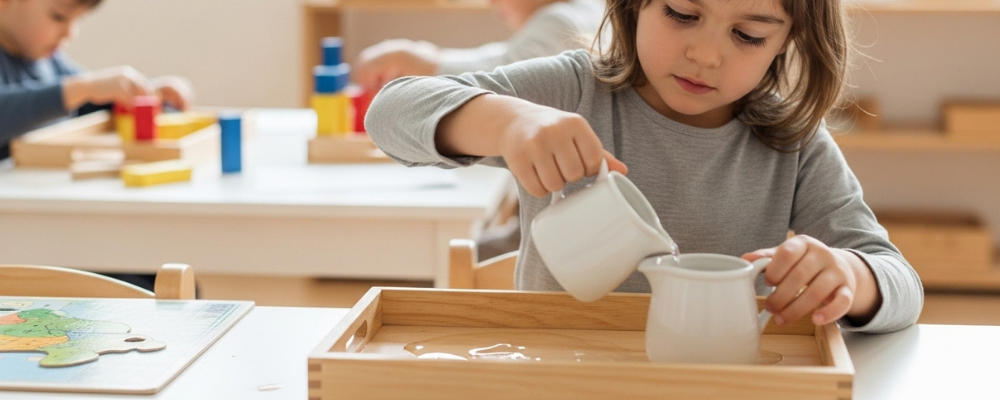

As parents and educators, we share a common goal: to raise children who are not just knowledgeable, but also confident, curious, and self-reliant. In the search for the best approach, the concept of child-led learning often emerges, particularly within the framework of the Montessori method. But what does this philosophy truly entail, and why is it so effective?
From our first-hand experience in Montessori environments, we see daily how empowering children to direct their own educational journey yields profound results. This isn’t about leaving children to their own devices; it’s about a deliberate, respectful partnership between the child, the teacher, and the environment. Here are five crucial insights from Montessori experts on why child-led learning is a cornerstone of developing capable and joyful learners.
Insight 1: It Ignites Intrinsic Motivation
One of the most powerful outcomes of child-led learning is the cultivation of intrinsic motivation. When a child has the freedom to choose an activity based on their own curiosity, the drive to learn comes from within, not from external rewards or pressure. We observe that a child who independently selects a puzzle or a pouring exercise will work with a level of focus that is rarely achieved through assignment.
This approach honors the concept of the “absorbent mind,” a term Dr. Maria Montessori used to describe the young child’s effortless ability to soak up knowledge from their surroundings. By allowing a child to follow their interests, we tap directly into this natural state, making learning a passionate and self-sustaining process.
Insight 2: It Builds Critical Executive Function Skills
Modern education places a heavy emphasis on executive function—the set of mental skills that include working memory, flexible thinking, and self-control. Child-led learning is a natural incubator for these abilities. Consider the process:
- Planning: The child must first decide what they want to accomplish.
- Sequencing: They must then gather the necessary materials and follow the steps of the activity.
- Problem-Solving: If they encounter a challenge, they are encouraged to find a solution independently before seeking help.
- Completion: They learn to see a task through from start to finish, including cleaning up and returning materials to their proper place.
This cycle, repeated daily with different activities, is a powerful workout for the developing brain, laying the foundation for future academic and life success.
Insight 3: It Respects Unique Developmental Timelines
No two children are the same. They learn to walk, talk, and read on their own individual schedules. The Montessori method deeply respects these differences by allowing for self-directed learning. A rigid, one-size-fits-all curriculum can leave some children bored and others frustrated.
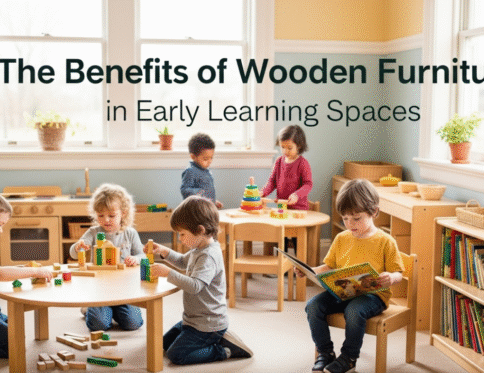
In a child-led learning environment, a child who is fascinated by numbers can spend hours with counting beads, while another who is developing fine motor skills can focus on practical life skills like buttoning or zipping. This respects their individual developmental needs, ensuring that each child is appropriately challenged and can experience mastery at their own pace, which is fundamental to building self-esteem.
Insight 4: The Teacher’s Role Shifts to Guide and Observer
A common misconception about child-led learning is that the teacher is passive. In reality, the role is incredibly active and requires deep expertise. The Montessori teacher is a master observer and a meticulous preparer. Their primary roles are:
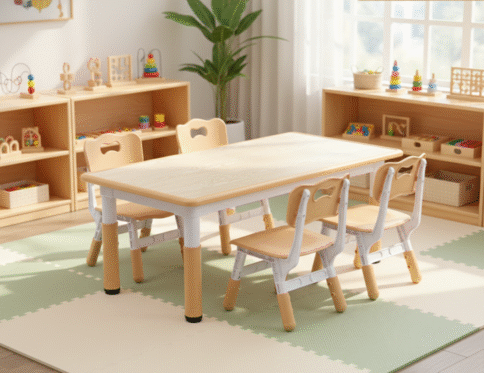
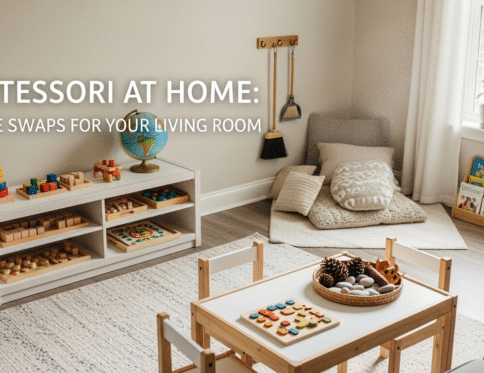
- To Prepare the Environment: The classroom is carefully curated with accessible, engaging, and often self-correcting materials. This is the “prepared environment”—a space where children can learn independently and safely.
- To Demonstrate, Not Lecture: The teacher shows the child how to use materials with precise, deliberate movements and then steps back.
- To Observe and Guide: The teacher closely observes each child to understand their needs and interests, presenting new challenges only when the child is ready.
This approach of “following the child” ensures that learning is always relevant and supportive.
Insight 5: It Fosters True Independence and Lifelong Confidence
Ultimately, the goal of education is to prepare a child for life. By fostering independence from a young age, child-led learning equips children with the belief that they are capable and competent. Every time a child masters a task they chose for themselves—whether it’s tying their shoes, successfully completing a map puzzle, or preparing their own snack—they are building a deep-seated sense of self-efficacy.
This confidence, born from real-world accomplishment through hands-on learning, becomes a core part of their personality. These are the children who grow into adults who are not afraid to ask questions, tackle challenges, and continue learning throughout their lives. The work of child-led learning is the work of building capable, confident, and engaged human beings.
Disclaimer: This blog post is for informational purposes only and does not constitute professional educational or developmental advice. Please consult with a qualified expert for any specific concerns regarding your child.