

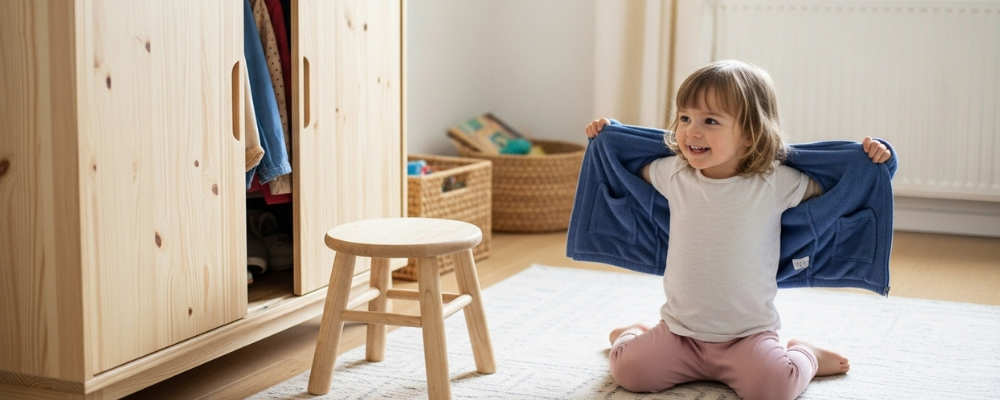

Empowering your child to dress themselves is a significant milestone in their journey toward independence. The Montessori method, with its emphasis on self-directed learning and practical life skills, offers a gentle and effective framework for guiding your little one through this process. By fostering a sense of autonomy and providing the right environment, you can transform the daily routine of getting dressed into a joyful and enriching experience. This guide will walk you through the key principles and practical steps of the Montessori approach to teaching your child the art of self-dressing.
The Philosophy: Fostering Independence and Confidence
At the heart of the Montessori philosophy is the belief that children are capable and eager to learn when given the opportunity. Teaching a child to dress themselves is not merely about putting on clothes; it’s about nurturing their burgeoning sense of self, enhancing their fine motor skills, and building their confidence. When a child masters this practical life skill, they experience a profound sense of accomplishment that fuels their desire for further exploration and learning.
Preparing the Environment for Success
A core tenet of the Montessori method is the prepared environment. This means organizing your child’s space in a way that is accessible and encourages independence.
- A Child-Sized Wardrobe: Invest in a small, low-hanging closet or a set of drawers that your child can easily reach. This allows them to see their clothing options and make their own choices.
- Limited Choices: To avoid overwhelming your child, offer a limited selection of weather-appropriate outfits. Two to three choices are often sufficient for a young child. This respects their desire for autonomy while ensuring they are dressed suitably.
- A Dressing Station: Create a designated “getting dressed” area. A small stool or chair where they can sit to put on socks and shoes, and a low-level mirror, are excellent additions. The mirror allows them to see what they are doing and self-correct.
The Gentle Art of Showing, Not Telling
Montessori education emphasizes demonstration over verbal instruction. When teaching your toddler to dress themselves, use slow, deliberate movements to show them how each piece of clothing is put on.
- Break It Down: Isolate each step of the process. For example, when teaching how to put on pants, first show them how to sit down, then how to hold the waistband, and then how to put one leg in at a time.
- The “Jacket Flip”: A classic Montessori technique for putting on a jacket involves laying the jacket on the floor with the collar facing the child’s feet. The child then bends over, puts their arms in the sleeves, and flips the jacket over their head. It’s a fun and effective method that children love.
- Practice with Dressing Frames: Montessori dressing frames are wonderful tools for practicing specific skills like buttoning, zipping, and snapping. These frames isolate the fastener, allowing the child to master the movement before applying it to their own clothing. You can even create DIY versions at home.
Embracing the Process: Patience and Positive Reinforcement
Learning to dress independently takes time and practice. It’s crucial to be patient and supportive throughout the journey.
- Allow for Mistakes: Your child will inevitably put their shoes on the wrong feet or their shirt on backward. Resist the urge to immediately correct them. Instead, gently ask if they feel comfortable. This encourages self-awareness and problem-solving.
- Celebrate Effort, Not Perfection: Praise their attempts and celebrate their small successes. A simple “You worked so hard to put on your shirt!” can be incredibly encouraging.
- Choose the Right Clothes: Start with easy-to-manage clothing. Look for pants with elastic waistbands, shirts with loose necklines, and shoes with Velcro closures. This sets your child up for success and minimizes frustration.
By adopting a Montessori approach, you are not just teaching your child a practical skill; you are nurturing their independence, confidence, and love for learning. The journey of learning to dress themselves will be filled with moments of discovery and pride, laying a strong foundation for their future development.
Disclaimer: This blog post is for informational purposes only and does not constitute professional advice. Please consult with a qualified expert for any specific concerns.