


In a world filled with screens, the power of tactile, hands-on learning has never been more vital for a child’s development. Sensory play is a cornerstone of early childhood development, allowing children to explore, investigate, and make sense of the world around them. And when it comes to sensory exploration, nothing beats a well-designed sensory bin.
But many parents find themselves stuck in a rut, rotating the same old rice and water bins. To truly spark your child’s curiosity, you need fresh, engaging sensory bin ideas that go beyond the basics. We’re moving past simple fillers and into creating immersive “small worlds” that foster deep, meaningful play.
This guide provides five unique sensory bin ideas designed for today’s preschoolers and toddlers. Grounded in the principle of providing genuine, first-hand experience, these bins are more than just activities; they are invitations to learn. As a certified early childhood educator with over a decade of experience, I’ve seen firsthand how these specific setups can dramatically enhance fine motor skills and cognitive growth.
1. The Frozen Ocean Rescue
Forget a simple water table. The Frozen Ocean Rescue bin adds layers of scientific discovery and problem-solving to water play. This is one of the most engaging toddler activities for a warm day.
What It Teaches: This bin introduces concepts like temperature, melting (a basic state of matter), and cause and effect. It’s also a fantastic tool for developing patience and fine motor control as children work to “rescue” the animals.
How to Create It:
- The Base: A large, shallow bin.
- The Main Event: The day before, freeze a large block of ice inside the bin or in a separate container. Place small plastic ocean animals (fish, whales, octopuses) at various levels within the water as it freezes.
- The Tools: Provide squeeze bottles, droppers, and small pitchers filled with warm (not hot) water. Add a bowl of coarse salt, which helps melt ice.
- The Experience: Encourage your child to use the tools to squirt warm water and sprinkle salt onto the ice block to melt it and “rescue” the trapped sea creatures. Talk about how the ice feels cold and how the warm water is changing it.
[Insert original photo here of a child using a blue-tinted dropper to melt a block of ice containing toy sea animals inside a sensory bin.]
2. The Fizzing Dinosaur Swamp
This prehistoric adventure combines the thrill of dinosaurs with a classic, exciting chemical reaction. It’s one of those preschool activities that feels like a magic trick but is pure science.
What It Teaches: This bin is a fun, safe introduction to basic chemistry (the reaction between baking soda and vinegar). It also encourages imaginative play and storytelling as children create narratives about the dinosaurs in their fizzing, bubbling swamp.
How to Create It:
- The Base: Fill the bottom of your bin with a generous layer of baking soda. Add a few drops of green and brown food coloring and a small amount of water to create a damp, clumpy “swamp floor.”
- The World: Add small plastic dinosaurs, rocks, plastic trees, and twigs to create a prehistoric landscape.
- The Magic: Provide droppers or a small teapot filled with vinegar. Let your child drip the vinegar onto the baking soda base and watch the swamp erupt in a satisfying fizz.
3. The Garden World Construction Site
This is one of my favorite sensory bin ideas because it combines tactile exploration with real-world knowledge. It provides a unique opportunity for hands-on learning about where our food comes from.
What It Teaches: This bin helps develop crucial fine motor skills through scooping, pouring, and “planting.” It also introduces basic botany concepts and can be a great precursor to helping with a real garden.
How to Create It:
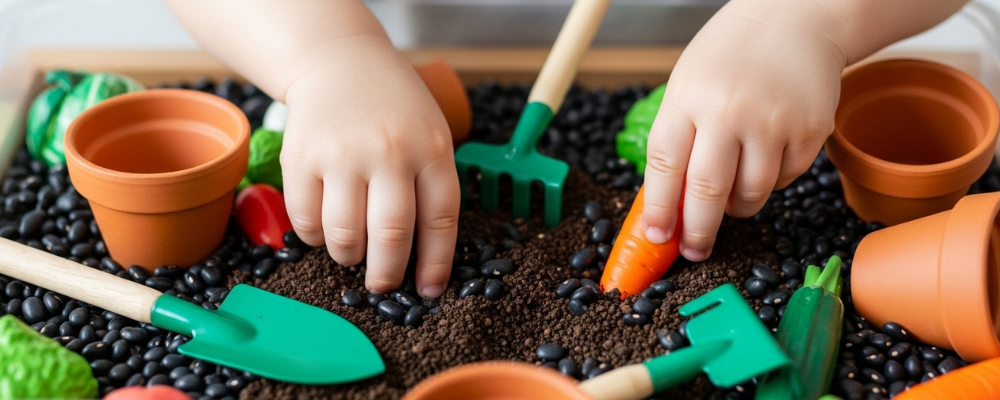
- The Base: Use dry black beans or coffee grounds as “soil.”
- The Materials: Add small, realistic-looking toy vegetables (carrots, lettuce, radishes), miniature terracotta pots, and small gardening tools like a child-safe trowel and rake.
- The Activity: Show your child how to scoop the “soil” into the pots and “plant” the vegetables. You can expand on this by having them sort the vegetables by color or type before planting. This bin is a perfect example of providing value that cannot be summarized by a screen—it’s pure, authentic experience.
4. The Magnetic Alphabet Hunt
This bin cleverly turns letter recognition into an exciting treasure hunt, making it one of the most effective sensory bin ideas for early literacy.
What It Teaches: This activity strengthens letter recognition, pre-reading skills, and fine motor skills. It also introduces the concept of magnetism in a fun, hands-on way.
How to Create It:
- The Base: Use a filler that allows for easy hiding, like colored pasta, shredded paper, or rainbow-dyed chickpeas.
- The Treasure: Hide a set of magnetic alphabet letters within the filler.
- The Tool: Provide a magnetic wand (available at most toy or educational stores).
- The Game: Have your child sweep the magnetic wand through the bin to “catch” the letters. As they find each one, they can name the letter and its sound. For an extra challenge, have them match the letter to a printed alphabet chart next to the bin.
[Insert original video here showing a short clip of a magnetic wand pulling letters out of colored pasta in a sensory bin.]
5. The City Scape Building Bin
Inspired by construction sites, this sensory bin allows for creative, open-ended building and engineering play.
What It Teaches: This bin encourages spatial reasoning, problem-solving, and imaginative play. Using different materials helps children understand concepts of weight, balance, and stability.
How to Create It:
- The Base: A mix of sand, smooth pebbles, and flat glass marbles works well to create a varied, textured landscape.
- The Building Blocks: Provide a variety of materials for construction. This can include small wooden blocks, LEGO Duplos, clean recyclable items like bottle caps and small cardboard tubes, and even metal nuts and bolts.
- The Vehicles: Add a few small construction vehicles like a bulldozer or a dump truck to enhance the imaginative play.
Sensory play is more than just a way to keep your child busy; it is a critical vehicle for learning. By providing these rich, multi-layered sensory bin ideas, you are creating an environment that fosters curiosity, builds confidence, and nurtures a lifelong love of hands-on learning.
Disclaimer: This blog post is for informational purposes only and does not constitute professional advice. Please ensure all activities are supervised by an adult and that all materials used are age-appropriate and non-toxic.