

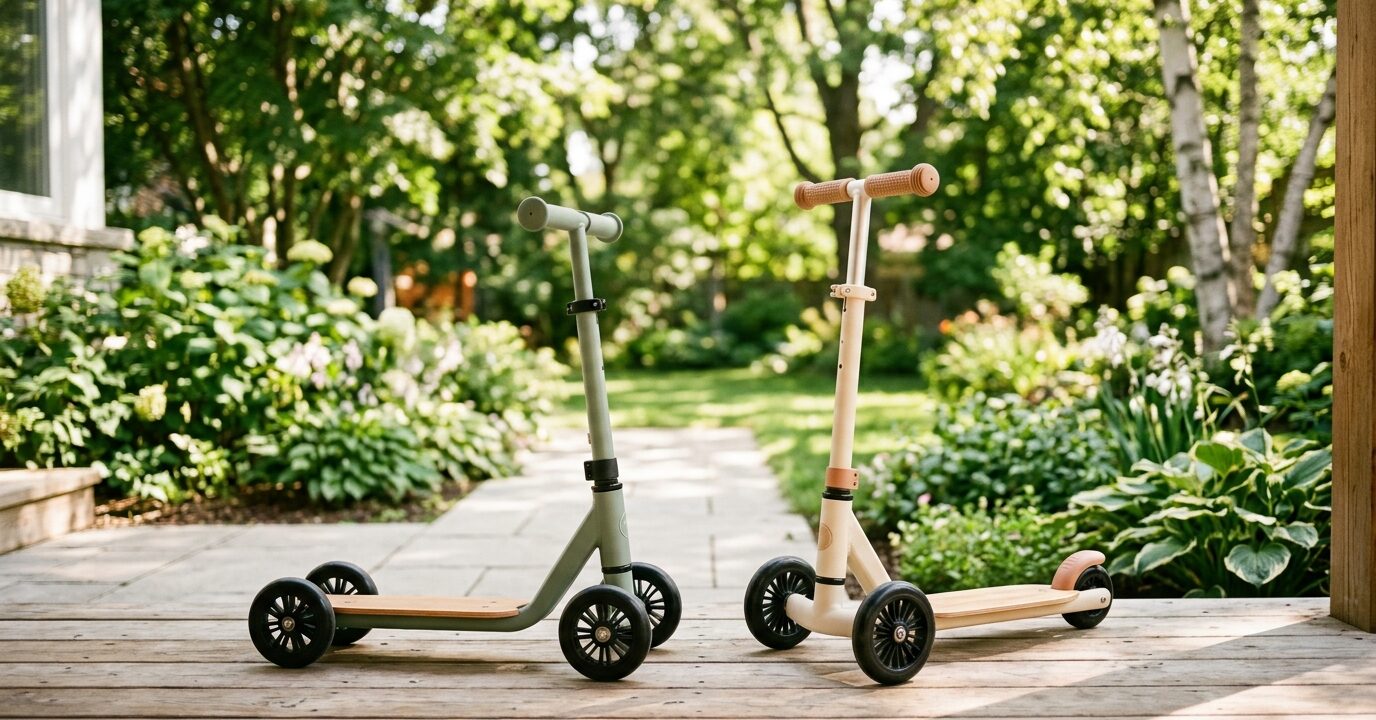

Direct Answer: Choose a 4-wheel scooter for early toddlers (18 months to 3 years) who need maximum side-to-side stability while learning to push and glide, and step up to a 3-wheel scooter (ages 3 to 6) once your child is ready for smoother lean-to-steer turning. Pitaya Kids supplies both the Four Wheels Scooter ($70 CAD) and Three Wheeled Scooter ($60 CAD, checked Nov 2026) across Canada.
1. 4-Wheel vs. 3-Wheel Kids Scooter Comparison
The wheel layout changes how a child balances, steers, and brakes. Here is a direct side-by-side breakdown for Canadian parents and daycare educators:
| Feature | 4-Wheel Scooter | 3-Wheel Scooter |
|---|---|---|
| Best Age Range | 18 months to 3.5 years | 3 to 6 years |
| Standing Stability | Highest (wide twin rear & front stance) | High (self-standing at low speeds) |
| Turning Style | Gentle wide arcs, predictable for beginners | Tighter agile turns for sidewalks and gyms |
| Honest Drawback | Wider rear axle can occasionally brush a child’s kicking heel as stride lengthens | Slightly less lateral forgiveness on uneven pavement for very young toddlers |
| Pitaya Kids Option (Checked Nov 2026) | Four Wheels Scooter ($70 CAD) | Three Wheeled Scooter ($60 CAD) |
2. When a 4-Wheel Scooter Is the Smarter First Choice
Early toddlers are still developing core balance and ankle control. A 4-wheel layout prevents the deck from tipping sideways when a child steps on with one foot or leans unevenly on the handlebars. Because the scooter stands upright on its own, toddlers can mount and dismount independently without frustration, which aligns well with Montessori gross-motor practice in indoor hallways, daycare gyms, and smooth driveways.
3. When to Move Up to a 3-Wheel Scooter
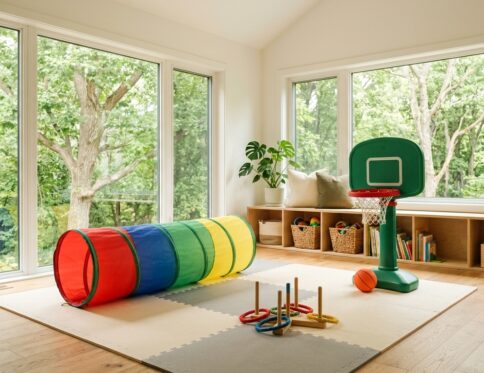
Once a child pushes confidently with one foot and wants to steer smoothly around corners, a Three Wheeled Scooter ($60 CAD) gives more heel clearance behind the deck and responds faster to weight shifts. For preschool classrooms and active home playrooms, keeping both layouts available allows younger siblings or mixed-age groups to ride at their own pace.
4. Practical Sizing & Safety Checklist for Canadian Riders
- Handlebar height: Aim for handlebars positioned between the child’s waist and lower chest (roughly 50 to 65 cm / 20 to 26 in for toddlers and preschoolers) so shoulders stay relaxed.
- Non-slip deck surface: Look for textured footing that grips indoor rubber soles and outdoor sneakers alike.
- Wheel material: Smooth polyurethane (PU) or soft composite wheels roll quietly on indoor hardwood floors without leaving dark scuff marks, and absorb minor sidewalk cracks outdoors.
- Protective gear outdoors: Always pair outdoor sidewalk or park riding with a properly fitted, CSA-certified child helmet and closed-toe shoes.
Shop our 4-wheel and 3-wheel scooters, balance boards, and indoor active play gear shipped across Canada in CAD.
Disclaimer: The information provided in this article is for general educational and informational purposes only and does not constitute medical, pediatric, or legal advice. Consult a qualified professional for specific developmental guidance. Product dimensions and specifications are based on current catalog data and subject to standard manufacturing tolerances.