


In an era of endless screen time, the call of the wild has never been more important for our children. As a parent, I’ve seen firsthand how swapping a tablet for a twig can ignite a sense of wonder and build resilience in a way that no app can. These Nature Play Ideas are more than just ways to pass an afternoon; they are foundational outdoor activities for kids that foster creativity, enhance sensory play, and create lasting memories. This guide is designed to give you practical, engaging nature activities that require little more than a bit of curiosity and the natural world right outside your door.
Getting kids in nature is one of the most significant gifts we can give them. This isn’t about grand, expensive adventures. It’s about rediscovering the magic in your own backyard or local park. Let’s dive into some simple yet powerful ideas.
1. Create a Nature Mandala
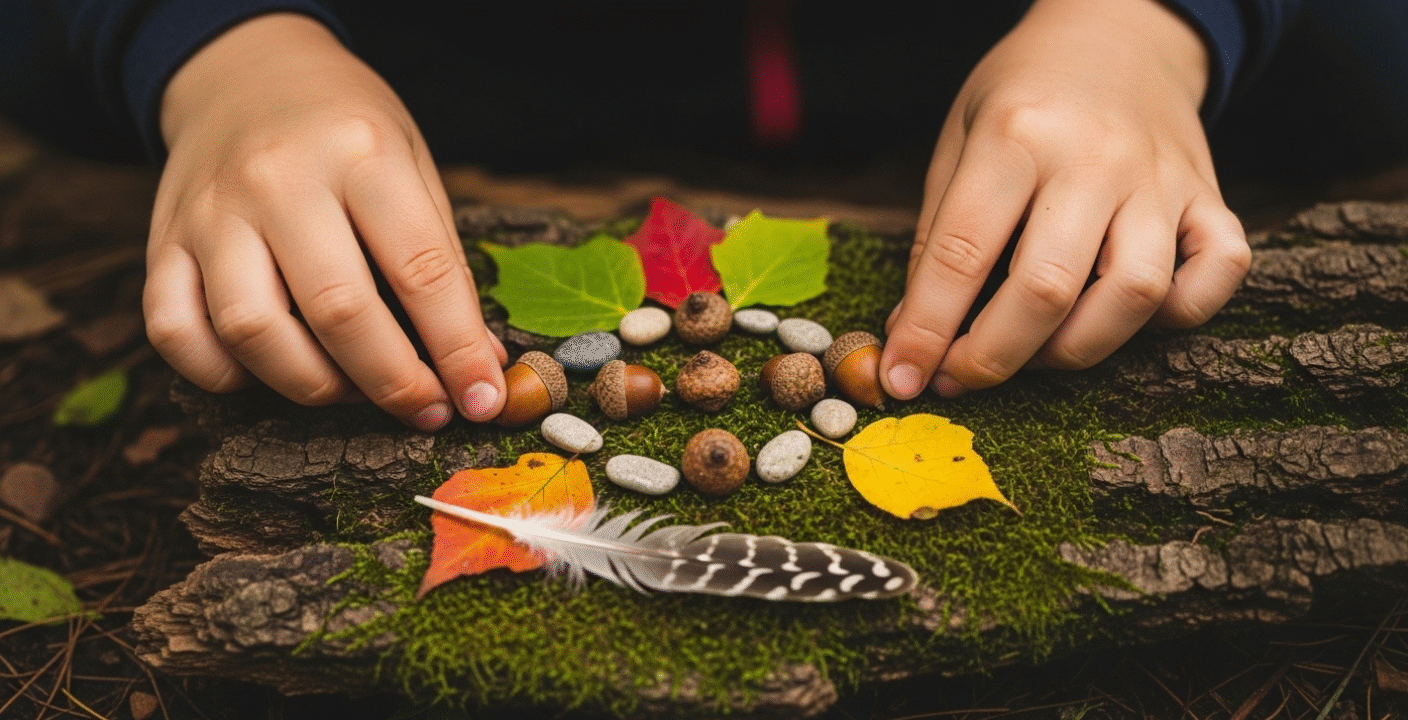
This is one of my family’s favorite calming outdoor learning activities. A mandala is a circular piece of art made from patterns.
- How to do it: Start in the center and have your child arrange natural treasures—like petals, leaves, stones, and pinecones—in a circular pattern.
- Why it’s great: This activity promotes mindfulness, pattern recognition, and a deep appreciation for the small details of the natural world. It’s a perfect, quiet form of sensory play.
2. Build a Bug Hotel
Encourage empathy for even the tiniest creatures with this engaging project.
- How to do it: Use a small wooden box, a large plastic bottle with the ends cut off, or even just a pile of sticks. Fill the structure with hollow bamboo canes, pinecones, rolled-up cardboard, and dry leaves to create nooks and crannies for insects to nest.
- Why it’s great: This is a fantastic lesson in ecology and the importance of insects in our ecosystem.
3. Go on a Sound Hunt
So many Nature Play Ideas focus on sight, but this one is all about listening.
- How to do it: Sit down in a park or on your lawn with your eyes closed for one minute. Ask your child to identify every single sound they hear—the rustle of leaves, a bird’s song, the buzz of a bee. You can even draw pictures of what you “saw” with your ears.
- Why it’s great: It sharpens listening skills and encourages a deeper, more focused connection with the environment.
4. Potion Making
This is a classic for a reason and one of the most creative forest school activities.
- How to do it: Give your child a bucket or large bowl, a spoon or stick for stirring, and access to water. Let them mix together “magic” ingredients they find, like mud, flower petals, grass, and leaves, to create powerful potions.
- Why it’s great: This is pure, unstructured sensory play that encourages imagination, storytelling, and scientific curiosity as they mix different materials.
5. Journey Sticks
A journey stick is a beautiful way to tell the story of a walk or a day of backyard exploration.
- How to do it: Find a sturdy stick and as you walk, attach items you find along the way using string or rubber bands. At the end, you’ll have a 3D map of your adventure.
- Why it’s great: It’s a wonderful tool for memory, storytelling, and observation, turning a simple walk into an epic tale.
6. Shadow Drawing
On a sunny day, this simple activity blends art and science.
- How to do it: Place a large piece of paper on the ground and arrange interesting natural objects (like ferns, flowers, or complex-shaped rocks) along the edge. Have your child trace the shadows they cast.
- Why it’s great: This is a fun introduction to how light works and how the sun’s position changes throughout the day. It’s one of the most peaceful outdoor activities for kids.
7. Nature’s Weaving Loom
This is another fantastic idea borrowed from forest school activities that builds fine motor skills.
- How to do it: Find a forked branch in a ‘Y’ shape. Wrap string back and forth between the two forks to create the “warp.” Then, your child can weave “weft” materials they find—like long grass, flexible twigs, and feathers—through the strings.
- Why it’s great: It develops dexterity and patience while creating a beautiful, ephemeral piece of natural art.
8. Mud Painting
Embrace the mess! Mud is a fantastic and free art supply.
- How to do it: Just add a little water to some dirt to create a paintable consistency. Use old paintbrushes or even just fingers to paint on rocks, sidewalks, or large pieces of bark.
- Why it’s great: This is the ultimate sensory play, connecting kids directly with the earth and washing away any inhibitions about getting dirty. It’s a great way to encourage screen-free kids.
9. Cloud Gazing
This timeless activity requires nothing but a patch of grass and an imagination.
- How to do it: Lie on your backs and watch the clouds drift by. What shapes do you see? A dragon? A sailboat? A fluffy sheep?
- Why it’s great: It sparks creativity and storytelling and is a meditative, calming way to spend time together in nature.
10. Stick Mazes and Letters
Sticks are one of nature’s most versatile toys.
- How to do it: Gather a large pile of sticks and twigs. On a clear patch of ground, work together to lay them out to form a giant maze you can walk through, or practice forming letters of the alphabet.
- Why it’s great: This is active, hands-on outdoor learning that can help with problem-solving (for mazes) or literacy skills (for letters) in a fun, low-pressure way.
By encouraging kids in nature with these Nature Play Ideas, you are giving them a gift that will last a lifetime: a deep and abiding love for the natural world.
Disclaimer: This blog post is for informational purposes only. Please ensure all activities are supervised by a responsible adult and that all natural materials used are safe and non-toxic. Always be aware of your surroundings and potential hazards when playing outdoors.