

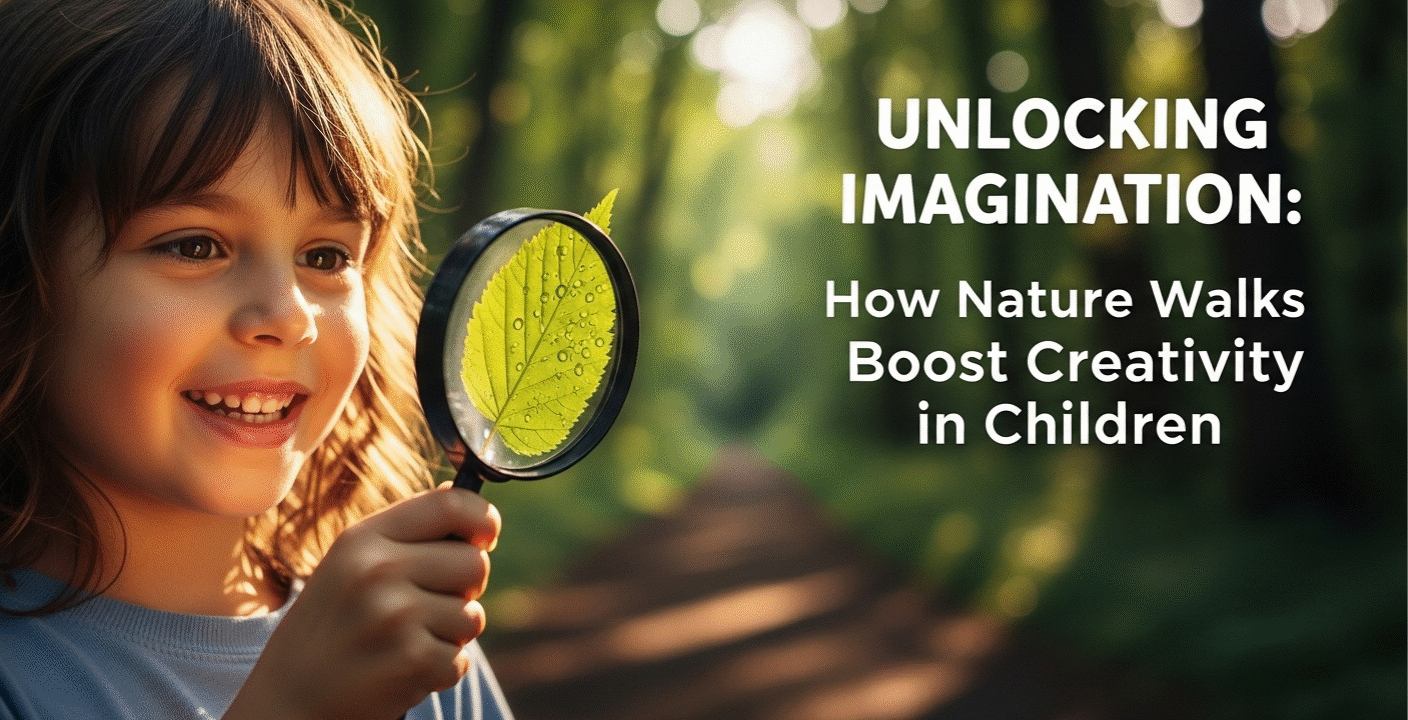

In a world filled with screens and structured schedules, it’s easy for a child’s natural creativity to get pushed aside. Parents and educators are constantly looking for ways to reignite that spark of imagination. The solution might be simpler and closer than you think: a walk in nature. The link between nature walks and creativity is a powerful engine for healthy child development, offering far more than just fresh air.
Taking children outdoors provides a unique environment where their minds can wander, explore, and invent. Let’s explore how these simple excursions can have a profound impact on their creative thinking.
Engaging All the Senses
Unlike a flat screen, nature is a multi-sensory world. During a walk, a child doesn’t just see the forest; they experience it. They feel the rough bark of a tree, hear the crunch of leaves under their feet, smell the damp earth after a rain, and see countless shades of green. These rich sensory experiences are the raw materials for imagination. A brain that is actively engaged with diverse stimuli has more resources to draw upon when it comes to inventing stories, art, and games. This kind of outdoor play provides a full-body experience that digital entertainment simply cannot match.
The Power of Unstructured Play
Nature is the ultimate open-ended toy box. A stick is not just a stick; it can be a wizard’s wand, a sword, a fishing rod, or a tool to draw in the dirt. A pile of stones can become a fortress or a family of friendly rock creatures. This is the essence of unstructured play—play that is child-led and doesn’t have a predetermined set of rules or goals. The benefits of nature are most apparent here, as it encourages children to create their own narratives and invent their own fun, which is a cornerstone of creative thinking. It empowers them to see possibilities everywhere.
Fostering Curiosity and Problem-Solving
A nature walk is a journey of discovery that naturally encourages problem-solving skills. How do we cross this muddy puddle? What’s the best way to climb that small hill? What kind of bug is living under that log? These small challenges require children to think critically, assess situations, and try different solutions. This process builds resilience and a curious mindset. Curiosity is the engine of creativity; a child who asks questions is a child who is ready to learn and invent. These screen-free activities promote an active, inquisitive mind.
Reducing Stress for a Calmer, More Creative Mind
Studies have shown that spending time in nature reduces stress and mental fatigue. For children, this can mean improved focus and a calmer emotional state. A mind that isn’t overstimulated or stressed has more space for daydreaming, imagining, and creating. This aspect of mindfulness for kids is an often-overlooked benefit of being outdoors. When a child is relaxed and present in the moment, their creative channels are wide open. This demonstrates how the connection between nature walks and creativity is also tied to a child’s emotional well-being.
Tips for Your Next Nature Walk
- Let Them Lead: Allow your child to set the pace and choose the path. Their curiosity should be the guide.
- Ask Open-Ended Questions: Instead of “Do you see the bird?” try “What do you think that bird is singing about?”
- Embrace the Mess: Let them touch the dirt, pick up leaves, and splash in puddles. This tactile interaction is crucial for learning.
- Pack Light: All you need are comfortable shoes and a sense of wonder. The goal is exploration, not a long hike.
Ultimately, fostering creativity isn’t about expensive toys or formal classes. It’s about giving children the time and space to explore the world on their own terms. The profound link between nature walks and creativity offers a simple, accessible, and joyful way to support your child’s imaginative growth and overall child development.
Disclaimer: This article is for informational purposes only and is not intended to be a substitute for professional advice. Always supervise children during outdoor activities.