

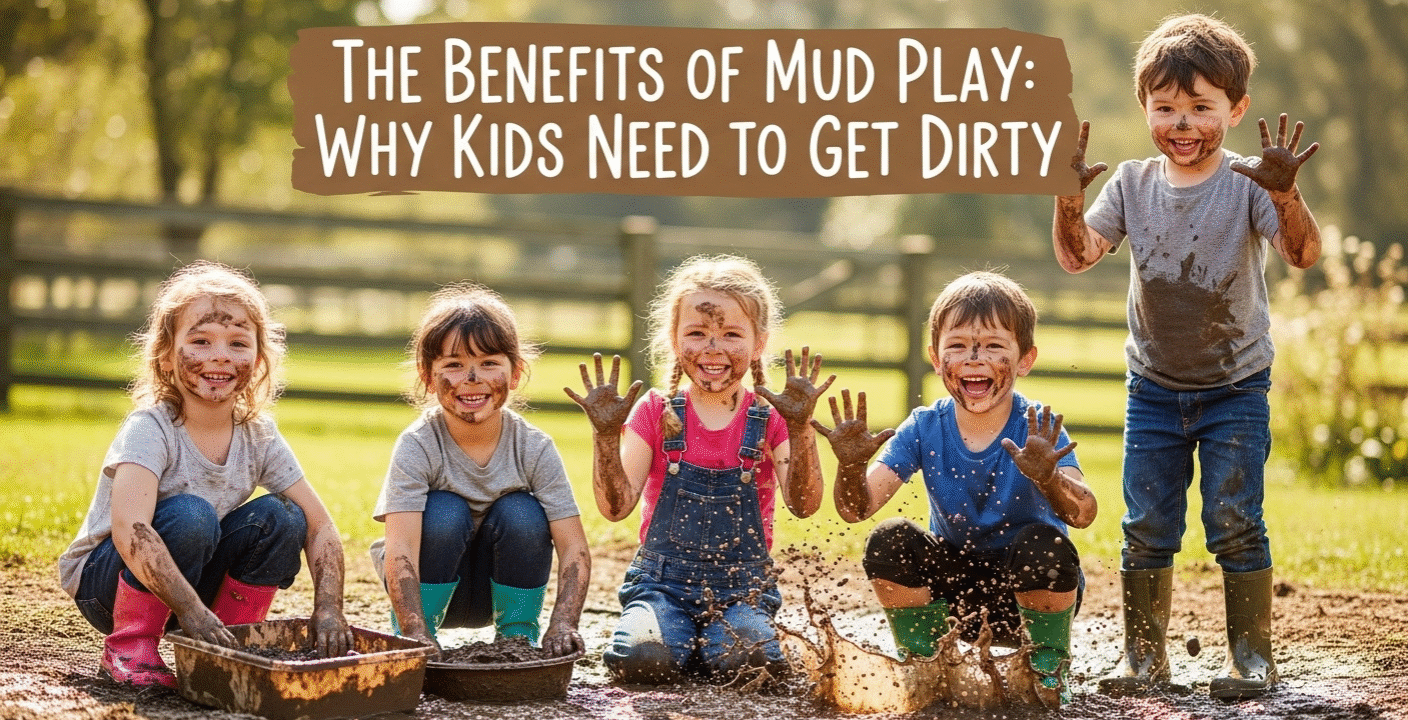

In our modern world of hand sanitizers and pristine playrooms, the thought of letting your child plunge their hands into a gooey mud puddle can be… unsettling. As a parent, I understand the instinct to keep things clean and orderly. But what if I told you that by avoiding the mess, we are denying our children a powerhouse of developmental opportunities? The incredible benefits of mud play go far beyond simple fun; it is a foundational activity that nurtures a child’s body, mind, and spirit.
This guide is designed to go deeper than a simple list. In a search landscape where authentic experience is paramount, we will explore the why behind the benefits, providing you with the confidence to embrace messy play. This content is crafted for you, the parent, to solve the problem of understanding why this classic childhood activity is more important than ever.
Beyond the Mess: Unpacking the Developmental Goldmine
Letting a child engage in mud play is one of the most effective ways to support their growth. It is a cornerstone of outdoor activities for kids that delivers comprehensive, holistic advantages.
- Supercharging Sensory Development: Modern life can be sterile. Mud play is a sensory feast. The cool, squishy texture, the earthy smell, and the satisfying splat are invaluable inputs for a developing brain. This rich tactile experience helps build neural pathways and is fundamental to sensory development, helping children process and respond to the world around them.
- Building a Stronger Immune System: Research has increasingly pointed to the “hygiene hypothesis,” which suggests that overly sterile environments can contribute to a rise in allergies and autoimmune issues. Mud contains soil-based microorganisms, like Mycobacterium vaccae, which studies suggest can act as a natural antidepressant and strengthen the immune system. Exposure to this everyday dirt helps a child’s body build a more robust and intelligent defense system, which is one of the most critical benefits of mud play.
- Fostering Creativity and Cognitive Skills: A pile of mud is the ultimate open-ended toy. It can become a birthday cake, a construction site, a witch’s potion, or an artistic sculpture. This type of creative play for kids requires imagination, problem-solving (“How do I make the mud stick together?”), and scientific thinking (cause and effect). Unlike a toy with a single purpose, mud offers limitless possibilities, fostering cognitive flexibility and executive function skills.
- Enhancing Physical and Motor Skills: Scooping, pouring, patting, and squishing mud are fantastic for developing fine motor skills and hand-eye coordination. When children are carrying buckets of water, digging, or stomping in muddy puddles, they are also developing their large motor skills, balance, and physical strength.
From Hesitation to Celebration: How to Embrace Mud Play
Understanding the benefits is the first step; the next is creating the opportunity. You don’t need a large backyard to get started.
- Start Small: Begin with a single container, like a large baking dish or a storage tub. Add some soil, a little water, and a few old spoons or cups. Let your child explore on a patio or a patch of grass.
- Create a DIY Mud Kitchen: This is a fantastic “linkable asset” you can create. Find a small, unused space and add a low table or some wooden planks. Stock it with old pots, pans, muffin tins, and utensils from a thrift store. This dedicated space contains the mess while inviting incredible creative play.
- Dress for Success: Designate specific “mud clothes” and boots for your child. Knowing that the clothes are meant to get dirty removes the stress for both of you.
By embracing mud play, you are giving your child a gift of resilience, creativity, and pure, unadulterated joy. It’s a powerful reminder that sometimes, the most profound learning experiences are the messiest ones.
Disclaimer: This post is for informational purposes only. The information provided is not a substitute for professional medical advice. Always supervise children during play and ensure the play area is free from hazards.