

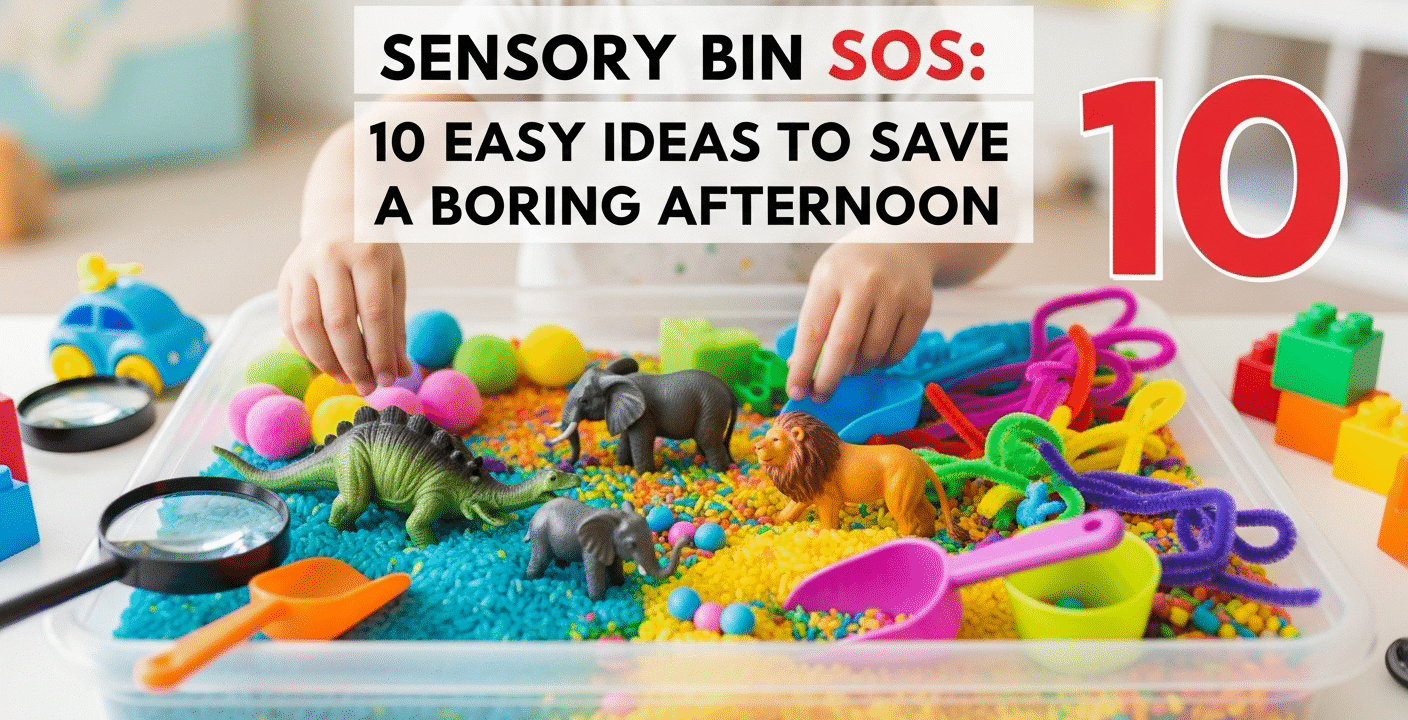

It’s 2:00 PM on a Tuesday. The nap was too short, the kids are restless, and you’re staring down the long, empty hours until dinner. You have a classic boring afternoon on your hands. We’ve all been there. Before you give in to screen time, let me offer a simple, powerful solution: the sensory bin.
If you’re looking for a quick fix, this post is your Sensory Bin SOS: 10 Easy Ideas to Save a Boring Afternoon. These low-prep, high-engagement easy sensory activities are perfect for saving your sanity and turning a dull day into an adventure.
What is a Sensory Bin, Anyway?
A sensory bin is simply a container—like a plastic tub, a large bowl, or a small storage box—filled with tactile materials (called sensory bin fillers) designed to stimulate a child’s senses. The goal is open-ended sensory exploration.
They are a powerhouse for development, helping to build:
- Fine motor skills (scooping, pouring, pinching)
- Language and vocabulary (describing textures, colors, and actions)
- Problem-solving skills
- A sense of calm and focus
Best of all, a great DIY sensory bin doesn’t have to be complicated or expensive. You probably have everything you need for amazing toddler sensory play in your pantry right now.
10 Easy Sensory Bin Ideas to Save Your Day
Here are 10 super-simple sensory bin ideas you can set up in five minutes or less.
1. The Classic Rice Bin
- Filler: Plain, uncooked rice.
- Tools: Scoops, measuring cups, funnels, and small plastic animals.
- Why it works: The sound of the rice falling, the feeling of it running through fingers—it’s a classic for a reason. For extra fun, you can dye it with food coloring and a little vinegar (let it dry first!).
2. The Pasta Playground
- Filler: Different shapes of dry pasta (spirals, shells, macaroni).
- Tools: Spoons, bowls for sorting, or string for threading.
- Why it works: The variety of shapes and textures is fantastic for tactile exploration. Kids love the clattering sound it makes.
3. Bubble Water Wonders
- Filler: Water and a few drops of dish soap or bubble bath.
- Tools: Whisks, sponges, plastic cups, and waterproof toys.
- Why it works: This is one of the all-time best easy sensory activities. It’s perfect for a warm day outside (or inside on a towel). The bubbles add a new sensory dimension to simple water play.
4. Cereal Search and Snack
- Filler: An older (or inexpensive) box of O-shaped cereal or puffed rice.
- Tools: Their own hands, spoons, and small trucks (to “bulldoze” the cereal).
- Why it works: It’s taste-safe, making it a perfect DIY sensory bin for babies and toddlers who still put everything in their mouths.
5. Cloud Dough
- Filler: 8 parts flour to 1 part oil (vegetable or baby oil). Mix well.
- Tools: Cookie cutters, small rollers, and cups for molding.
- Why it works: This “dough” is silky soft and moldable like wet sand, but it’s completely dry. It’s a magical texture that provides hours of sensory play for preschoolers.
6. The Pom-Pom Pit
- Filler: A big bag of craft pom-poms in various sizes and colors.
- Tools: Tongs, tweezers (for fine motor practice), and an ice cube tray for sorting by color.
- Why it works: It’s soft, quiet, and 100% mess-free. This is a great “calm-down” bin.
7. Shaving Cream Clouds
- Filler: A can of inexpensive, unscented shaving cream.
- Tools: A smooth, washable surface (like a baking sheet) or the tub itself. Add plastic animals or cars to be “washed.”
- Why it works: It’s messy fun at its best! The texture is fluffy and cool, and cleanup is as simple as a quick rinse.
8. Ice Block Excavation
- Filler: A large block of ice (freeze a container of water overnight) with small, waterproof toys (like plastic dinosaurs or block figures) frozen inside.
- Tools: Squeeze bottles with warm water, paintbrushes, and plastic hammers.
- Why it works: This bin introduces the concept of temperature and states of matter. It’s a challenge that keeps older kids engaged as they “rescue” their toys.
9. Nature’s Treasure Hunt
- Filler: Head outside! Use dirt, leaves, small, safe twigs, grass clippings, and pebbles.
- Tools: A magnifying glass, old pots or pans, and spoons.
- Why it works: It’s free and connects your child to the natural world. A “mud kitchen” is the ultimate sensory exploration for many kids.
10. Shredded Paper Search
- Filler: Paper from your home office shredder or just torn-up junk mail.
- Tools: Magnetic letters, foam numbers, or any small toys to “hide.”
- Why it works: It’s a fantastic way to recycle and create a “search and find” game. This is a great sensory bin for practicing letter or number recognition.
Tips for Easy Setup and Cleanup
- Contain the Mess: Lay down an old shower curtain, tablecloth, or fitted sheet under the bin.
- Set Boundaries: Gently explain the rule: “The fillers stay in the bin.”
- Supervise: Always supervise young children, especially with small-part sensory bin fillers.
- Involve Them: Make cleanup part of the activity. Hand them a dustpan and brush.
A boring afternoon doesn’t stand a chance against a good sensory bin. With just a few simple items, you can provide a rich, engaging activity that builds your child’s brain and saves your day. We hope this list of Sensory Bin SOS: 10 Easy Ideas to Save a Boring Afternoon gives you the quick inspiration you need!
Disclaimer: This article is for informational purposes only. All activities should be performed with adult supervision. Always use materials that are age-appropriate and safe for your child. The author and publisher are not responsible for any liability or damage resulting from the use of the suggestions in this post.