



As parents, we’re drawn to the Montessori method for its beautiful, child-centered philosophy. We love the idea of fostering independence and nurturing our child’s natural curiosity. But in the rush of daily life, one of the core tenets can feel like the hardest to practice: patience. If you’re one of the many busy parents who has felt a surge of frustration while your toddler takes five full minutes to put on their own shoes, you are not alone. This guide is for you.
We will explore why patience in Montessori is more than just waiting; it’s an active tool for your child’s growth. We will provide realistic, actionable strategies to cultivate patience, even when you’re short on time, helping you bridge the gap between the philosophy you love and the reality of your busy life.
Why Patience is the Cornerstone of the Montessori Method
In a world that prizes speed and efficiency, the Montessori approach asks us to slow down and “follow the child.” This isn’t just a quaint suggestion; it is fundamental to healthy child development. When we practice patience, we are communicating deep respect for the child’s individual timeline and capabilities.
- It Builds Concentration: When we interrupt a child who is concentrating on a task—whether it’s buttoning a coat or stacking blocks—we break a precious cycle of focus. Allowing them to complete their work uninterrupted, on their own time, is how the muscle of concentration is built.
- It Encourages Problem-Solving: Rushing in to “fix” a struggle robs a child of a learning opportunity. Patiently observing allows them to work through challenges, make mistakes, and discover solutions on their own. This is the foundation of resilience and critical thinking.
- It Nurtures Self-Esteem: The unspoken message of patience is “I trust you. I believe in your ability to do this.” This unwavering faith from a caregiver is what builds a child’s core sense of competence and self-worth, a key aspect of respectful parenting.
Reframing Patience: It’s Not About Waiting, It’s About Providing Space
For busy parents, the idea of “waiting” can feel like a luxury. This is where a crucial mindset shift comes in.
Patience in Montessori is not passive waiting; it is the active and intentional act of providing space for your child to unfold. It’s choosing to observe instead of direct. It’s preparing the environment so they
can succeed on their own, which ultimately saves you time. This is a form of conscious parenting that serves both parent and child.
Practical Strategies for Cultivating Patience (Even When You’re Rushed)
Adopting this mindset is easier with concrete tools. Here are practical ways to integrate patience into your daily rhythm:
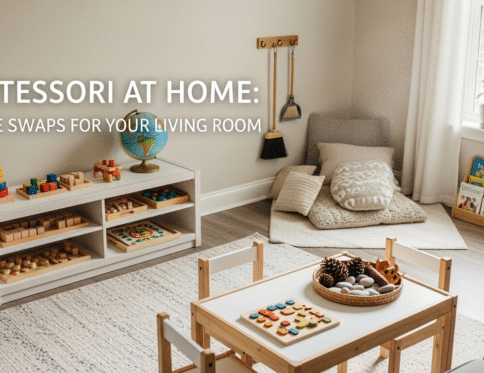
- Prepare the Environment in Advance: The most powerful Montessori tool is a prepared environment. Lay out clothes the night before. Have a low stool for them to sit on while putting on shoes. Arrange their practical life skills activities on a low, accessible shelf. A few minutes of preparation prevents a power struggle later.
- Build In Buffer Time: If you know it takes your child five minutes to get their shoes on, start the “getting ready” process five minutes earlier. Rushing is often a symptom of our own poor time management. Building buffer time into your routines is one of the most effective strategies for busy parents.
- Use the 10-Second Pause: When your child is struggling and your instinct is to jump in, pause. Take a deep breath and count to ten. In those ten seconds, you give your child more time to work it out, and you give yourself a moment to regulate your own impulse to rush.
- Narrate, Don’t Direct: Instead of “Put your arm in,” try observing what they’re doing. “I see you are holding your coat. You’re getting ready to put your arm in the sleeve.” This patient narration shows you are present and engaged without taking over the task. It’s a cornerstone of respectful parenting.
The Long-Term Reward: A Confident, Independent Child
Practicing patience in Montessori is an investment. The minutes you “lose” waiting for your child to zip their own jacket are paid back tenfold in the long run. You are not just getting out the door; you are building a human being who is capable, confident, and secure in the knowledge that they are trusted. This approach to fostering independence leads to children who are more resilient and intrinsically motivated.
Ultimately, this practice is a gift to yourself as well. It allows you to slow down, be more present, and truly see the incredible person your child is becoming, one unhurried step at a time.
Disclaimer: This blog post is for informational purposes only and is based on established Montessori principles and parenting experiences. It does not constitute professional psychological or educational advice. Please consult with a qualified professional for any specific concerns regarding your child’s development.