

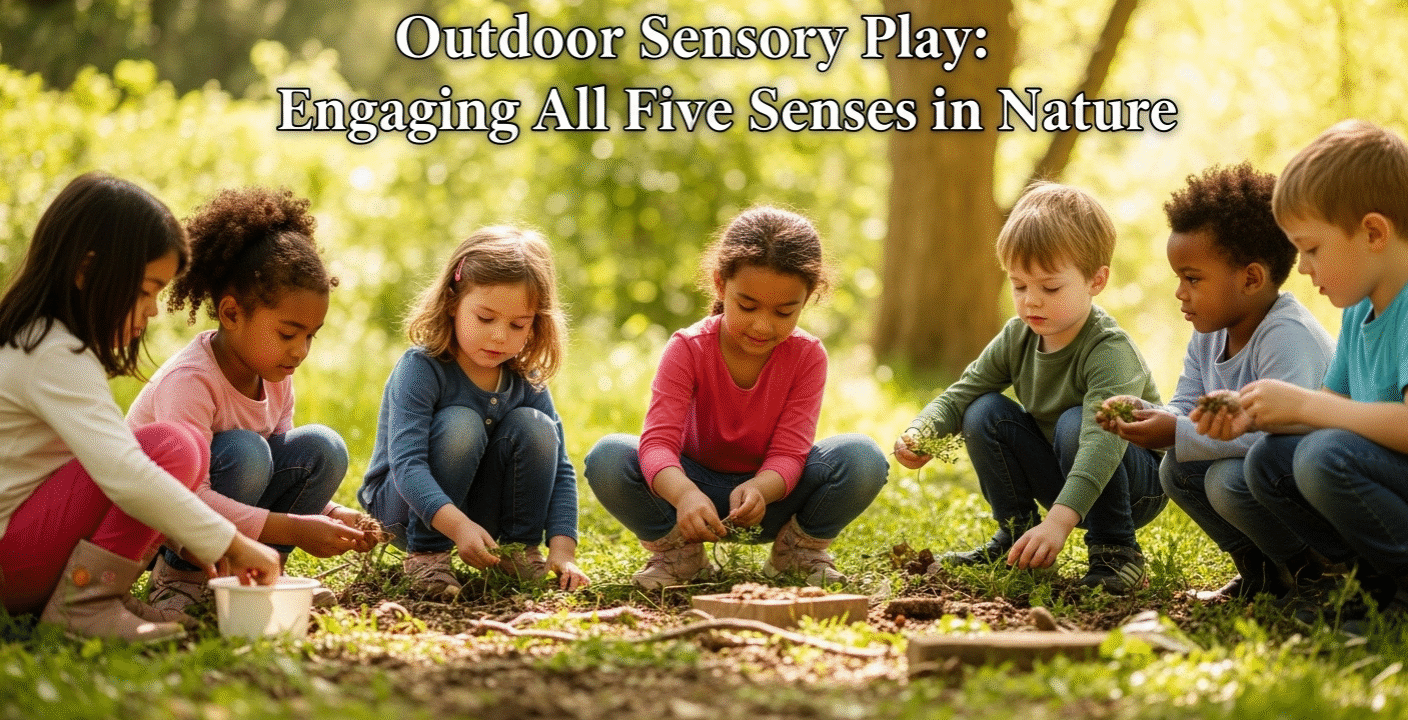

There’s a special kind of magic that happens when children play outside. The open space, fresh air, and endless discoveries create the perfect environment for learning and growth. One of the most powerful ways to enhance this experience is through outdoor sensory play, a method that encourages kids to connect with the world around them using all five of their senses. This isn’t just about getting messy; it’s about building a deeper understanding of nature and boosting crucial developmental skills.
Let’s dive into how you can facilitate a rich sensory exploration for your child right in your backyard or a local park.
What is Outdoor Sensory Play? 🌳
At its core, outdoor sensory play includes any activity that stimulates a child’s senses of sight, sound, touch, smell, and taste. Unlike structured indoor play, nature play offers an ever-changing, dynamic environment. The textures, sounds, and smells of the natural world provide a perfect, cost-free sensory playground that fosters curiosity and learning in a hands-on way. It’s one of the most natural outdoor activities for toddlers and young children.
Engaging the Sense of Sight 👀
The natural world is a visual masterpiece. Encourage your child to slow down and truly see the details around them.
- Nature’s I-Spy: Play “I-Spy” with colors, shapes, and textures. “I spy something green and pointy” (a blade of grass) or “I spy something brown and rough” (tree bark).
- Cloud Gazing: Lie on your backs and watch the clouds. What shapes do you see? Are they moving fast or slow?
- Bug Hunt: Use a magnifying glass to get a closer look at ants marching in a line or the intricate patterns on a ladybug’s back. This is one of the most classic sensory activities for kids.
Engaging the Sense of Sound 👂
Teach your children to tune into the symphony of nature. Our world is full of sounds we often ignore in our busy lives.
- Listening Walk: Take a walk and pause every few minutes to listen quietly. What can you hear? Birds chirping, leaves rustling, the wind whistling, a dog barking in the distance?
- Make Some Noise: Crunch dry leaves under your feet, snap twigs, or splash in puddles. How many different sounds can you create using only natural objects?
Engaging the Sense of Touch 🤲
Nature is full of fascinating textures waiting to be explored. This tactile experience is a cornerstone of sensory play.
- Texture Scavenger Hunt: Go on a hunt for different textures. Find something smooth (a river stone), rough (bark), soft (moss), prickly (a pinecone), and wet (dew on a leaf).
- Mud Kitchen: Don’t be afraid of dirt! Making mud pies is a fantastic activity for engaging senses in nature. The feeling of squishy mud between the fingers is an unforgettable sensory experience.
- Barefoot Exploration: On a safe surface like soft grass or sand, let your child walk barefoot to feel the different sensations on their feet.
Engaging the Sense of Smell 👃
Our sense of smell is strongly linked to memory. Creating scent memories in nature is a beautiful gift to give your child.
- Scent Safari: What can you smell? Encourage your child to smell flowers, freshly cut grass, damp earth after it rains, and pine needles. Crush a mint or rosemary leaf (if available) to release its strong scent.
Engaging the Sense of Taste 🍓 (With Caution!)
Exploring taste outdoors requires strict supervision and certainty. Never allow a child to taste a plant unless you are 100% sure it is edible.
- Garden Tasting: If you have an edible garden, taste a ripe strawberry, a cherry tomato, or a fresh mint leaf. Talk about the different flavors—sweet, sour, and savory.
- Nature’s Picnic: The easiest and safest way to engage the sense of taste is to simply have a picnic. Food often tastes better in the fresh air!
The Amazing Benefits of Sensory Play ⭐
Engaging in outdoor sensory play offers more than just a fun afternoon. The benefits of sensory play are vast and contribute significantly to a child’s development:
- Cognitive Growth: It helps build nerve connections in the brain, supporting the development of thought, learning, and creativity.
- Language Development: It gives children new words to describe their experiences (e.g., “crunchy,” “slimy,” “fragrant”).
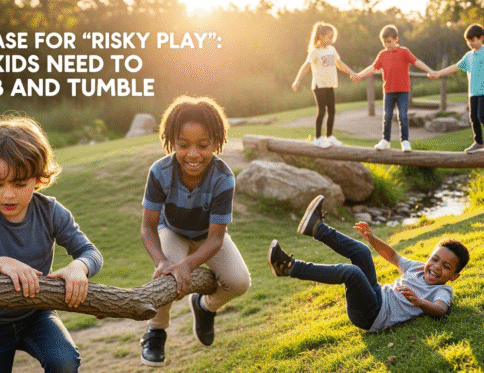
- Motor Skills: Activities like picking up small stones or climbing over logs develop both fine and gross motor skills.
- Calming and Regulation: Nature play can be very calming and help children regulate their emotions.
Ultimately, outdoor sensory play is a joyful and essential part of childhood. So, step outside, let your child lead the way, and watch them discover the world, one sense at a time.
Disclaimer: This article is for informational purposes only. Please ensure children are supervised at all times during outdoor play and exercise caution, especially with activities involving taste.