


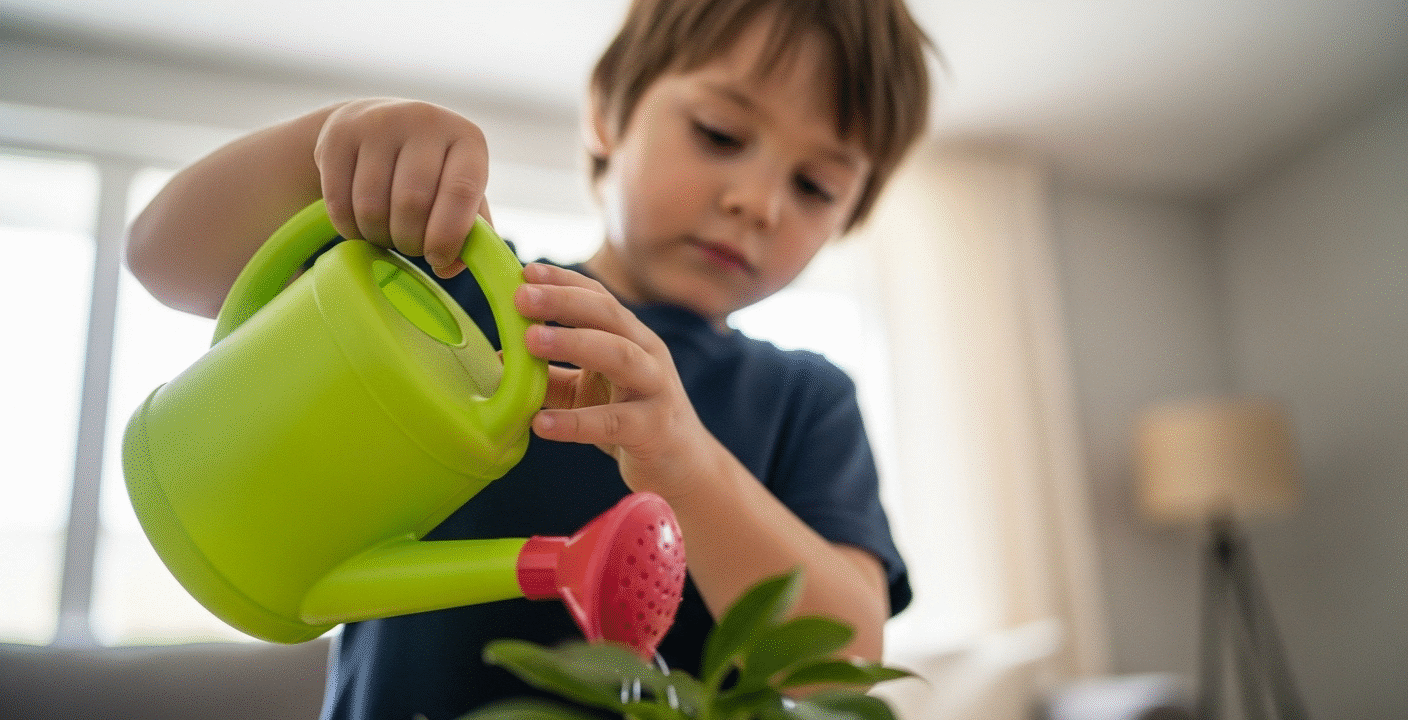

Incorporating chores into a child’s routine provides a wealth of developmental advantages that are crucial for their future success and well-being. These tasks are the building blocks for essential life skills for children.
- Cultivating a Sense of Responsibility: When children have a task that is their own, they learn to be accountable. Watering a plant or feeding the dog teaches them that others depend on them. This is the very first step in building responsibility in kids, showing them they are a valuable, contributing member of the family unit.
- Boosting Self-Esteem: Successfully completing a chore gives a child a powerful sense of competence and accomplishment. A simple “You did a great job putting your toys away!” reinforces their ability to make a positive impact on their environment. This internal validation is far more powerful than any external reward.
- Developing Gross and Fine Motor Skills: Many age-appropriate chores are excellent for physical development. Tasks like wiping a table, sorting laundry into colored piles, or using a dustpan require coordination and control, refining both fine and gross motor skills in a practical, real-world setting.
- Teaching Teamwork and Empathy: Chores help shift a child’s perspective from “me” to “we.” When they participate in keeping the home running smoothly, they begin to understand that they are part of a team. This fosters empathy as they learn to consider the needs of the household and the work others are doing.
Putting It Into Practice: A Guide to Age-Appropriate Chores
The key to success is to assign tasks that are manageable and suited to your child’s developmental stage. The goal is contribution, not perfection.
For Toddlers (Ages 2-3): The Little Helpers
At this age, children love to mimic and “help.” Chores should be simple and framed as a fun activity.
- Put their toys in a bin.
- Place their dirty clothes in the hamper.
- Wipe up small spills with a cloth.
- Stack books on a low shelf.
For Preschoolers (Ages 4-5): Gaining Independence
Preschoolers can handle more complex, multi-step tasks. This is a great time to introduce a simple chore chart for kids to help them track their contributions.
- Set the table with napkins and plates.
- Help put away groceries.
- Water houseplants.
- Feed a pet (with supervision).
- Match clean socks from the laundry.
As noted by child development experts, consistency is more important than the chore itself. For a deeper dive into developmental milestones, resources like the Mayo Clinic provide excellent, authoritative guidance on child health and parenting.
Creating a “Linkable Asset”: Your Printable Chore Chart
To help you get started, we’ve created a simple, visually appealing, and printable chore chart you can use at home. This unique resource is designed to empower your child by giving them a clear, visual way to see their responsibilities and track their amazing contributions.
(This is where a link to a downloadable PDF of a chore chart would be placed, providing unique value and a “linkable asset” as described in the SEO document.)
By embracing this parenting guide to chores, you are not just tidying your home; you are building a foundation of character and capability in your child. The investment of time and patience now will pay dividends for a lifetime, nurturing a responsible, confident, and empathetic adult.
Disclaimer: This blog post is for informational purposes only and is based on shared parental experiences and generally accepted child development concepts. It does not constitute professional advice. Please consult with a pediatrician or a child development expert for guidance tailored to your child’s specific needs.

