

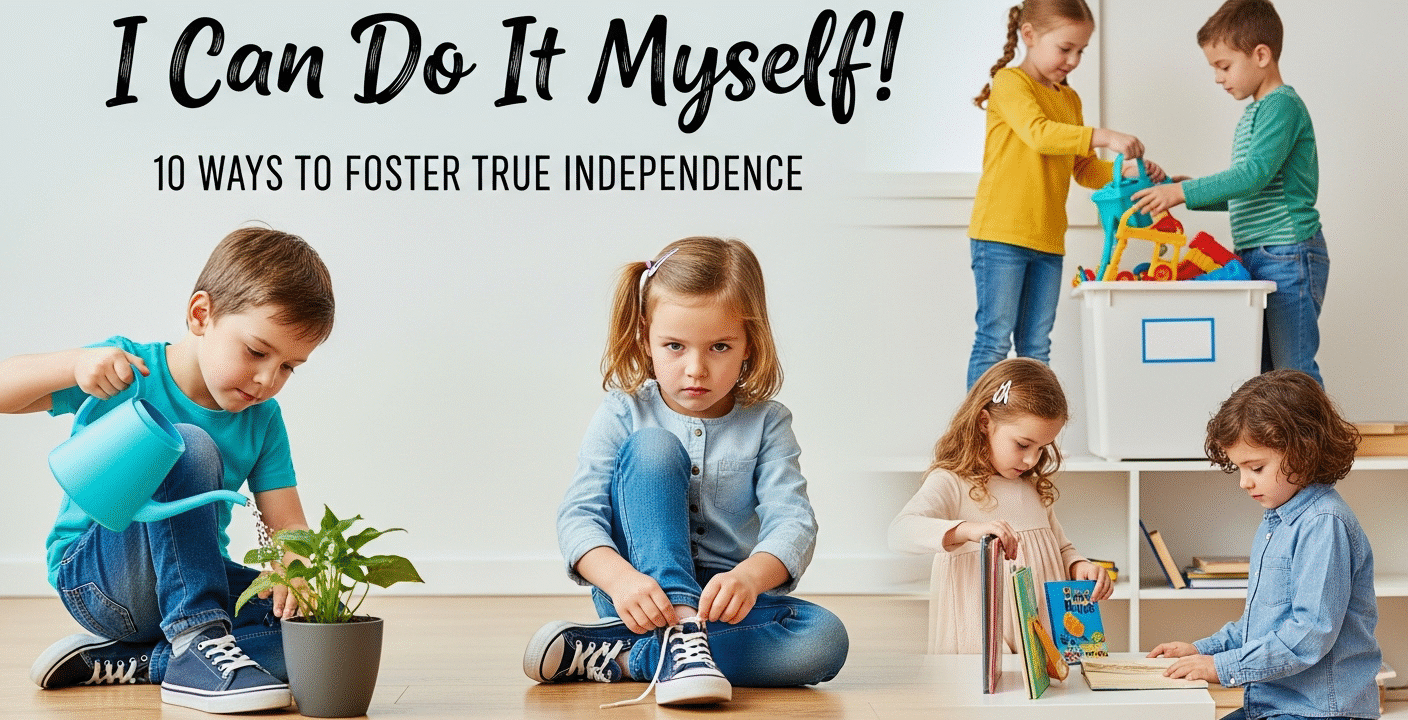

“I can do it myself!”
It’s a declaration every parent, guardian, or teacher has heard. It can be a source of pride and, let’s be honest, sometimes a test of patience. This powerful phrase is the anthem of emerging child independence. But how do we nurture this spark without extinguishing it or, conversely, pushing them too fast?
The goal isn’t just to raise a child who can tie their own shoes or make their own snack. The real goal is to foster true independence—a deep-seated confidence and capability that will serve them for life. This means raising independent children who are resilient, resourceful, and ready to take on the world.
If you’re looking for practical parenting tips to move beyond power struggles and toward genuine self-sufficiency, here are 10 effective ways to build self-reliance in children.
10 Practical Ways to Foster True Independence
1. Start with Age-Appropriate Tasks
Independence doesn’t start with driving a car; it starts with putting away a toy. Providing children with age-appropriate tasks is the foundation of capability. A toddler can put their dirty clothes in the hamper. A five-year-old can help set the table. A pre-teen can be responsible for their own homework schedule. These small wins build a “can-do” attitude.
2. Encourage Decision-Making (and Respect It)
From a young age, encourage decision-making to give your child a sense of control. Start small: “Would you like the red cup or the blue cup?” or “Do you want to play outside before or after your snack?” As they grow, so can the decisions. Respecting their choices (even if it’s not the one you’d pick) shows them their voice matters and is a powerful way to promote autonomy.
3. Teach Problem-Solving Skills
When your child faces a challenge, resist the immediate urge to jump in and fix it. Instead, become a “problem-solving partner.” Ask questions like, “What have you tried so far?” or “What do you think you could try next?” Guiding them to find their own solutions is one of the most effective ways to build problem-solving skills and confidence.
4. Assign Real Responsibility
Children thrive when they feel needed. Give them a genuine sense of responsibility that contributes to the family or classroom. This could be feeding the dog, watering the plants, or being in charge of sorting the recycling. When they see that their contribution matters, their sense of competence and independence soars.
5. Embrace (Natural) Consequences
It’s tempting to shield children from all discomfort, but this robs them of learning opportunities. Allowing natural consequences to play out (within reason and safety) is a powerful teacher. If they forget their jacket, they will be cold. If they don’t finish their homework, they will have to explain it to their teacher. These experiences are far more memorable than a lecture.
6. Create Predictable Routines and Structure
This may sound counterintuitive, but structure is the springboard for independence. When children know what to expect—a clear morning routine, a consistent bedtime process—they feel secure. This security gives them the confidence to manage the steps of that routine on their own, which is a key part of your mission to foster true independence.
7. Step Back and Let Them “Fail”
As parents, our instinct is to protect. But “rescuing” children from every minor stumble, spill, or mistake sends an unintended message: “You can’t handle this without me.” Letting a child struggle with a zipper or get a “C” on a project they rushed is not a parenting failure. It’s a critical part of building self-reliance and learning that it’s okay to try again.
8. Build Emotional Resilience
True independence isn’t just physical; it’s emotional. Teach children to name their feelings and cope with them. Don’t dismiss their frustrations with “you’re fine.” Instead, validate their feelings: “I can see you are very frustrated that your block tower fell down.” This teaches them that they can manage difficult emotions, a cornerstone of emotional resilience.
9. Praise the Process, Not Just the Person
Instead of “You’re so smart!” (which is a fixed label), focus on the effort: “Wow, you worked so hard on that puzzle!” or “I noticed you kept trying even when that part was tricky.” Praising the process encourages a growth mindset, teaching children that their abilities can be developed through persistence and hard work.
10. Be a Role Model
Children learn more from what you do than what you say. Let them see you trying new things, making mistakes and recovering, managing your own time, and solving problems calmly. When they see you modeling independence and self-reliance in your own life, they’ll have a clear blueprint to follow.
A Journey, Not a Destination
Raising independent children is a marathon, not a sprint. It requires patience, trust, and the courage to step back so they can step forward. The journey to foster true independence may be messy, but the reward—a confident, capable, and resilient individual ready to navigate the world on their own—is worth every moment.
Disclaimer: This article is for informational purposes only and does not constitute medical, legal, or professional parenting advice. Please consult with a qualified professional for advice tailored to your specific situation.