


“No!” “Don’t touch that!” “Get away from there!”
If you’re a parent of a curious toddler or baby, this probably sounds familiar. While it’s our job to keep our children safe, constantly saying “no” can be exhausting for you and frustrating for your little explorer. But what if you could create a space where “yes” was the default?
Welcome to the concept of the “Yes Space.” This simple yet transformative idea is a game-changer for positive parenting and fostering crucial child development. This guide will walk you through the why, what, and how of creating a yes space in your own home.
❓ What Exactly is a “Yes Space”?
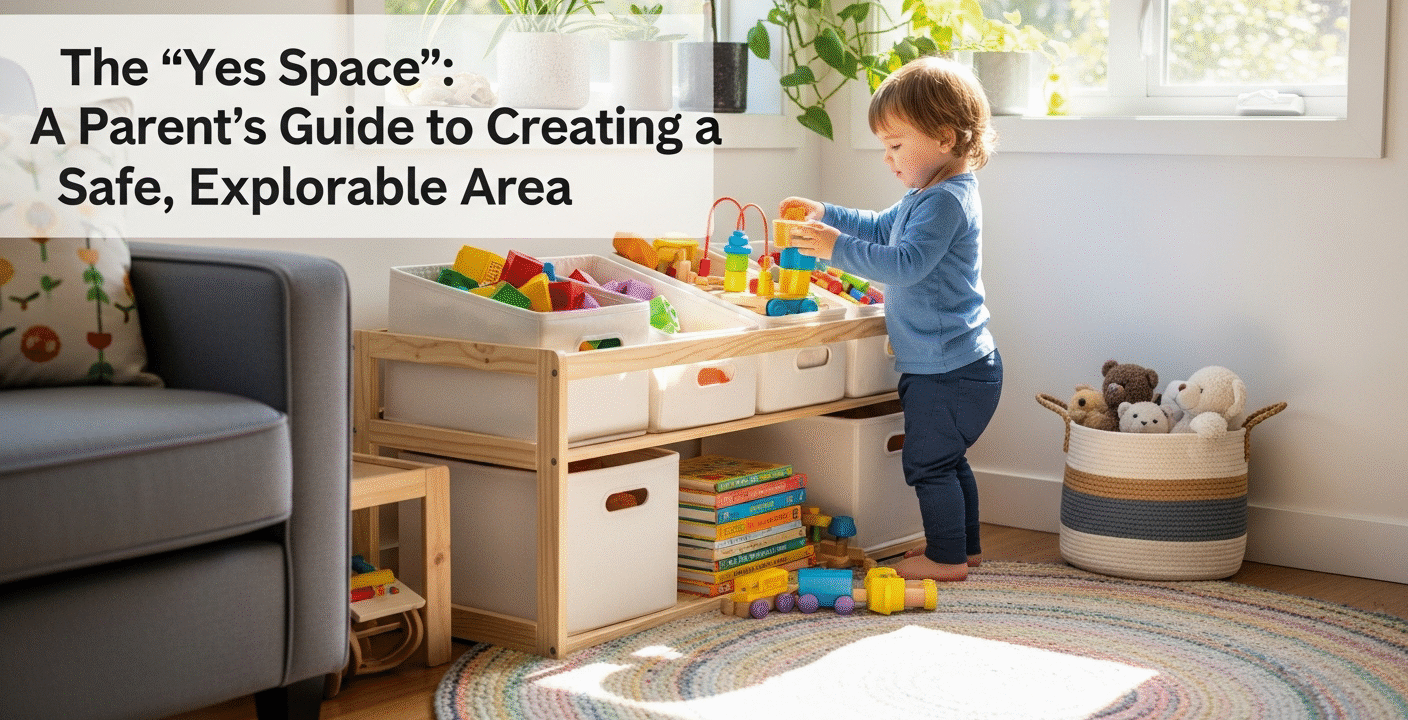
A “Yes Space” is a designated area in your home that is 100% child-safe, engaging, and accessible to your child.
It’s a safe play area where everything within reach is safe for them to touch, explore, and play with, without you having to intervene or say “no.” It’s a “yes” environment. Want to pull all the books off that low shelf? Yes. Want to bang those two soft blocks together? Yes. Want to open and close that little cabinet? Yes.
This approach, popular in methods like Montessori at home, shifts the focus from restricting the child to preparing the environment.
🌟 The Benefits of a Safe, Explorable Area
The magic of creating a yes space goes far beyond just reducing your stress levels (though that’s a huge perk!).
- For the Child:
- Fosters Independent Play: When children aren’t waiting for permission or direction, they learn to engage with their surroundings on their own terms, building focus and self-reliance. This independent play is a cornerstone of development.
- Builds Confidence: Being able to make their own choices (even small ones) and mastering their environment gives them a powerful sense of competence.
- Encourages Curiosity: A Yes Space is designed for exploratory play, allowing them to safely investigate textures, shapes, and objects without fear of reprisal.
- Supports Cognitive Development: Freedom to explore is how young children learn about cause and effect, problem-solving, and spatial awareness.
- For the Parent:
- Reduces “No” Fatigue: You get a break from being the “play police.”
- Lowers Stress: Knowing your child is in a truly child-safe environment allows you to relax, drink your coffee while it’s hot, or get a small task done nearby.
- Promotes Connection: It frees up your mental energy. Instead of just managing their safety, you can truly observe and connect with them during play.
🛠️ How to Create Your Own Yes Space: A Step-by-Step Guide
Ready to get started? Creating a yes space doesn’t have to be complicated or expensive.
Step 1: Choose Your Location
You don’t need a massive, dedicated playroom. A Yes Space can be:
- A corner of the living room.
- A section of your child’s bedroom.
- A safely gated-off area in a main living space.
The key is that it’s in a location where you can passively supervise while allowing them independence.
Step 2: Safety First (The “Non-Negotiables”)
This is the most critical step. You must be able to turn your back for a moment and know they are completely safe. This means rigorous toddler-proofing or baby-proofing.
- Cover all electrical outlets.
- Secure all furniture (bookshelves, dressers, TV stands) to the wall.
- Manage all cords. Blind cords, phone chargers, and lamp cords must be completely out of reach.
- Remove any hazards: This includes small items (choking hazards), sharp corners (use bumpers), heavy objects that can be pulled down, and any toxic items like house plants.
- Use baby gates to define the area and prevent access to unsafe zones like stairs or the kitchen.
Your goal is to create a 100% child-safe environment. Get on your hands and knees and see the world from their perspective. What can they reach? What can they pull?
Step 3: Define the Boundaries
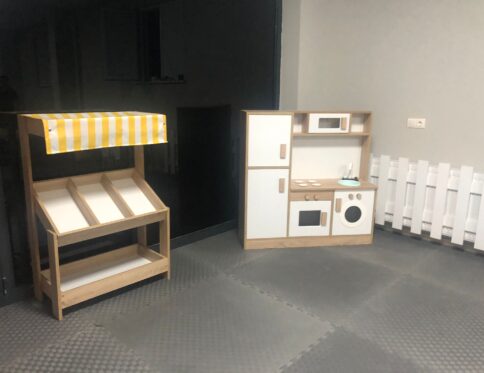
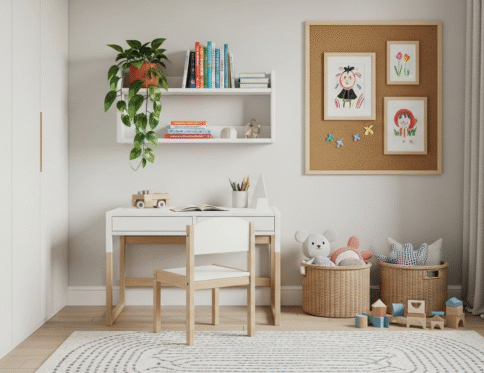
Visually and physically define the space. A soft rug or play mat is perfect for this. It provides a comfortable surface and sends a clear signal to the child: “This area is for you.” Low, sturdy shelves (like a small cube shelf secured to the wall) are also excellent for defining a boundary and making toys accessible.
Step 4: Curate the “Yes” Items
Now for the fun part! Fill the space with things they are allowed to explore. The key is “less is more.” A cluttered space can be overwhelming.
- Age-Appropriate Toys: Include a small, curated selection of toys that encourage open-ended play. Think blocks, stacking rings, soft dolls, or simple puzzles.
- “Real” Items (Safely!): Toddlers often prefer real-world objects. Include a small, clean wooden spoon, a metal mixing bowl, or different-textured (and safe) fabrics.
- Comfort: Add a small, child-sized chair, a floor cushion, or a soft blanket to make the space cozy.
- Books: A small, front-facing basket of board books encourages early literacy.
Step 5: Implement Toy Rotation
To keep the Yes Space engaging, don’t put all their toys out at once. Keep most in storage and swap out 5-7 items every week. This “toy rotation” (another Montessori at home staple) makes old toys feel new again and prevents overwhelm.
🌱 Maintaining Your Yes Space
A Yes Space evolves as your child grows.
- Observe: Watch what your child is drawn to. Are they ignoring the blocks but love the stacking rings? Adjust accordingly.
- Re-Evaluate Safety: As your child becomes more mobile and capable (e.g., learning to climb), you will need to re-assess the toddler-proofing.
- Tidy Up: At the end of the day, reset the space. Put the toys back on the shelf and the books in the basket. This models respect for the environment and makes it inviting for the next day.
By creating a yes space, you are giving your child—and yourself—a powerful gift. You’re creating a foundation for independent play, confident exploration, and a more peaceful, positive parenting journey.
Disclaimer: This article is for informational purposes only and does not constitute medical or professional child-rearing advice. Parents and guardians are solely responsible for ensuring the safety and supervision of their children. Always follow manufacturer guidelines for safety products and consult with a pediatrician for questions related to your child’s development.