

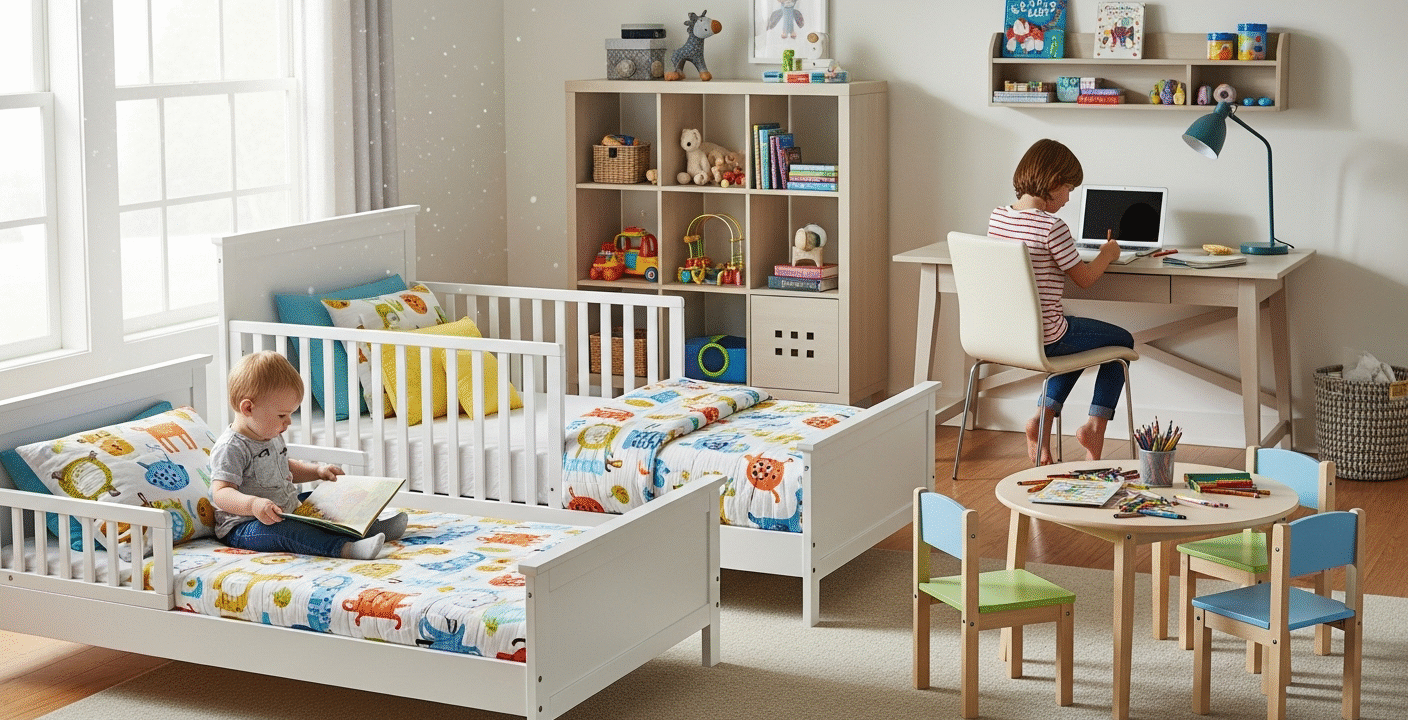

They grow up so fast. It’s a cliché because it’s true. One minute you’re assembling a crib, and in the blink of an eye, your toddler is suddenly a “big kid” ready to vault over the rails. This rapid growth spurt signals a major milestone: the toddler-to-kid transition. This phase doesn’t just apply to clothes and toys; it’s a major event for their personal space.
The challenge? Finding furniture that can keep up. Constantly buying new beds, desks, and storage every two years is exhausting and expensive. The solution is to be strategic. The key is investing in kids’ furniture that is designed to evolve. This guide will walk you through the art of Choosing furniture for the toddler-to-kid transition, helping you select smart, stylish, and long-lasting children’s furniture.
Why Invest in Furniture That Grows?
Choosing adaptable furniture isn’t just a trend; it’s a smart financial and practical decision.
- Cost-Effective: The initial investment might be slightly higher, but convertible kids’ furniture saves you significant money in the long run. One bed that lasts from age 3 to 13 is far cheaper than buying three different beds.
- Eco-Friendly: Less turnover means less waste. By choosing durable pieces, you’re making a more sustainable choice and reducing the amount of “fast furniture” that ends up in landfills.
- Less Disruption: Transitions can be tough for little ones. Keeping core furniture pieces provides a sense of stability and familiarity as their room (and world) changes around them.
Key Pieces of Transitional Furniture for Children
When planning your multi-functional kids’ room, focus on the “big three” items that offer the most longevity.
1. The Bed: Conquering the Toddler Bed Transition
This is the centerpiece of the transition. While toddler-sized beds are cute, their lifespan is incredibly short.
- Look for: The “4-in-1” or “3-in-1” convertible kids’ furniture system. Many cribs now convert to a toddler bed, then a daybed, and finally, a full-size headboard or platform bed. If you’ve missed the convertible crib, skip the toddler bed entirely.
- Smart Choice: Opt for a twin bed with removable guardrails. This feels safe for a 3-year-old but is perfectly suitable for a 10-year-old. For maximum utility, consider a twin bed with a pull-out trundle (for sleepovers) or built-in storage drawers underneath.
2. Storage: The Dresser and Bookshelf
The changing table is often the first piece to be outgrown.
- Look for: A standard-height, sturdy dresser. Instead of a dedicated changing table, buy a quality dresser and attach a removable changing topper. Once your child is potty-trained, the topper comes off, and you’re left with a perfectly functional dresser that will last for years.
- Smart Choice: For shelving, think modular. Cube shelving (like the classic Kallax) is a perfect example of adaptable furniture. It can lie horizontally as a bench and toy storage for a toddler, then be turned vertically to act as a tall bookshelf and “trophy case” for an older child.
3. The “Work” Space: Desks and Chairs
Your toddler’s tiny art table will look comical once they start kindergarten.
- Look for: Adjustable kids’ furniture. Many companies now offer desks and chairs with adjustable legs that grow with your child. This ensures they always have an ergonomic space for coloring, crafts, and eventually, homework.
- Smart Choice: If an adjustable desk isn’t in the budget, look for a simple, timeless writing desk. Pair it with an adjustable-height office chair (in a fun color) to bridge the gap for a few years until they can use it at a standard height.
What to Look for When Shopping
When you’re comparing toddler-to-kid furniture, keep these three “S” factors in mind:
- Safety: This is non-negotiable. Look for solid wood construction, non-toxic finishes, and rounded corners. All dressers and shelving units must be securely anchored to the wall with anti-tip kits.
- Sturdiness: Kids are tough on furniture. They will jump, climb, and slam. Avoid particleboard if you can, as it doesn’t hold up to wear (or disassembly/reassembly) nearly as well as solid wood or high-quality MDF.
- Style (Timeless): Avoid themes. That racecar bed or princess castle dresser will be a source of regret in three years. Instead, choose long-lasting children’s furniture in neutral colors (white, grey, natural wood). You can add personality with bedding, rugs, wall decals, and drawer knobs—all of which are cheap and easy to change as their interests evolve.
Making the Choosing furniture for the toddler-to-kid transition Process a Success
Choosing furniture for the toddler-to-kid transition is more than just a shopping trip; it’s a long-term plan for your child’s personal space. By prioritizing furniture that grows, you create a stable, functional, and stylish room that can adapt as quickly as they do. You’ll save money, reduce waste, and build a space that truly supports them from their first “big kid” bed to their first all-night study session.
Disclaimer: This article is for informational purposes only. It is not intended as financial, design, or professional parenting advice. Always prioritize safety standards and manufacturer guidelines when purchasing and assembling children’s furniture.