


It’s the moment every toddler parent dreads: the nap transition. One day, your child naps for two solid hours, and the next, they’re either fighting sleep for 90 minutes or dropping the nap entirely. The problem? They still need a rest, and by 5 PM, you’re dealing with a cranky, overtired mess.
Enter the solution: quiet time for toddlers.
This post is your complete guide on how to introduce quiet time in a positive way and, most importantly, how to handle the common “my toddler won’t stay in room” challenge.
Why Quiet Time for Toddlers is a Non-Negotiable
First, let’s be clear: toddler quiet time is not a punishment. It’s a non-negotiable part of our daily toddler schedule, just like lunch or bath time.
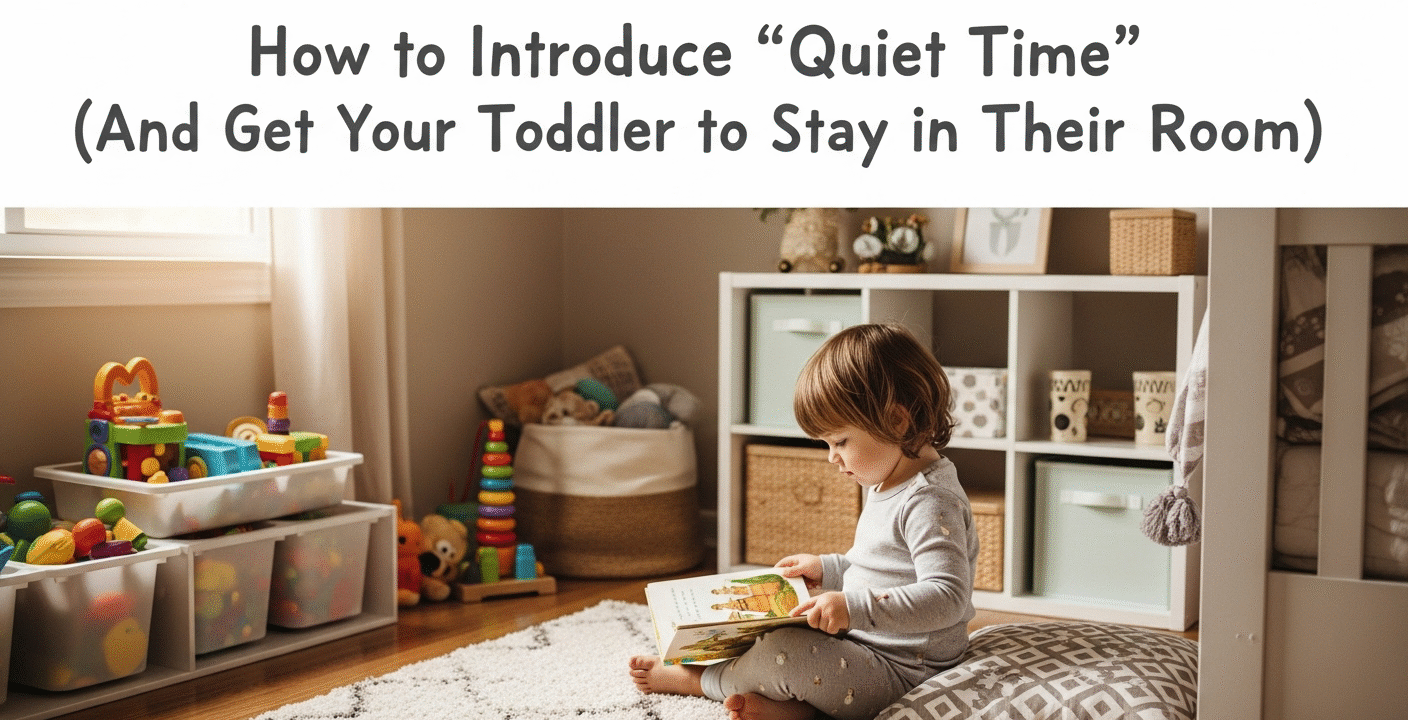
It’s a designated period (usually 30-60 minutes) where your child rests and plays independently in a safe space (like their bedroom).
The benefits are huge:
- It bridges the nap transition. It gives their bodies and brains the essential downtime they need to make it to bedtime without meltdowns.
- It builds independent play. This is a critical life skill. Quiet time for toddlers teaches them how to be content with their own company and imagination.
- It gives you a break. Let’s be honest. Parents need a few moments to recharge their own batteries. A successful quiet time routine is essential for the whole family’s well-being.
How to Introduce Quiet Time (The 5-Step Plan)
You can’t just announce “It’s quiet time!” and expect your toddler to cooperate. A successful introduction requires a plan.
1. Frame it Positively
How you talk about it matters. Don’t call it “nap time” if they’re not sleeping. Don’t use it as a threat.
Say this: “It’s time for our special quiet time routine! You get to play with your “rest time” toys.” Not this: “You didn’t nap, so now you have to go to your room.”
2. Start Incredibly Small
Do not start with a 60-minute goal. Your toddler’s independent play muscle needs to be built up. Start with 10 minutes. Once they have successfully (and happily) mastered 10 minutes for a few days, bump it to 15, then 20, and so on. Slow and steady wins this race.
3. Use a Visual Timer
This is the single most important tool in your arsenal. Toddlers have no concept of time. “One hour” means nothing to them. A visual timer (like an “Okay to Wake” clock that turns green, a sand timer, or a visual countdown app) makes an abstract concept concrete.
The rule is simple: “When the light turns green, toddler quiet time is over, and you can come out.”
4. Create “Special” Quiet Time Activities
Make this time exciting by having a bin of quiet time activities that only come out during this part of the day. This creates anticipation.
Good ideas include:
- Lacing beads
- Puzzles they can do themselves
- Board books or “I Spy” books
- Mess-free coloring pads (e.g., Water Wow or Crayola Magic Ink)
- A “calm down” sensory bottle
5. Make it Part of the Quiet Time Routine
Consistency is everything. Have a simple 2-minute “wind-down” ritual before quiet time begins. This might be:
- Go to the potty.
- Get a quick drink of water.
- Choose 2-3 quiet time activities from the bin.
- A quick hug and kiss, set the visual timer, and leave.
The Big Challenge: “My Toddler Won’t Stay in Room!”
This is the hard part. You’ve set up the perfect quiet time for toddlers, and 30 seconds later, they’re running out, proclaiming, “I’m done!”
This is where you must be calm, kind, and firm. This is all about quiet time boundaries.
The Strategy: The Silent Return
- When they come out, do not engage. Don’t scold, don’t lecture, don’t negotiate. Any attention—even negative attention—is a reward.
- Calmly and silently take their hand and lead them back to their room.
- Point to the timer. Say one, simple, boring phrase: “It’s still toddler quiet time. You can come out when the timer turns green.”
- Leave.
- Repeat. You might do this 10 times on the first day. That’s okay. The key is that they learn nothing fun happens when they leave their room. You become a boring, broken record.
Don’t Forget Positive Reinforcement
When that visual timer finally goes off, and they’ve been successful (even if it was just for 15 minutes), praise them!
- “Wow! You did such a great job playing during your quiet time for toddlers!”
- “I saw you building a great tower on the monitor. That looked so fun!”
- “You stayed in your room until the timer went off. High five!”
This positive reinforcement is what makes the new habit stick.
Your New Reality
Be patient. Implementing a quiet time routine can take a few weeks. There will be good days and bad days. But by staying consistent, positive, and firm with your quiet time boundaries, you will successfully navigate the nap transition.
You’ll be giving your child the gift of rest and independent play, and you’ll get a much-needed moment of peace in your day. You’ve got this.
Disclaimer: This article is for informational purposes only and does not constitute medical or professional parenting advice. Always consult with a qualified professional for advice tailored to your child’s specific needs.