


Does your child struggle to sit still? Do they seem to be constantly fidgeting, bouncing off the walls, or crashing into furniture? Before you label it as “bad behavior,” consider this: your child might be craving a specific kind of sensory information. The solution might not be to tell them to “calm down,” but to give them the tools to feel calm.
Enter “heavy work” activities. This simple, yet profound concept, often used in occupational therapy, could be the missing piece to helping your child achieve a calm, focused state.
What Exactly Are “Heavy Work” Activities?
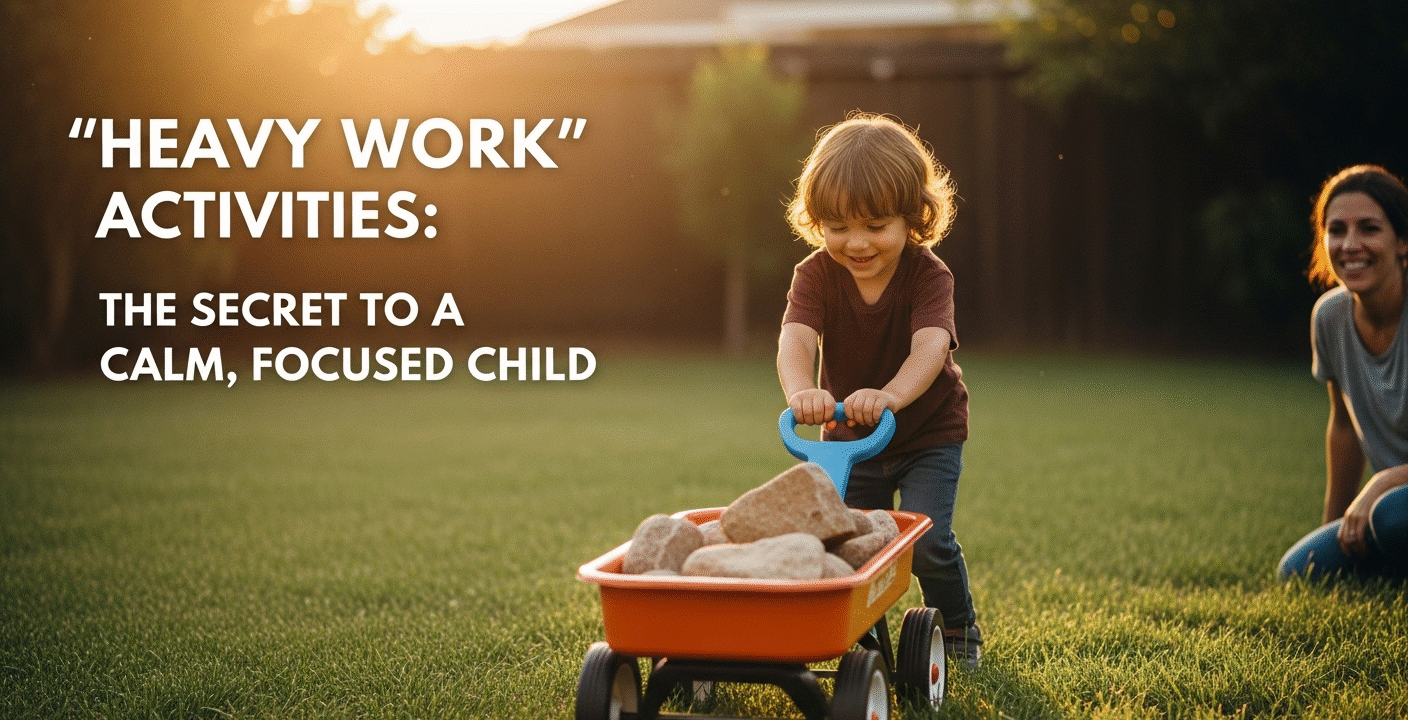
Heavy work activities are any tasks that involve pushing, pulling, lifting, or carrying heavy objects—or simply moving the body against resistance.
These actions provide powerful sensory information to the muscles and joints. This is known as proprioceptive input. Think of proprioceptive input as your body’s “position sense.” It’s how your brain understands where your body is in space without you having to look.
For many children, especially those with sensory processing challenges, this input is deeply organizing and calming to the nervous system. When a child engages in heavy work for kids, their brain receives a flood of this organizing information, which can help improve self-regulation and filter out overwhelming sensory noise.
The Surprising Benefits of “Heavy Work”
Integrating heavy work activities into your child’s day isn’t just about burning energy. It’s about feeding their nervous system what it needs to function optimally.
The benefits are remarkable:
- Improves Attention and Focus: By calming the nervous system, heavy work helps clear the “static,” allowing a child to concentrate on tasks like homework or listening in class.
- Better Self-Regulation: This input can reduce anxiety, frustration, and the likelihood of meltdowns. It’s a proactive tool for emotional stability.
- Reduces Sensory Seeking: Does your child chew on their shirt, crash into the sofa, or wrestle aggressively? This is often a form of sensory seeking. Heavy work activities provide a safe and effective alternative to meet that need.
- Increases Body Awareness: Proprioceptive input helps children feel more “grounded” and secure in their own bodies, which can reduce clumsiness.
- Promotes a Calm, Focused Child: Ultimately, the goal is to help your child feel “just right” in their own skin, and heavy work is a powerful tool to get them there.
15 Easy “Heavy Work” Activities to Try Today
The best part is that you don’t need any special equipment. You can incorporate heavy work for kids right into your daily routine.
Around the House Chores
- Pushing the vacuum cleaner or a dry mop.
- Carrying the laundry basket (make it as heavy or light as is safe).
- Wiping down tables, windows, or the shower door (requires firm pressure).
- Helping with groceries: Carrying bags from the car or putting heavy items (like cans) away.
- Taking out the trash or pulling the recycling bin to the curb.
Fun & Playful Activities
- Animal walks: Bear crawls, crab walks, or frog jumps.
- Play-Doh or therapy putty: Kneading, squeezing, and pulling is excellent heavy work for hands.
- Jumping: On a trampoline, on jumping jacks, or hopping from one spot to another.
- Building with heavy blocks or sofa cushions to make a fort.
- Pushing a friend or sibling on a swing.
On-the-Go & Quick Fixes
- Wall push-ups: Have them “push the wall over.”
- Chair push-ups: While seated, have them place their hands on the seat and lift their bottom off the chair.
- Carrying a backpack with a few books in it (for a short, supervised time).
- Squeezing a stress ball or fidget toy.
- Chewing: Eating crunchy snacks (like carrots or pretzels) or drinking a thick smoothie through a straw.
How Do I Know If My Child Needs This?
While all children can benefit from heavy work activities, you may notice your child especially needs them if they:
- Seem to be in constant motion, fidgeting and wiggling.
- Love to crash, jump, and play rough.
- Chew on non-food items like shirt collars, pencils, or fingernails.
- Seem clumsy or have poor body awareness.
- Struggle with attention and focus, especially during quiet tasks.
If these signs sound familiar, try incorporating a few of these activities before you ask your child to do a task that requires focus, like sitting for dinner or starting homework. You might be amazed at the difference.
Creating a “Sensory Diet”
In occupational therapy, a plan of these activities is often called a “sensory diet.” It’s not about food, but about providing the brain with a regular “diet” of sensory input throughout the day to keep it regulated.
Try scheduling a “heavy work snack” every couple of hours. A 5-minute break for 20 jumping jacks or some wall push-ups can reset the nervous system and make the next block of time much more productive.
Conclusion
If you’re looking for the secret to a calm focused child, the answer may not be less movement, but more of the right kind of movement.
Heavy work activities are a simple, free, and incredibly effective way to support your child’s developing nervous system. By giving their body the proprioceptive input it craves, you are giving them the foundation they need to feel organized, secure, and ready to learn.
Disclaimer: This article is for informational purposes only and is not intended to be a substitute for professional medical advice, diagnosis, or treatment. Always seek the advice of your physician, an occupational therapist, or other qualified health provider with any questions you may have regarding a medical condition or your child’s development.