

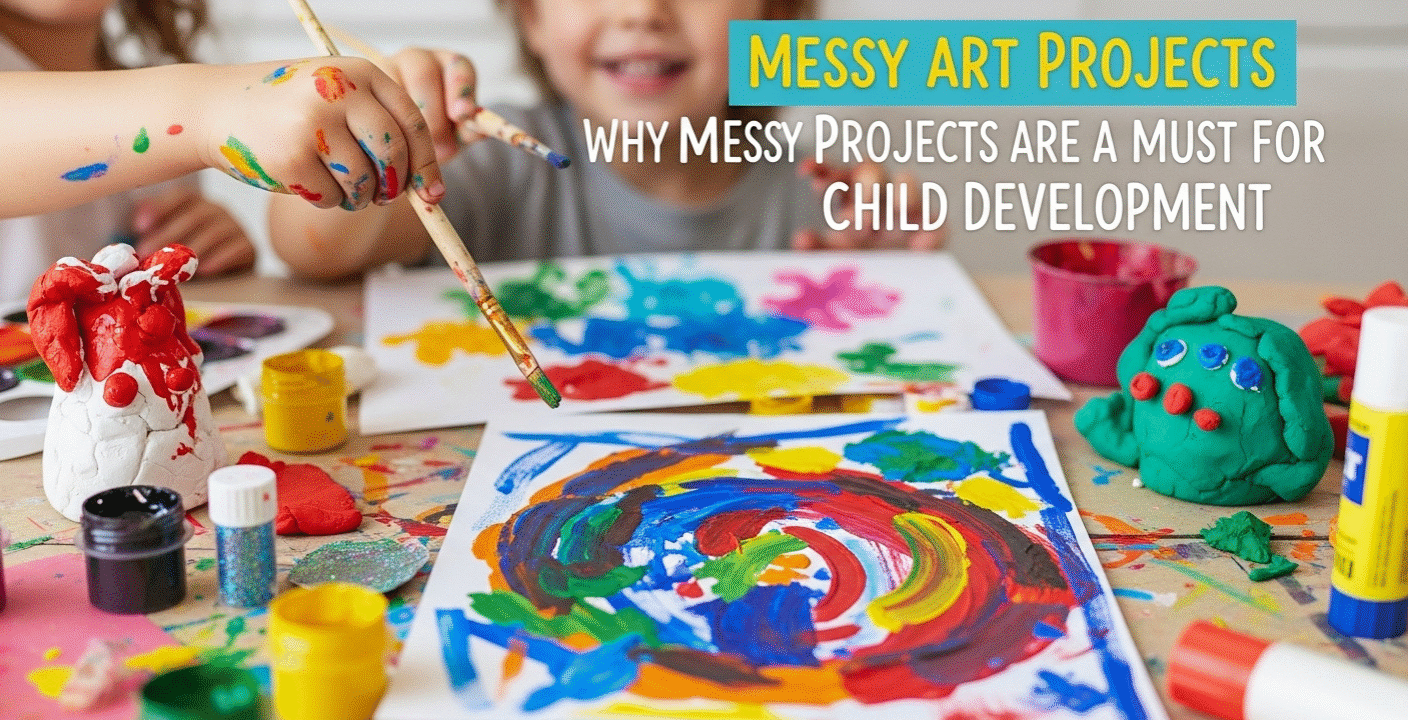

As a parent or caregiver, your first instinct when you see a child with paint-covered hands and a gleam in their eye might be to reach for the wet wipes. The thought of cleaning up glitter, glue, and splattered paint can be daunting. But what if we told you that embracing the chaos is one of the best things you can do for child development? That’s right—messy art projects are more than just fun; they are powerful tools for learning and growth.
Let’s dive into why you should make space for a little creative mess in your life.
Igniting the Senses Through Sensory Play
At its core, much of messy art is a form of sensory play. When a child squishes clay between their fingers, feels the cool slipperiness of finger paint, or sprinkles sand onto a gluey surface, they are engaging multiple senses at once. This multi-sensory experience is critical for brain development. It helps build nerve connections in the brain’s pathways, leading to a greater ability to complete more complex learning tasks. Messy art projects provide a rich environment for this kind of learning through play, making abstract concepts like texture and consistency tangible.
Developing Crucial Fine Motor Skills
The journey to writing letters and tying shoelaces begins long before a child ever holds a pencil correctly. It starts with developing fine motor skills—the coordination of small muscles in the hands and fingers. Messy art projects are fantastic for this!
- Pinching glitter or small pieces of paper.
- Squeezing a glue bottle.
- Dabbing a sponge in paint.
- Molding playdough or clay.
Each of these actions strengthens hand-eye coordination and muscle control, laying a critical foundation for future academic and life skills. This hands-on approach is a cornerstone of early childhood education.
Fostering True Creativity and Problem-Solving
Have you ever seen a craft that requires a child to glue three cotton balls exactly in one spot to make a snowman? That’s product-focused art. Messy art projects, on the other hand, are often what’s known as process art. In process art, the focus is on the experience of creating, not the final result.
This freedom is incredibly liberating for a child. There is no “wrong way” to smear paint or mix colors. This encourages experimentation and boosts creativity for kids. It also builds crucial problem-solving skills. A child might ask themselves, “What happens if I mix blue and yellow?” or “How can I make this clay stand up?” They learn cause and effect in a low-stakes, highly engaging way.
Boosting Cognitive and Language Development
Believe it or not, a messy art session is a workout for a child’s brain. As they experiment, they’re engaging in early scientific and mathematical thinking. They observe changes, compare textures, and see firsthand how different materials interact. This is the very essence of cognitive development.
Furthermore, it’s a goldmine for building vocabulary. As you engage with them, you can introduce a wealth of descriptive words like squishy, sticky, gooey, smooth, rough, bright, and vibrant. Talking about what they are doing (“You are dripping the red paint!”) helps them connect words to actions, enhancing their language skills. It turns a simple activity into a rich lesson.
So, the next time you hesitate to break out the paints, remember all the incredible benefits packed into that “mess.” By embracing messy art projects, you aren’t just creating a temporary cleanup job; you are building a foundation for a curious, capable, and creative child.
Disclaimer: This article is for informational purposes only and is not intended to be a substitute for professional educational or developmental advice. Always supervise young children during art activities.