

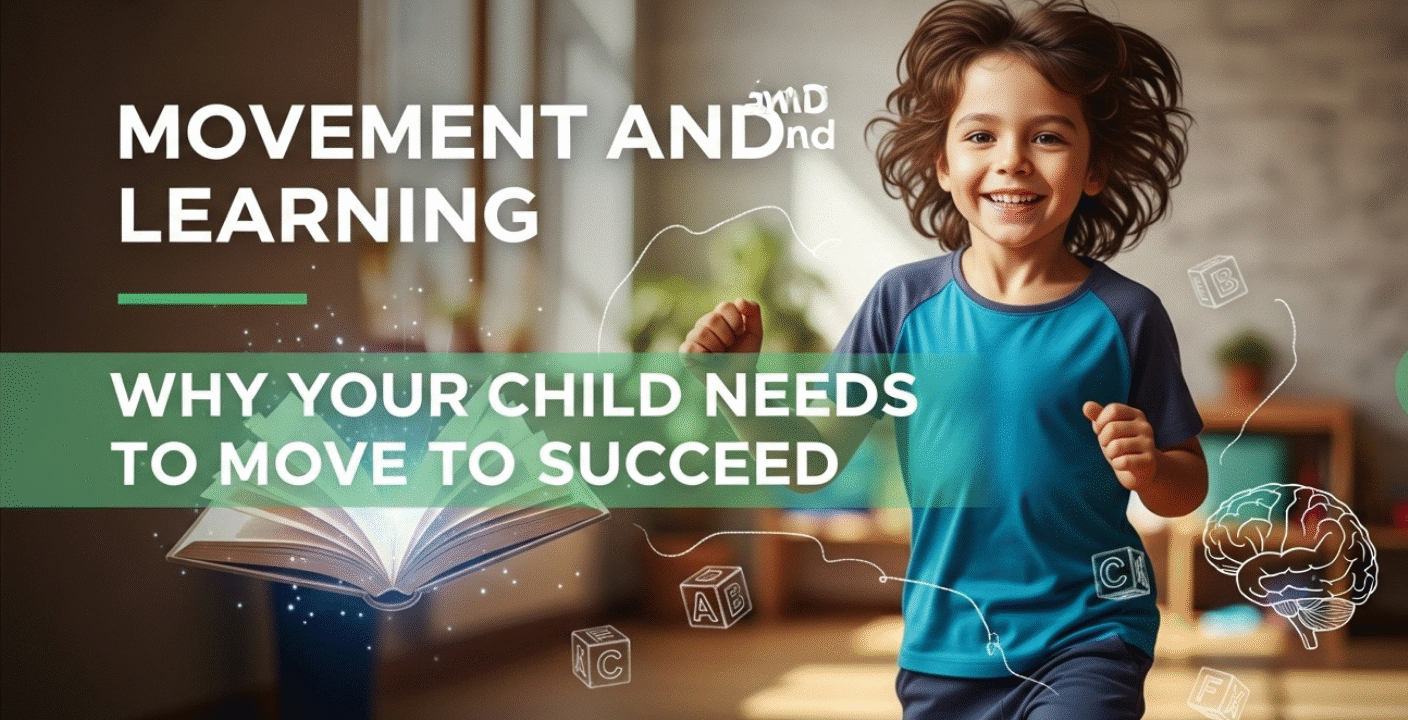

Ever told a child to “sit still and concentrate”? It’s a common phrase in classrooms and homes everywhere. We often associate stillness with focus and learning. But what if that’s all wrong? Growing evidence shows a powerful and undeniable link between movement and learning, suggesting that for children to truly thrive academically, they need to get up and move. 🤸♀️
For too long, we’ve treated physical activity as a break from learning, a reward for finishing work, or just a way to burn off excess energy. The reality is that movement is not separate from learning; it’s an integral part of it. When children are active, they aren’t just exercising their bodies—they’re firing up their brains for optimal performance.
The Science: How Movement Fuels the Brain
The connection between movement and learning isn’t just a theory; it’s based on neuroscience. When a child engages in physical activity, several incredible things happen inside their brain:
- Increased Blood Flow: Movement pumps more oxygen-rich blood to the brain, which improves its overall function and helps children feel more alert and receptive to new information.
- Release of Miracle-Gro for the Brain: Exercise stimulates the production of a protein called Brain-Derived Neurotrophic Factor (BDNF). Think of BDNF as fertilizer for brain cells. It supports the survival of existing neurons and encourages the growth of new ones, which is crucial for memory and learning.
- Neurotransmitter Boost: Physical activity increases levels of important neurotransmitters like dopamine and norepinephrine, which play a key role in focus, attention, and motivation. This is a big reason why a short burst of active play can dramatically improve a child’s concentration.
This powerful combination creates the ideal environment for brain development and enhanced cognitive function.
The Tangible Benefits for Your Child
So, how does this scientific link between movement and learning translate into real-world results? The benefits are clear and impact everything from grades to emotional well-being.
Improved Academic Performance
Studies consistently show that kids who are more physically active tend to have better academic performance. They score higher on tests, have better concentration in class, and are more efficient with their homework. This is because kinesthetic learning—learning by doing and moving—helps solidify abstract concepts. For example, pacing while memorizing facts or using hands-on manipulatives in math can make information stick.
Enhanced Cognitive Skills
Beyond grades, regular physical activity sharpens key cognitive skills essential for child development. These include:
- Focus and Attention: Movement helps regulate a child’s energy, making it easier for them to sit and focus when required.
- Memory: As mentioned, the BDNF boost from exercise directly impacts the hippocampus, the brain’s memory center.
- Problem-Solving: Active play often involves strategy, creativity, and adapting to new situations, which builds flexible thinking and problem-solving abilities.
Development of Motor Skills
Finally, movement is essential for developing both fine and gross motor skills. From running and jumping to writing and drawing, these skills are fundamental to a child’s ability to interact with the world and succeed in a school environment.
Simple Ways to Add More Movement to the Day
Incorporating more movement doesn’t have to be complicated. The goal is to make physical activity a natural part of your child’s daily routine.
- Take “Brain Breaks”: Encourage short, 5-minute breaks for every 30 minutes of homework. This could be stretching, jumping jacks, or a quick dance party.
- Embrace Active Chores: Turn household tasks into a game. See how fast they can put away toys or help with gardening.
- Walk and Talk: When helping with homework or studying, try walking around the room or tossing a ball back and forth while discussing concepts.
- Prioritize Outdoor Play: Ensure your child gets plenty of unstructured active play time outside. Climbing, running, and exploring are fantastic for both the body and the brain.
The takeaway is clear: we need to shift our perspective. Instead of seeing a fidgety child as a problem, we should see it as a brain that is asking for what it needs to learn. By embracing the vital connection between movement and learning, we can help our children build stronger bodies and sharper minds. 🧠
Disclaimer: This article is for informational purposes only and does not constitute medical advice. Please consult with a qualified professional for any health concerns or before making any decisions related to your child’s health or education.