

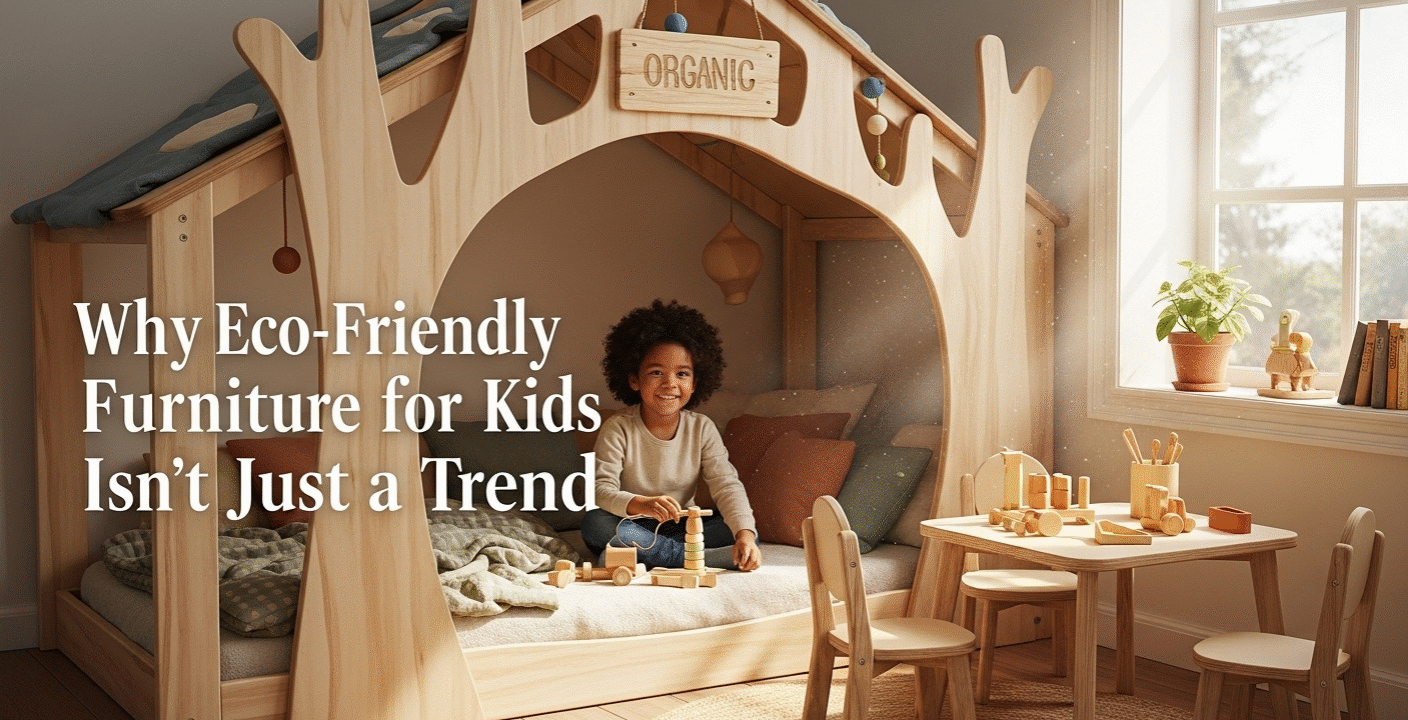

When designing our children’s spaces, we often focus on color palettes and cute themes. But what about the very materials that furnish their rooms? The choice of furniture is more than an aesthetic one; it’s a decision that impacts their health, our planet’s future, and even their development. As a parent who has spent countless hours researching and building a safe nursery, I’ve come to understand that choosing eco-friendly furniture for kids is one of the most significant steps we can take. This isn’t just about sustainable parenting; it’s about creating a truly safe and nurturing environment from the ground up.
This guide will provide more than just surface-level facts; it will offer a deep dive into why non-toxic kids furniture is a critical investment, moving beyond simple definitions to share insights that can help you create a truly healthy nursery.
A Healthier Haven: The Hidden Dangers in Conventional Furniture
The primary reason to choose eco-friendly furniture for kids is to protect their health. Children are uniquely vulnerable to environmental toxins because their bodies and brains are still developing.
- The Problem with VOCs: Much of the mass-produced children’s furniture is made from composite woods like MDF or particleboard. These materials often use adhesives that release volatile organic compounds (VOCs) into the air. Formaldehyde, a common VOC, is a known carcinogen. Choosing furniture made from solid wood kids furniture or certified low-VOC materials drastically reduces this indoor air pollution, creating a safer space for your child to sleep and play.
- Toxic Finishes and Paints: Brightly colored paints and shiny finishes on conventional furniture can contain lead and other heavy metals. Even if they meet basic standards today, the emphasis on child-safe materials is a cornerstone of eco-friendly design. Look for pieces finished with natural oils, water-based paints, or zero-VOC finishes to ensure your child isn’t exposed to harmful chemicals.
A Greener Future: Making a Sustainable Choice
Our purchasing decisions have a ripple effect. Opting for eco-friendly furniture for kids is a powerful vote for a healthier planet.
- Sustainably Sourced Materials: Sustainable children’s room furniture often utilizes wood from responsibly managed forests (look for FSC certification), fast-growing resources like bamboo, or even recycled materials. This practice ensures that we are not contributing to deforestation or depleting natural resources, preserving the environment for future generations.
- Reducing Your Carbon Footprint: The production process for eco-friendly furniture is typically less energy-intensive and produces less waste than conventional manufacturing. By choosing brands committed to sustainability, you support ethical production and contribute to a healthier global environment.
Beyond the Label: The Long-Term Value of Quality
One of the most compelling arguments for eco-friendly furniture for kids is its superior quality and longevity. While the initial investment might be higher, the long-term value is undeniable.
- Durability and Craftsmanship: Unlike particleboard furniture that can easily warp or break, pieces made from solid wood are built to last. They can withstand years of play, be passed down to younger siblings, or even be repurposed elsewhere in the home. This “buy it once, buy it well” philosophy is the essence of true sustainability and a core tenet of an environmentally friendly kids room.
- Timeless Design: Eco-friendly furniture often features simple, classic designs that don’t fall out of style. A well-crafted wooden bed or dresser will look just as good in a teenager’s room as it did in a nursery, eliminating the need to constantly buy and discard trendy, disposable pieces. This focus on durability and timelessness is a form of information gain that many parents overlook; it’s not just about being green, it’s about being smart with your resources.
Choosing eco-friendly furniture for kids is a deliberate act of love—for your child and for the world they will inherit. It is a commitment to health, quality, and a sustainable future, creating a space where your child can truly thrive.
Disclaimer: This blog post is for informational purposes only. It is essential to conduct your own research and verify the certifications and materials of any furniture you purchase for your child. This article does not constitute professional medical or environmental advice.