

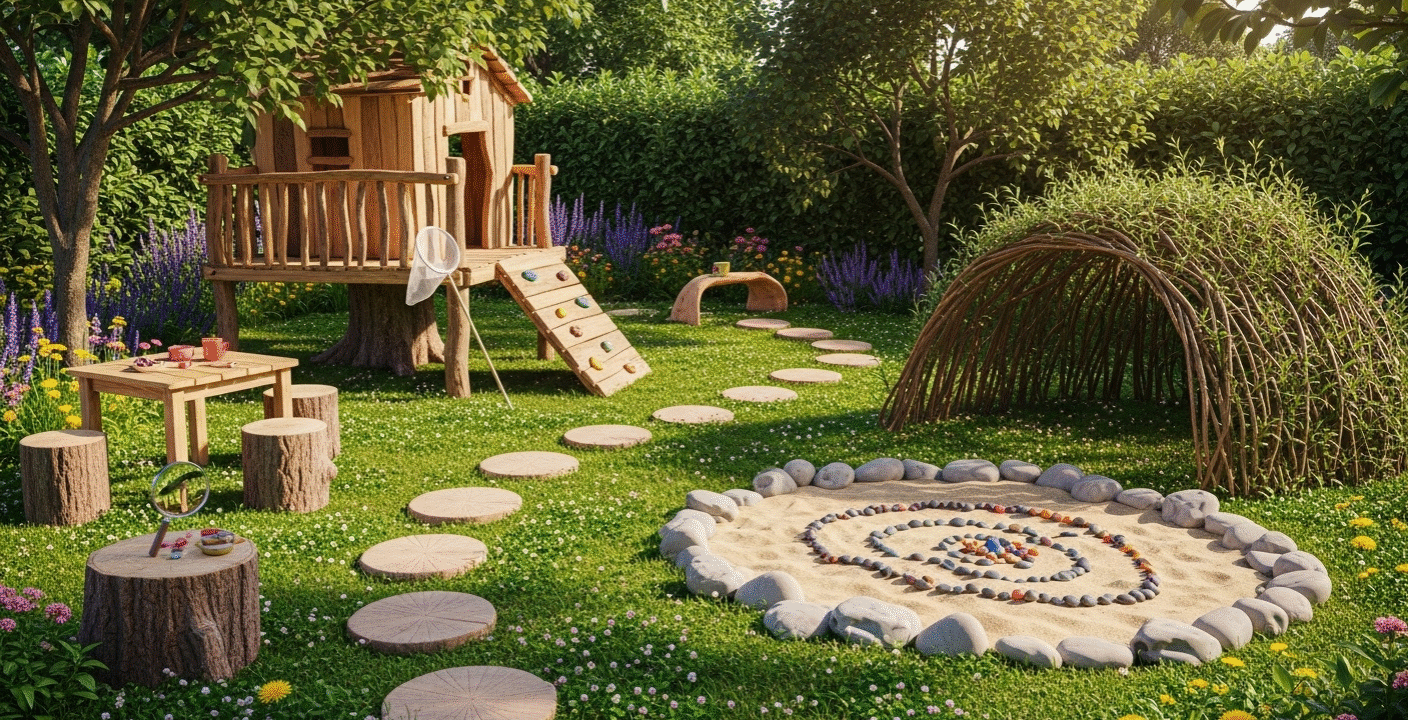

Tired of the brightly colored plastic that dominates most backyards? I was too. I watched my kids’ expensive toys get used for a week and then forgotten, and I knew there had to be a better way to foster creativity and a love for the outdoors. That’s when I decided to completely rethink our yard and create a nature-inspired play space. This journey transformed our patch of grass into a dynamic, engaging outdoor classroom that changes with the seasons and grows with my children.
This guide is more than a list of ideas; it’s a blueprint based on my first-hand experience. We’ll go beyond the simple “what” and dive into the “why” and “how,” ensuring you can build a
natural playground that provides genuine value and endless opportunities for imaginative play.
The Philosophy: Why a Natural Playground Is Better
In a world of digital distractions, a backyard play area filled with natural elements encourages problem-solving, sensory development, and resilience. Unlike a static plastic slide, a pile of logs can be a fort, a balance beam, or a family of bears. This open-ended “loose parts play” is the foundation of a nature-inspired play space and is critical for cognitive development. It moves beyond simple entertainment to provide an experience that is deeply satisfying for a child.
Foundational Elements for Your Natural Playground
The key is to create “zones” that invite different types of play. You don’t need a huge yard; you just need to be intentional. Here’s how to create a nature-inspired play space by focusing on a few core elements.
The Sensory Hub: A DIY Mud Kitchen
A DIY mud kitchen is, without a doubt, the single most-used feature of our backyard. It doesn’t need to be fancy.
- Structure: Use old pallets, wood scraps, or a couple of tree stumps as a base. An old sink, if you can find one, is a bonus.
- Utensils: Stock it with old pots, pans, metal bowls, and wooden spoons from a thrift store.
- Ingredients: This is the fun part! Provide access to dirt, sand, water, leaves, flower petals, and small twigs. This station becomes a hub for sensory exploration and imaginative “cooking.”
The Builder’s Zone: Embracing Loose Parts Play
This concept is about providing movable, adaptable materials that children can control. It is the opposite of a fixed playground structure.
- Wood Cookies & Offcuts: Slices of logs or branches of various sizes.
- Stones & Pebbles: A collection of smooth river rocks (ensure they are not a choking hazard for very young children).
- Pinecones & Seed Pods: A basket of natural treasures gathered on walks.
- Logs & Planks: Larger logs for building or balancing and simple wooden planks to make ramps or bridges.
The Living Garden: A Sensory Garden for Kids
A small garden patch teaches children about life cycles and engages all their senses. Focus on plants that are safe and offer a variety of textures and scents.
- Smell: Plant hardy herbs like mint, rosemary, and lavender.
- Touch: Lamb’s ear has soft, fuzzy leaves.
- Taste: A small patch of strawberries or cherry tomatoes is incredibly rewarding.
- Sight: Brightly colored, easy-to-grow flowers like marigolds and sunflowers. For a comprehensive list of non-toxic plants, it’s essential to consult a trusted resource like your local university’s agricultural extension office. Citing authoritative sources is a key part of building trust and expertise.
Key Considerations for Safety and Success
Creating a natural play space requires a slightly different approach to safety.
- Inspect Materials: Ensure any wood is free of splinters, nails, or sharp edges.
- Know Your Plants: Be 100% certain that every plant in the play area is non-toxic.
- Supervise: Natural play involves inherent risks like climbing and balancing. These are valuable for development but require adult supervision appropriate for the child’s age.
Building this trust is the most important part of the E-E-A-T framework.
Starting Small: Tips for Any Backyard or Budget
You don’t need acres of land or a big budget to get started.
- Start with a single zone. A DIY mud kitchen in a corner of the yard is a fantastic first step.
- Use what you have. Trimmed branches become building blocks. Old kitchen utensils become mud pie tools.
- Think vertically. If space is limited, a small trellis with climbing beans or a wall-mounted planter for herbs can create a wonderful sensory garden for kids.
By choosing to create a nature-inspired play space, you are giving your child a gift that will last far longer than any plastic toy. You are providing a foundation for creativity, a love of nature, and a childhood filled with authentic, hands-on discovery.
Disclaimer: This blog post is for informational purposes only and is based on personal experience. The author is not a professional playground designer or botanist. Always ensure proper adult supervision and verify the safety and toxicity of all materials and plants used in any children’s play area. Consult with a professional for specific safety concerns.