

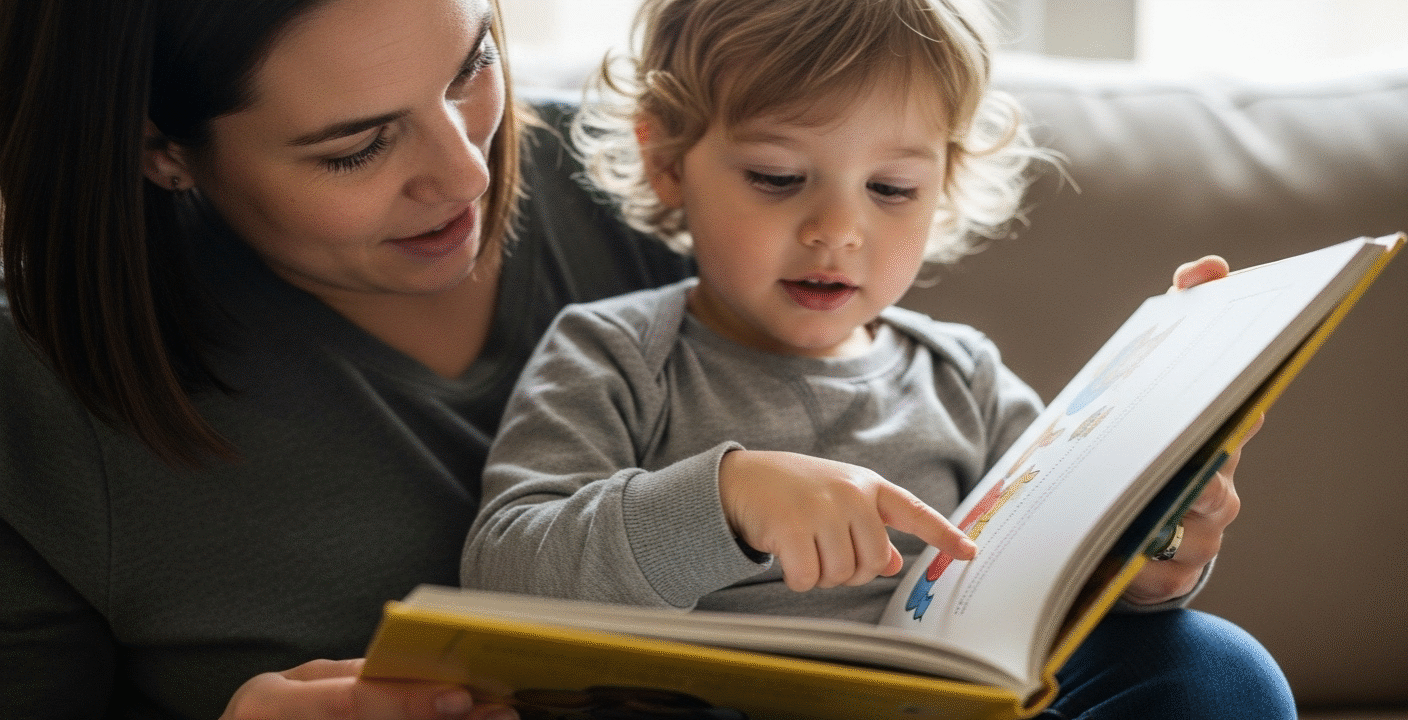

If you’re a parent, you know the sound well: “Again! Again!” Whether it’s the same book for the tenth night in a row, the same song on a loop, or the same block tower built only to be knocked down, a child’s love for repetition can test any parent’s patience. But what if I told you that this seemingly monotonous cycle is actually one of the most powerful engines for your child’s brain development? As a parent who has read “Goodnight Moon” enough times to recite it backward, I’ve learned to see this phase not as a chore, but as a critical process. Understanding the role of repetition in early learning transforms our perspective, revealing it as a cornerstone of early childhood education.
This guide is designed to go beyond a simple definition. We will explore why your child’s brain craves repetition and provide actionable strategies to harness its power, turning everyday moments into profound learning opportunities that build a foundation of confidence and skill.
Why Repetition is a Superpower for the Developing Brain
The demand for “again” isn’t a whim; it’s a biological imperative. The role of repetition in early learning is deeply connected to the fundamental mechanics of how a young brain is built.
- Building Strong Neural Connections: Think of your child’s brain as a forest. The first time they learn something, it’s like walking through the dense woods, creating a faint trail. Each time they repeat the action or hear the information, they walk that same path again. With every pass, the trail becomes wider, clearer, and easier to travel. This is a simplified model of how repetition and brain development work together. Neurons form connections, and repetition strengthens these synaptic connections, making recall faster and more automatic. This is the essence of mastery.
- From Mastery to Confidence: When a child repeats a task—like successfully placing a puzzle piece or reciting a nursery rhyme—they experience a powerful sense of accomplishment. This feeling of mastery is a huge confidence booster. It gives them the courage to tackle the next, slightly more challenging task. This confidence, born from repetition, is a key component of effective toddler learning.
- The Comfort and Safety of Predictability: The world can be a big, unpredictable place for a young child. Repetitive stories, songs, and routines create a predictable and safe environment. This importance of routine allows their brain to relax, freeing up cognitive resources to focus on learning. When they know what to expect, they feel secure enough to explore.
Putting Repetition into Practice: Fun and Effective Strategies
The best part is that you don’t need expensive tools to leverage the role of repetition in early learning. It’s about being intentional with the activities you already do.
- Embrace the Re-Read: That book your child wants to read over and over? It’s a goldmine. Each reading allows them to focus on something new—the story’s sequence, the rhythm of the words, the pictures on the page, or the emotions of the characters. This is learning through play at its finest.
- Sing-Along Songs and Rhymes: Nursery rhymes and simple songs are packed with repetitive structures, rhythms, and rhymes that are fantastic for language acquisition and phonological awareness—a precursor to reading.
- Routine as a Learning Tool: Daily routines are a powerful form of repetition. The sequence of getting dressed (shirt first, then pants), washing hands before a meal, or a consistent bedtime routine all reinforce memory, sequencing, and self-help skills.
- Playful Practice: Encourage repetitive play. Stacking and restacking blocks teaches cause and effect. Doing the same simple puzzle over and over builds spatial reasoning and fine motor skills.
Balancing Repetition with New Experiences
While repetition is vital, the ultimate goal of child development is to build a broad foundation of skills and knowledge. Once your child has shown mastery and comfort with a specific activity, you can gently introduce small variations. In that favorite book, try pointing out a new detail in the illustration. With the familiar song, try singing it a little faster or slower. This strategy respects their need for predictability while gently expanding their horizons.
Ultimately, by embracing the “Again! Again!” phase, you are responding directly to your child’s developmental needs. You are their trusted guide, helping them pave the strong neural pathways that will support all future learning.
Disclaimer: This blog post is for informational purposes only and is based on established child development principles and shared parenting experiences. It does not constitute professional medical or psychological advice. Please consult with a pediatrician or a child development specialist for any specific concerns regarding your child.