


Have you ever watched a toddler completely captivated by the simple act of squishing play-doh between their fingers or listening intently to the crinkle of a leaf? It might look like simple fun, but it’s one of the most important jobs of early childhood. This is brain-building in its purest form. As parents and caregivers, understanding why sensory play matters is the first step in empowering our children’s development. This is not just about keeping them busy; it’s about providing the foundational tools for lifelong learning through play.
This guide moves beyond a simple list of activities to explore the deep connection between sensory experiences and cognitive growth, providing the “why” behind this essential part of early childhood development.
What Exactly Is Sensory Play?
At its core, sensory play is any activity that stimulates a young child’s senses: touch, smell, taste, sight, and hearing. It also includes activities that engage the sense of balance and body awareness. It’s the hands-on, messy, and often noisy process of exploration that helps the brain create powerful connections to the world.
The Science Behind the Fun: How Sensory Play Fuels Brain Development
When a child engages in sensory play, they are conducting complex experiments. Their brain is firing on all cylinders, creating and strengthening neural pathways. This process, often called sensory integration, is the bedrock of brain development.
- Building a Complex Brain Architecture: Every time a child explores a new texture or sound, they are forming new connections between neurons. These pathways are the foundation for more complex learning later on. A rich sensory environment leads to a more intricate and capable brain architecture.
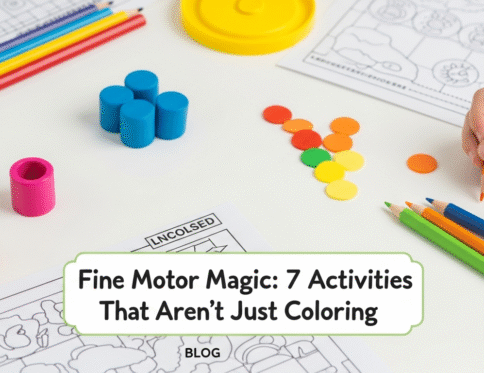
- Developing Fine and Gross Motor Skills: Scooping, pouring, pinching, and sorting are not just simple actions. These movements are essential sensory activities for toddlers that refine the small muscle control needed for writing ( fine motor skills) and the larger movements for running and jumping.
- Fostering Problem-Solving and Critical Thinking: What happens when I mix water with sand? How much pressure does it take to squish this ball? This is scientific inquiry at its earliest stage. Sensory play encourages children to observe, hypothesize, experiment, and draw conclusions, which are critical skills for cognitive growth.
- Enhancing Language and Communication: Sensory experiences provide a rich vocabulary. Instead of just “soft,” a child learns “fluffy,” “squishy,” and “silky.” This hands-on context makes language meaningful and helps children develop the descriptive skills needed for communication.
Putting It Into Practice: Simple Sensory Activities for Toddlers
You don’t need expensive toys to create a powerful sensory experience. The best activities often use simple, household items.
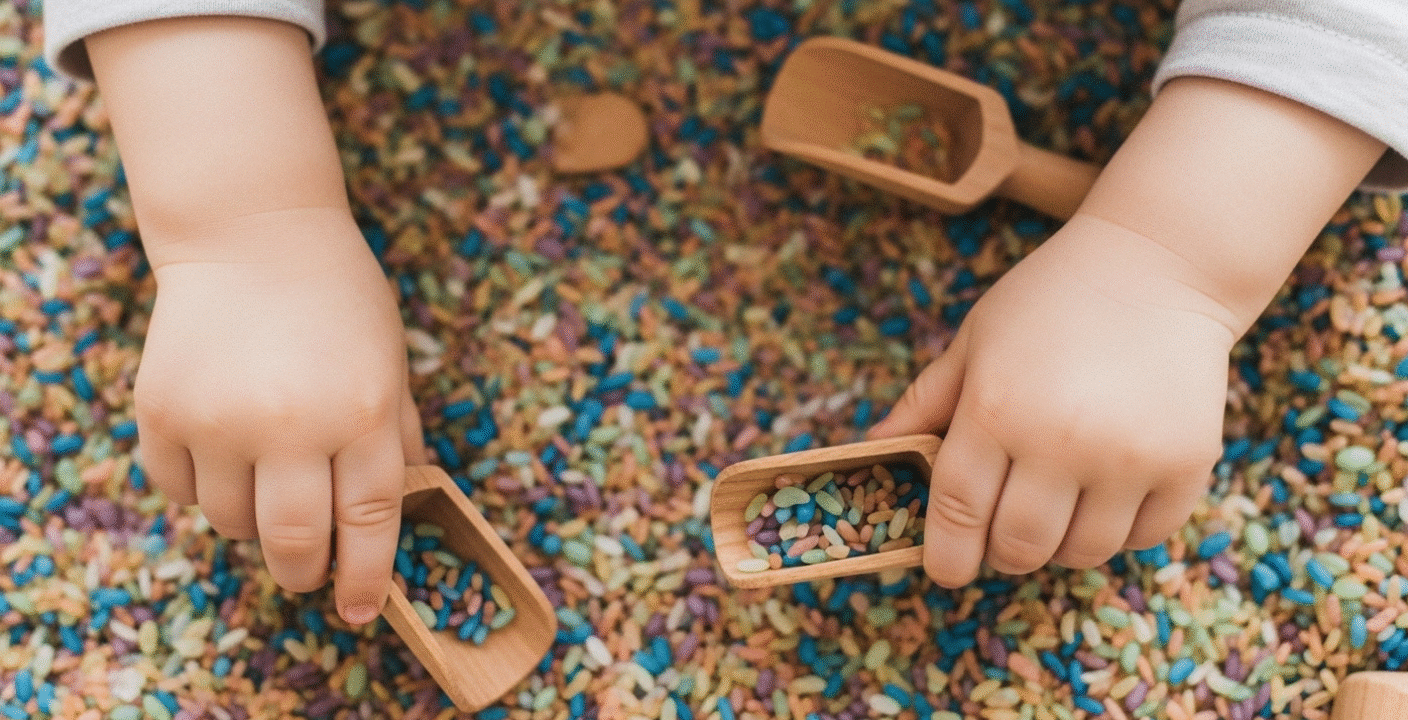
- The Classic Sensory Bin: Fill a small tub with a base material like dry rice, pasta, water, or sand. Add scoops, cups, and small toys for endless scooping and pouring fun.
- Nature’s Treasures: A walk in the park offers a feast for the senses. Collect smooth stones, rough bark, and crunchy leaves. Talk about how each one feels and sounds.
- Play-Doh Exploration: A timeless classic for a reason. Pounding, rolling, and cutting play-doh is fantastic for developing fine motor skills and expressing creativity.
- Water Painting: All you need is a bucket of water and a paintbrush. “Painting” on a fence or sidewalk on a sunny day is a mess-free way to explore cause and effect.
A Parent’s Role: Be a Facilitator, Not a Director
Our role in this process is crucial. The goal isn’t to direct the play, but to create a safe and inviting environment for exploration. Resist the urge to show them the “right” way to play. Let them make a mess. Let them mix the colors. True learning through play happens when a child has the freedom to follow their own curiosity. Your calm presence and occasional questions (“What does that feel like?”) are all that’s needed to facilitate this vital work.
Ultimately, understanding why sensory play matters transforms how we see our children’s playtime. It’s not a distraction from learning; it is the learning. By embracing the mess and the magic, we give our children one of the greatest gifts for their future cognitive growth.
Disclaimer: This blog post is for informational purposes only and is based on widely accepted child development principles. It does not constitute professional medical or educational advice. Please consult with a pediatrician or a qualified child development expert for specific concerns regarding your child.